
Vaccination against whooping cough has become routine in many countries, yet cases of infection continue to appear, which emphasizes the importance of awareness of this disease, as it is not just a passing childhood disease;
What is whooping cough?
Whooping cough, known as pertussis or the hundred-day cough, is a type of severe bacterial infection that affects the respiratory system, caused by a bacteria called Bordetella pertussis. It may affect different age groups, but is common in infants and young children.
What are the symptoms of whooping cough?
Symptoms of pertussis develop gradually and in several stages. The symptoms of the first stage include the catarrhal stage, which lasts from one to two weeks and is similar to a cold, as follows:
- Runny or stuffy nose.
- Mild fever less than 38°C.
- Mild, intermittent cough.
- In some cases, infants suffer from temporary stopping of breathing and the skin turns blue.
The second stage, the paroxysmal cough stage, begins after one to two weeks and lasts from one to six weeks or more. The symptoms of the second stage are characterized by the following:
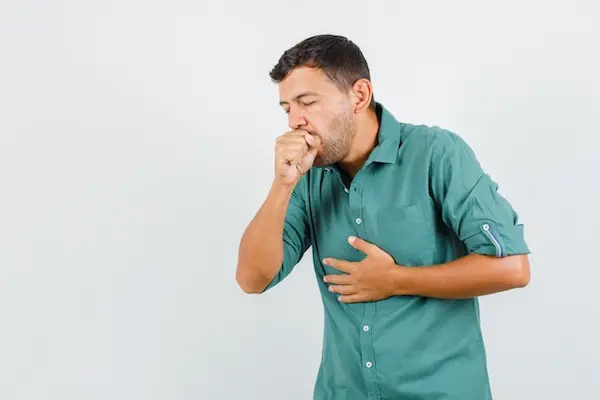
- Rapid, violent, and continuous coughing attacks until the air is emptied from the lungs.
- A coughing fit is followed by a violent attempt to inhale air, resulting in the characteristic gasping sound that may not occur in infants, adults, or partially vaccinated people.
- Vomiting may occur during or after coughing attacks.
- Feeling very tired after a coughing attack, but the person usually feels fine between attacks.
- Difficulty sleeping due to coughing.
- The face may turn red or blue during coughing attacks due to lack of oxygen.
- Minor eye or nose bleeding may occur due to forceful coughing, in some severe cases
Then the third stage begins, which is the gradual recovery stage and continues for several weeks or months, and its symptoms include:
- The cough gradually decreases in intensity and frequency.
- Coughing attacks may continue to occur, but are less severe, with any other respiratory infection.
- Watery or red eyes.
- difficulty breathing.
It is worth noting that in newborns and infants, the symptoms of whooping cough do not appear in the form of a severe cough, but rather appear in interruption of breathing and blueness of the face, and they often do not develop a severe cough.
Causes of whooping cough
The only cause of whooping cough is a bacterial infection called Bordetella pertussis, which is a respiratory infection.
How is whooping cough transmitted?
The bacteria that cause whooping cough are transmitted mainly through respiratory droplets from the nose and mouth of an infected person while coughing, sneezing, or even talking and laughing.
When droplets loaded with bacteria are inhaled by another healthy person through the nose or mouth, this leads to the bacteria entering the respiratory system of the healthy person, and then attaching to the cilia in the lining of the bronchial tubes.
Then the bacteria begin to multiply and release toxins that lead to irritation and inflammation of the airways, causing damage to the cilia, leading to severe coughing attacks characteristic of the disease.
Factors that increase the risk of transmission include:
- Close contact, in closed and crowded places with the patient.
- The early stages of the disease, where the patient is most contagious during the early stages of the disease, before the appearance of severe coughing attacks because he is often unaware of his infection and interacts normally with others.
- Not vaccinating.
It should be noted that whooping cough is not transmitted through accidental touching of objects or surfaces contaminated with bacteria, and that the main method of transmission is through inhalation of respiratory droplets containing bacteria.
The patient is contagious from the beginning of cold-like symptoms until about three weeks after the start of coughing attacks if he does not receive treatment with antibiotics.
If you develop any symptoms Book your consultation now at Respiratory disease clinic At Almoosa Hospital
How to diagnose whooping cough
The diagnosis of whooping cough at Almoosa Specialist Hospital depends on several factors, including apparent symptoms, medical history, and laboratory tests, and since the early symptoms may resemble symptoms of other respiratory diseases, diagnosis may be difficult in the early stages.
The main methods for diagnosing whooping cough include:
First: clinical examination and medical history
- Medical history, where the doctor asks about the symptoms that the patient is suffering from, especially the type of cough, is it episodic, does it end with a sniffle, does vomiting occur after coughing, about the history of vaccination, about the presence of any contacts infected with whooping cough, and about the patient’s general medical history.
- Physical examination: The doctor performs a general physical examination, listening to the sound of the lungs while breathing and coughing.
Second: laboratory tests
- Nasopharyngeal swab, a common procedure to confirm the diagnosis of whooping cough, especially during the first three weeks of illness, is where a sample is taken from the back of the nose and throat using a soft cotton swab and sent to a laboratory to test for the presence of Bordetella pertussis bacteria using bacterial culture analysis, or polymerase chain reaction (PCR).
- Blood test, to look for an increase in the number of white blood cells, which may indicate whooping cough, especially in the later stages of the disease.
Get to know better Methods of treating children's cough Depending on age and type of cough
How can whooping cough be treated?
Treatment of whooping cough at Almoosa Specialist Hospital aims to eliminate the bacteria causing the infection, relieve symptoms, as well as prevent the spread of the disease to others, and reduce the risk of complications. Treatment depends mainly on the stage of the disease, the age of the patient, and the severity of symptoms. The main methods include the following:
Pharmaceutical treatments
- Antibiotics: They are the main treatment for whooping cough, especially if they are started in the early stages of the disease, that is, during the first three weeks, before the development of severe coughing attacks, and to reduce the duration of infection and reduce the severity of symptoms. Doctors often prescribe azithromycin, clarithromycin, or erythromycin.
- Corticosteroids: The doctor may recommend taking corticosteroids to help treat whooping cough in children in severe cases.
Supportive home care to relieve symptoms
- Get enough rest to help the body recover.
- Drink plenty of fluids to prevent dehydration and loosen mucus, preferably water, natural non-acidic juices, and clear broth.
- Avoid irritants, such as cigarette smoke, stove smoke, dust, strong odors, and sudden changes in temperature, as they can trigger coughing fits.
- It is recommended to eat small, frequent meals because large meals are difficult due to coughing and possible vomiting.
- Eating a teaspoon of honey for children older than one year may help soothe the cough.
- Use a humidifier. Inhaling moist air can help relieve irritation in the airways and make coughing easier.
- Avoid any over-the-counter cough medicines as they are often not effective in treating whooping cough.
Hospital treatment
In severe cases, especially for infants and young children, or patients with complications, hospitalization may be required. Hospital treatment includes the following:
- Give fluids intravenously to prevent dehydration if the patient is unable to drink adequately.
- Oxygen in cases of difficulty breathing or low blood oxygen levels.
- Continuous monitoring of breathing, heart rate and other vital signs.
- Suctioning to remove mucus from the airway if the child is unable to cough effectively.
In cases of whooping cough, infected patients must be isolated, especially during the early infectious stages of the disease, to prevent the spread of infection.
Infected children should not go to school or nursery until the prescribed course of antibiotics has been completed or for three weeks from the start of the cough if antibiotics are not used.
Doctors also recommend vaccinating close contacts of the patient or giving them preventive antibiotics to help prevent the spread of the disease.
You can also read what are the methods Treatment of severe cough in children؟ و7 نصائح للوقاية منها
How to prevent whooping cough
Vaccination is the best way to prevent whooping cough and there are two main types of vaccines that provide protection:
- Children's vaccine (DTaP): Given in a series of five doses at ages 2 months, 4 months, 6 months, 15 to 18 months, and 4 to 6 years before school entry.
- Adolescent and Adult Vaccine (Tdap): It is given as a single booster dose to adolescents, usually at age 11 or 12, as well as adults.
Some other preventive measures to help limit the spread of whooping cough include:
- Wash hands regularly with soap and water for at least 20 seconds, especially after coughing or sneezing and before eating.
- Use alcohol-based hand sanitizer.
- Cover your mouth and nose when coughing or sneezing.
- Avoid touching the eyes, nose and mouth as germs can be transmitted this way.
- Stay home when sick, especially when respiratory symptoms appear.
- Stay away from people who show symptoms of coughing or sneezing.
- Clean and disinfect frequently touched surfaces, especially if there is a sick person in the home.
In the Respiratory Diseases Clinic at Almoosa Specialist Hospital, we provide diagnostic and therapeutic services for patients suffering from diseases related to the lung and breathing.
Frequently asked questions
What is the difference between whooping cough and a regular cough?
There are several main differences between whooping cough and regular cough, and these differences are summarized in the following points:
- The reason is that in whooping cough it is caused by Bordetella pertussis bacteria, while in regular cough it is caused by colds, viruses or allergies.
- The nature of the cough: whooping cough is characterized by violent bouts of coughing that often end with a sniffle, which is why it is called pertussis and may cause vomiting, while in cases of normal cough the bouts are less severe and frequent, and the cough may be dry or accompanied by phlegm.
- Duration of illness: Whooping cough, known as the 100-day cough, usually lasts weeks to months, while a regular cough usually lasts from a few days to two weeks.
- Complications are serious, especially for infants in the case of pertussis, while they are less common and less serious in cases of ordinary cough.
What is the sound of whooping cough?
The coughing sound of whooping cough is characterized by rapid, continuous bouts of coughing, followed by a gasping sound or something resembling a high-pitched scream when the infected person tries to inhale forcefully after a coughing bout.
The gasping sound results from a narrow, inflamed airway and an attempt to inhale air quickly. This sound is the most indicative sign of whooping cough, and from it the name of the disease is derived.
How many days does whooping cough last?
The duration of whooping cough can vary greatly from one patient to another, but it usually lasts for several weeks to months, due to the disease developing through three main stages: the catarrhal stage, which usually lasts from one to two weeks, the seizure stage, which usually lasts from one to six weeks, and the recovery or convalescence stage, which can last from two to three weeks.
When is a cough a concern?
Coughing is a natural reaction of the body to help clear the airway of any irritants or phlegm, but it may indicate something more serious, and a doctor should be consulted in this case, such as:
- Cough that persists for more than 3 weeks, because it is considered chronic in this case and the cause must be known.
- Accompanying symptoms include difficulty breathing or pain and shortness of breath.
- A cough accompanied by yellowish-green secretions is a serious sign of a bacterial infection.
- It is accompanied by pink discharge, which is a serious sign of a severe infection or lung cancer.
- Chest heaving, i.e. a whistling sound with breathing.
- High fever.
- Unexplained weight loss.
- Sweat at night is linked to tuberculosis infection.
- drought.
In conclusion, awareness of the symptoms of whooping cough and the ways it spreads represents an important step towards protecting our communities. If infection is suspected, going to specialized medical centers ensures optimal diagnosis and treatment.
Almoosa Specialist Hospital is an example of institutions that are committed to providing the highest levels of health care to patients suffering from whooping cough and other respiratory diseases. The hospital is committed to providing the best diagnostic and therapeutic services for patients suffering from this disease and others.
You can contact us on our numbers listed on the website for more details, reservations and inquiries.
Medical sources:
Whooping Cough – medlineplus
Whooping Cough – kidshealth