
Rehabilitation of spinal injury patients is an essential step to help them regain the ability to move and perform daily activities better. This program aims to reduce pain, enhance strength and flexibility, and support the patient psychologically and physically so that he can return to his normal life.
Rehabilitation program for patients with spinal injuries
Spinal injuries are one of the most common health problems. They affect movement and the ability to perform daily activities, so a rehabilitation program is an essential step to help patients. as follows:
- Manual therapy To relieve pain and improve spinal mobility.
- Therapeutic exercises To increase strength, flexibility and support the muscles surrounding the spine.
- Posture correction exercises To teach the body proper postures while sitting, standing, and moving.
- Exercises to improve motor functions To restore normal activity and the ability to perform daily tasks.
- Patient education Convert correct postures and body movements to avoid recurrence of injury or return of pain.
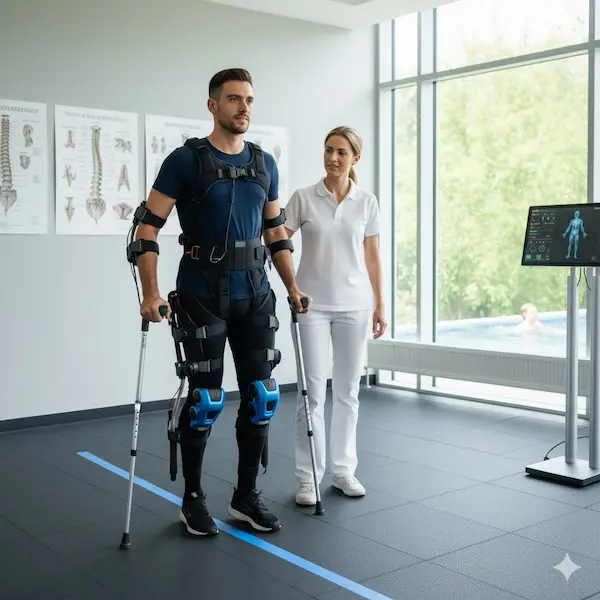
Rehabilitation after spinal injury
Rehabilitation is a treatment program designed specifically for each patient by physical therapists, according to the type of injury and his health condition. The program includes several important aspects, which are as follows:
- Reducing pain using physical therapy methods such as massage, laser, or heat therapy, which helps the patient significantly reduce pain.
- Restoring movement through special exercises to strengthen the back and abdominal muscles and improve the flexibility of the spine, so that the patient can move easily and without pain.
- Improving balance and coordination through special exercises that help reduce the risk of falls and injuries.
- Restoring strength and function through muscle strengthening exercises to restore capacity in areas affected by the injury.
- Preventing future injuries by teaching the patient the correct body positions and avoiding habits that may cause him new problems.
اقرأ ايضاً: إعادة تأهيل مرضى الحوادث لاستعادة الحركة والوظائف الحياتية
Causes of spinal injuries
The spine is the basis of movement and the ability to perform daily activities with stability and comfort. There are many reasons that may lead to spinal injuries, Among them are the following:
- Accidents and direct injuries, such as traffic accidents or falling from a height, are among the most prominent causes of vertebrae and nerve injuries.
- Sitting incorrectly for long periods, especially in front of the computer or while driving, causes muscle fatigue and disturbance in the distribution of pressure on the vertebrae.
- Lower spine problems such as spinal displacement or a herniated disc, which put pressure on the nerves and cause severe pain when moving or sitting.
- Lifting weights incorrectly. Sudden bending or excessive use of muscles may lead to tearing of ligaments or damage to the discs between the vertebrae.
- Lack of physical fitness, lack of activity, and weak muscles supporting the back make the spine more vulnerable to injury and chronic stress.
- Untreated chronic low back pain may gradually develop into more serious problems if not treated early.
- As we age, the vertebrae lose their flexibility and the cartilage weakens, which increases the possibility of injury even with simple effort.
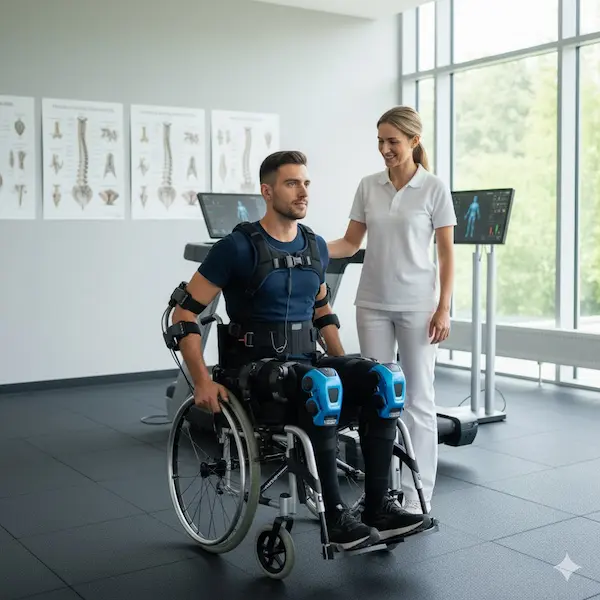
Conditions treated by the spine rehabilitation program
The rehabilitation program helps spinal injury patients deal with a range of problems that affect movement and quality of life, through therapeutic methods, The most prominent cases covered by the program are the following:
- A herniated disc causes severe pain in the back, neck, or leg as a result of the disc shifting from its place.
- A disc herniation occurs when the cartilage bulges and comes out from between the vertebrae, putting pressure on the nerves.
- Spinal stenosis leads to pain, muscle weakness, and numbness in the extremities due to limited space around the spinal cord.
- Neck and back pain are caused by factors such as muscle strain, arthritis, or inflammation of the vertebrae.
- Spinal injuries such as fractures or injuries to the spinal cord or ligaments and muscles.
- Obligatory spondylitis (an inflammatory disease that causes pain and stiffness).
- Degenerative disc disease (degeneration of the cartilage between the vertebrae).
- Scoliosis (abnormal lateral curvature of the spine).
اقرأ ايضاً: Discover the most important steps in the effective physical therapy rehabilitation process
Spine treatment and rehabilitation center
in Al Mousa Specialist Hospital We are keen to provide comprehensive rehabilitation care for patients with spinal injuries Through the following:
- Our medical team is distinguished by extensive experience and high efficiency in diagnosing and treating various spinal problems.
- We design individual rehabilitation programs for each patient according to his or her specific condition and needs.
- We rely on the latest devices and techniques in physical therapy to ensure the best results.
- We provide a safe and comfortable treatment environment that helps patients relax and feel at ease during treatment.
- Our team works with passion and belief in the importance of physical therapy in improving patients' quality of life, and does its best to provide the best care possible.
Types of spine surgeries
There are several types of surgical operations performed to treat spinal problems, and the doctor chooses the appropriate type according to the patient’s condition and the cause of the pain. The most prominent of these procedures are the following:
- Spinal fusion: Two or more vertebrae are joined together to reduce abnormal movement, which helps relieve chronic back pain caused by degenerative changes.
- Laminectomy: It is commonly used to treat lumbar spinal stenosis, in which parts of the bone or ligament are removed to relieve pressure on the nerves.
- Foraminectomy: The surgeon cuts part of the bone tissue around the vertebrae to relieve pressure and pain caused by pinched nerves.
- Discectomy: The spinal disc is partially or completely removed if it has slipped out of place and is causing pain. A surgical microscope may be used to make a small, precise incision.
- Disc replacement: The damaged disc is removed and replaced with an artificial disc to restore normal movement.
- Placing an implant between the plates: A less invasive surgical procedure than a laminectomy, a small U-shaped device is implanted between two vertebrae in the lower back to relieve pressure on the nerves.
Long-term rehabilitation of the musculoskeletal system
Injuries to the musculoskeletal system, especially those that require surgical intervention, require careful follow-up and long-term care to ensure full recovery and restoration of the ability to move. This includes the following:
- The patient needs long care after operations or injuries because full recovery takes time.
- The condition becomes more complicated if the injury causes disability or difficulty moving.
- Long-term rehabilitation programs are recommended with continuous monitoring by a qualified medical team around the clock.
- This type of care reduces the stress of travel and transportation on the patient.
- The program includes a comprehensive assessment of the patient's condition before starting treatment.
- Occupational therapy helps regain the ability to move and perform daily activities after surgery.
- Special exercise programs are designed to promote recovery and strengthen muscles.
- Careful monitoring of medications such as anti-inflammatories and painkillers to ensure safe and effective use.
Risks of spine surgery
Although spine surgeries are considered safe in most cases, some patients may face complications that appear immediately after the operation or may be delayed and appear after several months, The most prominent risks are the following:
- Complications of anesthesia may result from unexpected reactions to medications or other health conditions.
- Blood clots (thrombophlebitis) can interrupt normal blood flow and lead to a serious pulmonary embolism.
- Lung problems Anesthesia, painkillers, and prolonged bed rest may cause poor lung function, which can be improved with rehabilitation and regular exercise.
- The infection may spread from the skin incision to the tissues surrounding the spinal cord and vertebrae if not treated quickly.
- Chronic pain In some cases, the pain persists and does not improve over time, and this requires additional medical intervention.
- Breakage of surgical devices such as screws or metal rods used to stabilize the vertebrae, which may break or move during the recovery period.
- Implant migration An implant (such as an artificial disc) moves out of place before healing is complete.
- Pseudarthrosis occurs when the bone does not heal or does not fuse properly, leading to chronic pain.
- Nerve damage may cause weakness, paralysis, or chronic pain, and sometimes affects sexual function or bowel and bladder control.
اقرأ ايضاً: Aquatic physical therapy to improve mobility and relieve pain naturally
Advanced medical methods for treating spinal patients
A group of modern methods are available that help rehabilitate patients with spinal injuries and improve the functions of the muscular system. The most important of them are the following:
- Advanced electrotherapy Such as diathermy, low-level laser therapy, shockwave therapy, and electrical stimulation units to treat pain, in addition to diagnostic ultrasound examinations.
- Manual therapy and movement therapy To relieve pain and improve spinal flexibility.
- Motor function exercises It aims to restore normal movement and strengthen muscles.
- Treatment of vertebral compression Using integrated drag units to ease the pressure On the nerves.
- Dedicated therapeutic fitness room To deal with back problems and pain.
- Pilates exercises Helps improve overall fitness and balance.
- Proper posture exercises To correct the way we sit, stand and move.
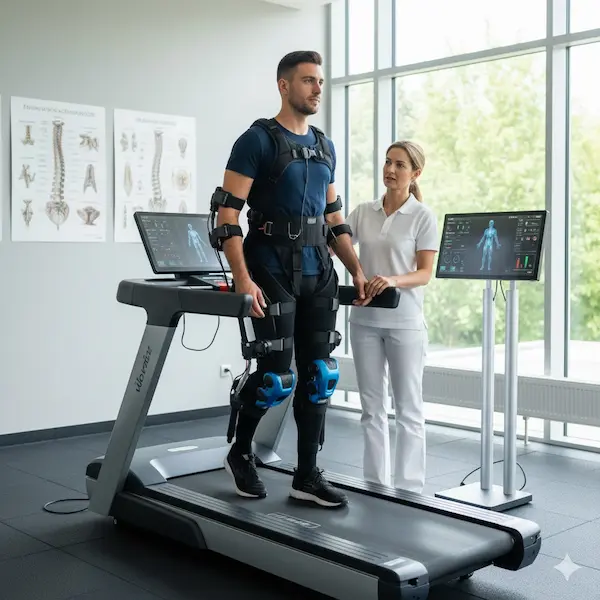
- Modern devices Such as electric walkers and water bikes to support rehabilitation.
Frequently asked questions
What are the signs of a spinal injury?
Spinal injury may appear in the form of back or neck pain, weak movement or numbness in the limbs, loss of balance or difficulty walking, and in advanced cases problems with bladder and bowel control, which requires urgent medical evaluation to avoid serious complications.
How long does it take to treat scoliosis?
The duration of treatment for scoliosis varies depending on the severity of the condition and the method of treatment. Non-surgical treatment may take several months to years, while surgery usually takes from 4 to 8 hours with a recovery period extending from weeks to several months.
What food strengthens the spine?
Foods that are beneficial for the spine include leafy vegetables, nuts and seeds, dairy products, fatty fish, legumes and whole grains, as they contain calcium, vitamin D, protein and fatty acids that strengthen bones and muscles and reduce inflammation.
How do the vertebrae return to their place?
Restoring the vertebrae may be done with physical therapy, exercises, or traction devices in simple cases, while in complex cases, doctors resort to surgery to stabilize the vertebrae with plates and screws to restore stability.
Rehabilitation of patients with spinal injuries is an essential step to regain movement, reduce pain, and return to their normal lives safely. Al Mousa Specialist Hospital offers advanced treatment programs and comprehensive rehabilitation services under the supervision of a specialized medical team. This guarantees the best results in the recovery journey. For inquiries or to book an appointment, you can Communicate with the hospital Through the official channels available to them to obtain appropriate support and care.
