
Do you know what interventional radiotherapy is?
This is because these rays enable doctors to reach the most precise points of pain and disease within the patient’s body, without the need for extensive surgery.
So if you want to know all the details about interventional radiology, and what conditions it treats, follow this article with me.
What is interventional radiotherapy?
Interventional radiology is also known as image-guided surgery, where doctors use medical imaging to look inside a patient's body and perform minimally invasive surgical procedures that diagnose, treat, and cure a variety of conditions.
The imaging methods used include the following:
1.X-rays.
2. Fluoroscopy.
3. Magnetic resonance imaging.
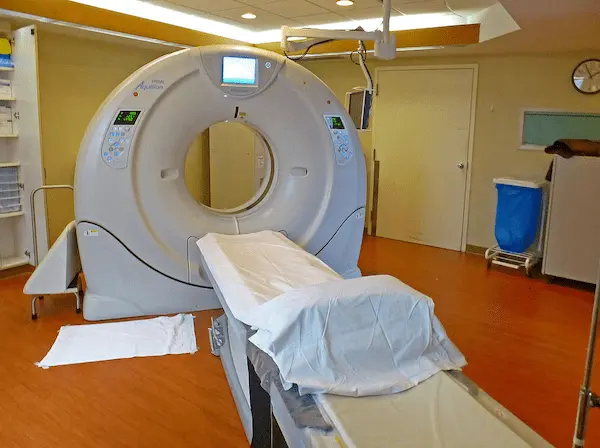
4.Computed tomography.
5.Ultrasound.
Doctors make small incisions, usually in the abdomen, to insert needles, wires, and catheters and guide them with the help of medical images into the organs and arteries.
Most surgical operations can be performed under local anesthesia or sedation, but complex cases may require general anesthesia.
Why is interventional radiology the best choice for patients?
Interventional radiology has many benefits, such as: –
- Less expensive.
- Provides minimally invasive surgeries.
- Contains fewer risks.
- More effective compared to traditional surgery.
- Less pain.
- Direct treatments precisely.
- It requires a much shorter recovery period compared to traditional surgeries.
- Reduces the need for major surgical interventions.
Therefore, interventional radiation therapy is a powerful and ideal option, and aims to enhance patient safety and achieve the best results, with the least recovery period.
How does interventional radiotherapy work?
Interventional radiotherapy involves inserting a needle into the patient's body, using ultrasound or computed tomography.
Then doctors direct a wire or catheter through that needle to the area to be diagnosed and treated.
Procedures that doctors may perform using interventional radiology include the following: –
- Angiography: –
It is an X-ray scan to detect blockages or narrowing of the arteries and blood vessels.
2. Vascular catheterization: –
The doctor inserts a small catheter with a balloon tip into the blocked blood vessel, then inflates the balloon.
3. Obstruction: –
The doctor inserts a substance through a catheter into a blood vessel, in order to prevent blood flow to specific areas, such as bleeding areas and cancer cells.
4. Gastrostomy tubes: –
Inserting a feeding tube into the stomach, if the patient cannot eat orally.
5. Installation Heart stent: –
Placement of a small mesh tube to treat narrow and weak arteries.
6. Removal of foreign bodies: –
Inserting a catheter into a blood vessel;
7. Radiation ablation: –
It is used to relieve nerve pain.
8. Discharge procedures: –
To remove accumulated fluids from different parts of the body.
9. Intravascular ultrasound: –
To see the blood vessels from the inside, in order to detect problems.
10. Biopsies: –
Using imaging methods, the doctor inserts a small needle into any part of the body to take a tissue biopsy for examination.
Book your appointment now with قسم الأشعة For details and treatment options with interventional radiology
An example of this procedure is a needle breast biopsy.
- Cancer treatment: –
The doctor gives medicine السرطان Directly at the tumor site.
2. Catheter insertion: –
The doctor inserts a tube into a large vein to administer chemotherapy, nutrition, or dialysis drugs.
3. Inferior vena cava filters: –
Inserting a small filter into the inferior vena cava (a large vein in the abdomen) to catch blood clots that may travel to the lungs.
The most prominent cases treated by interventional radiology
Your doctor may advise you to undergo interventional radiology to treat the following cases: –
- السرطان.
- دوالي الخصية.
- Uterine fibroids.
- Blocking blood flow to the enlarged prostate;
- Deep vein thrombosis.
- Lymphatic system disorders in adults.
- Peripheral arterial disease.
- Complications of high blood pressure in the veins feeding the liver (portal vein), by performing a hepatic portal vein shunt through the jugular vein.
- Tumor resection.
- Varicose veins Legs.
- Various back pain, such as degenerative disc, narrowing of the spinal canal.
- Joint or tendon pain.
What is the difference between traditional surgery and interventional radiology?
The main differences between interventional radiology and conventional surgery are in the following table: –
| Interventional radiology | Conventional surgery | |
| التدخل الجراحي | Minimally invasive | Open surgery |
| Recovery time | From one to three days | Weeks |
| Anesthesia | topical | General anesthesia |
| Scars | Minor | Bigger scars |
| Length of stay in hospital | It often comes out on the same day | Stay several days |
| Risks | less | higher |
| Cost | less | higher |
When should you resort to interventional radiology treatment?
Interventional radiotherapy may be useful for the following: –
- For people looking for alternatives to surgery.
- Surgery was ineffective or undesirable.
- Those who cannot afford major surgery, due to underlying health conditions.
- Patients with: –
- Vascular disorders.
- Chronic pain.
- Non-cancerous tumors.
Tips after undergoing interventional radiology treatment
The doctor may advise you on some important instructions after completing interventional radiology treatment, in order to obtain the best and fastest results, including the following: –
- Ensure that the food and drink you choose during the recovery period nourishes your body and contributes to its rapid and complete recovery.
- Avoid foods containing sugar, salt, processed foods, and drinks high in caffeine, to relieve discomfort.
- Make sure to attend all your appointments after surgery.
- Keep your body hydrated by drinking plenty of pure water.
- Quit smoking.
- Keep the operation site clean and dry.
- Use over-the-counter pain relievers, such as acetaminophen or ibuprofen.
- Apply ice compresses to the treated area;
- Do not engage in strenuous activities, lift weights, or stand for long periods for a few days.
- You should walk and do light activities to enhance blood circulation and prevent complications, such as blood clots.
Frequently asked questions about interventional radiology
If your doctor advises you to undergo an interventional radiology procedure, you may have many questions in mind, such as: –
How long do interventional x-rays take?
Simple procedures may take only 15 minutes, but most interventional radiology procedures take about an hour.
Does interventional radiology require anesthesia?
Interventional radiotherapy is performed under local anesthesia or sedation, but more complex cases may require general anesthesia.
Is it necessary to fast before interventional radiology?
Yes, the patient may be asked to fast for a certain period of time, depending on the nature of the procedure and the area to be examined.
In conclusion, I now understand, dear reader, what is interventional radiotherapy?
We also answered some questions that might be on your mind regarding these rays.
المصادر الطبية:
What is Interventional Radiology – radiology
Interventional Radiology – hopkinsmedicine
