
The coronary artery is one of the most prominent arteries in the heart, as it transports oxygen-laden blood from the aorta to the heart muscle. In the event of coronary artery disease, the heart is unable to do its work efficiently, which leads to many health problems. How can this artery become infected with the disease?
Definition of coronary artery disease
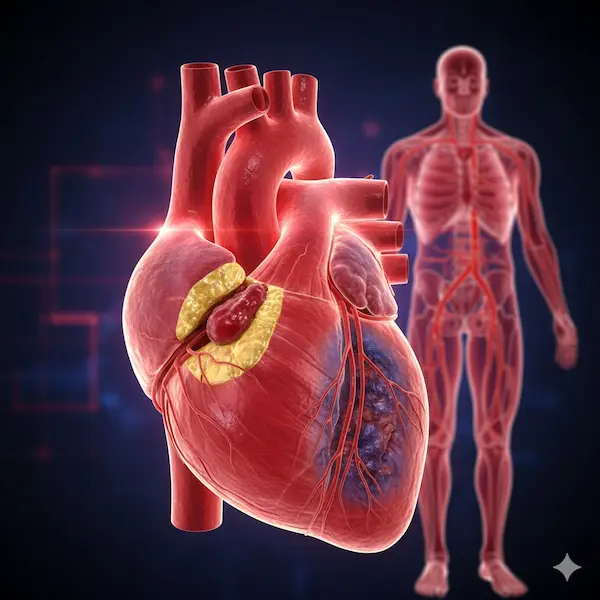
Coronary heart disease can be described as the accumulation of fat inside the artery until a condition known as atherosclerosis occurs. Over the years, the artery narrows more, preventing the flow of oxygen-rich blood to the heart muscle, and leading to many problems that affect the heart and affect the body in general.
What are the symptoms of coronary heart disease?
There are a number of symptoms that indicate a problem or disease in the coronary artery, ومن أبرزها:
- Feeling a pressing pain in the chest, in the middle or to the left. This occurs when exerting effort, being exposed to cold, or psychological stress.
- Episodes of shortness of breath, which initially occur with usual activities, and progress until they appear even during periods of rest.
- A general feeling of fatigue, even with light, non-strenuous activities.
- Feeling the symptoms of a heart attack, which include severe chest pain that extends to the left arm, sudden and severe sweating, dizziness or fainting.
اقرأ ايضاً: دليل شامل لكيفية تعزيز صحة القلب
Pattern of coronary heart disease
When coronary artery disease occurs, the disease goes through five stages of development and reaches an advanced state. These stages are as follows:
1. Changes in the inner lining:
At this stage, the artery becomes internally damaged due to existing risk factors such as high cholesterol levels, smoking, etc. As a result, the lining loses some of its functions, and is unable to control the expansion of blood vessels, resist fat deposition, or prevent inflammation.
2. Fat accumulation:
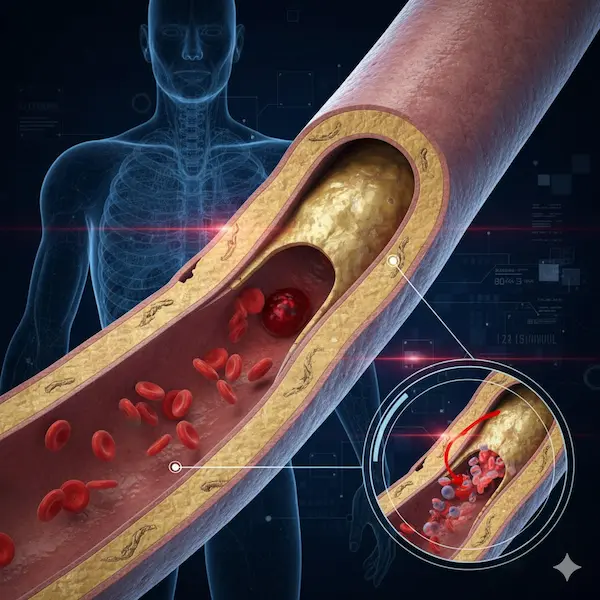
It is the second stage of the development of the disease, where fatty layers accumulate in small quantities, mixed with some immune cells and cholesterol. This stage may last for many years, but the artery begins to gradually harden during it.
3. Plaque formation:
Layers of fat continue to accumulate, especially if the disease is not detected and no attempt is made to change the lifestyle or obtain treatment. At this time, a fibrous cap forms over the fatty core of the artery, and it begins to narrow, leading to the appearance of disease symptoms when exerting effort such as carrying something heavy, climbing the stairs, or running.
4. Sclerosis and change in the structure of the artery:
The fatty plaques in the artery calcify and harden, and the coronary artery begins to expand to allow blood to flow, but it reaches extreme limits at which it stops expanding, which leads to a decrease in blood flow to the heart, and at this stage treatment becomes more difficult.
5. Severe complications:
At this stage, the condition becomes dangerous due to the narrowing of the blood vessel. There are high chances of a clot occurring inside the artery, causing its sudden blockage, and a sudden heart attack or angina pectoris occurs.
6. Chronic complications:
In these cases, the heart depends on the coronary collateral circulation, which are small blood vessels that remain inactive until a blockage occurs in one of the arteries, at which time they expand to provide alternative pathways and maintain blood flow to the heart to compensate for the amount lost due to the blockage.
However, despite this, the perfusion provided by the collateral coronary circulation remains insufficient and does not supply the heart with the required amount of blood, which leads to poor functional performance of the heart and the appearance of more severe symptoms such as shortness of breath and swelling. Ultimately, the heart may fail and death occurs as a result of neglecting treatment.
What are the most important coronary artery diseases?
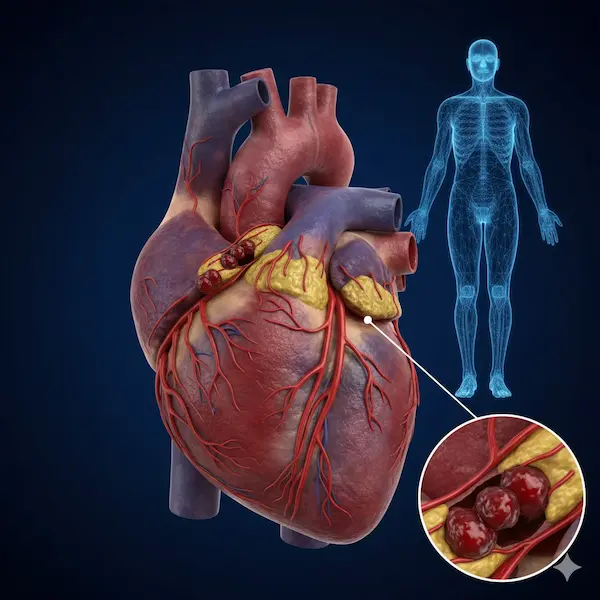
Although coronary artery obstruction due to fat is a very common condition, this is not the only disease that affects the coronary arteries. There are other diseases that cause myocardial ischemia and damage, It includes the following:
- Coronary artery spasm: Where a state of sudden contraction occurs in the heart, which leads to constriction and blood not passing to the heart, and causes myocardial infarction or angina pectoris.
- Rupture of the artery wallIn this case, a separation occurs between the layers of the artery wall, causing a blood pocket to form inside it, thus preventing normal blood flow, and the victim is exposed to a clot or internal bleeding.
- VasculitisWhen it affects the coronary arteries, it causes their walls to swell and become inflamed, which prevents the passage of blood in the required quantities and may lead to the rupture of the artery. This occurs due to immune diseases, infections, or taking some medications.
- Disorder of the inner lining of the artery: It indicates the inability of the lining to perform its functions in the required manner, which leads to a higher chance of fatty accumulation, clots, or even spasms in the artery, and ultimately leads to a heart attack or myocardial infarction.
- ClotsAlthough it is rare, it may occur and cause an artery blockage and a heart attack.
- Chronic diseasesHigh blood pressure, diabetes, and autoimmune diseases may cause recurrent inflammation of the artery and affect its performance of its functions.
اقرأ ايضاً: Heart valve disease causes, symptoms and treatment
What are the causes of narrowing of the coronary arteries?
It is clear to us from the above that most coronary heart diseases result from their blockage and inability to pass blood to the heart sufficiently, and this occurs due to many factors, Among them:
- Eating foods containing harmful cholesterol in large quantities or frequently.
- Untreated high blood pressure.
- Smoking and drinking alcohol.
- Lack of control of diabetes.
- Weight gain and obesity.
- Laziness and lack of daily physical activity.
- Constant exposure to stress.
- The presence of genetic factors and a family history of heart disease.
How common is coronary artery disease?
Coronary heart disease is one of the most common heart diseases in the world, with the number of people infected with it in 2022 reaching about 315 million people, and it is the first cause of premature death in 146 countries for males and 98 countries for females.
Numerous studies have confirmed that one in every 12 people lives with a cardiovascular disease, the most prominent of which is coronary heart disease.
Who gets coronary artery disease?
Studies indicate that males are more susceptible to infection, and the chances of the disease appearing increase after the age of 45 years, especially when there is a genetic predisposition.
اقرأ ايضاً: أعراض أمراض القلب التاجية وطرق التشخيص والعلاج
How are coronary artery problems diagnosed?
There are various tests and methods for diagnosing coronary heart disease, all of which aim to determine whether there is a blockage, narrowing, or other problems in the artery, and how severe they are. The most important of these methods are the following:
- Initial examinationIt includes identifying the patient’s symptoms, then asking him about risk factors such as lifestyle, smoking, family medical history, etc.
- الفحص السريري: It includes detecting, listening to, and examining the heartbeat, while tracking any evidence of a heart problem or sign of its weakness.
- Conducting laboratory tests and blood testsIt includes measuring blood cholesterol levels, sugar levels, and other tests that may indicate the presence of inflammation or damage to the heart muscle.
- Electrocardiogram (ECG): To measure the level of electrical activity of the heart.
- echo (ultrasound): Through it, the movement of the heart wall can be seen and its functional performance can be judged.
- Determining the level of calcium in the coronary arteries: To ensure that there is no calcification or hardening in it.
- CT scan: To detect atherosclerosis and blockages in the artery.
- Imaging using a catheter or dye.
- Magnetic resonance imaging.
Coronary artery treatment
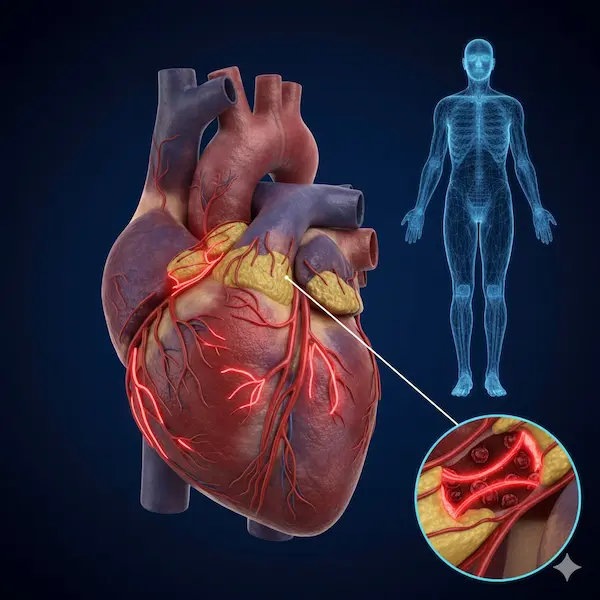
Although some cases require surgical intervention to treat the problem, most cases need to be treated through a combination of different treatment methods, Includes the following:
Lifestyle changes
You must avoid everything that causes harm, such as smoking, laziness, and inactivity, while making sure to perform physical activities on a daily basis. The diet must also be healthy and not contain fats, cholesterol, or sugars to protect against their accumulation in the arteries. If there are chronic diseases, they must be controlled efficiently.
pharmaceutical
The doctor prescribes it to improve blood flow to the heart. ومن أبرزها:
- Antiplatelet agents and blood thinners.
- Anticoagulants.
- Drugs that reduce cholesterol.
- Medicines that relieve heart stress.
- Arterial dilators.
Procedures and surgeries
If the doctor finds that the artery is too narrow, It intervenes in one of the following two ways:
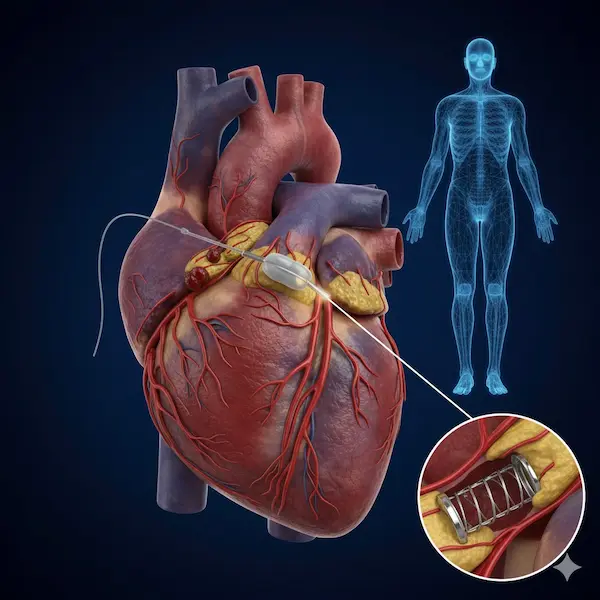
- Interventional catheter: In this, a balloon is passed to the site of the blockage to expand it, and then a stent is installed to allow blood to pass through it.
- Bypass surgery: In which the blood is diverted to another bloodstream, and this procedure is taken in certain cases.
اقرأ ايضاً: علاج انسداد شرايين القلب.. الأنواع والأعراض وتغيرات الحياة
Tips for living with coronary artery disease
In order to maintain a healthy heart and healthy arteries, or try to reduce the risk of coronary artery disease, start by improving the quality of food, making it more diverse, and staying away from harmful fats.
You should also practice sports activities without stress, and completely stay away from... التدخين Of all kinds, it is also important to keep track of your health condition and control chronic diseases effectively.
Frequently asked questions about coronary artery disease
Find out more information about coronary artery by answering the questions below.
What foods help me avoid coronary heart disease?
Vegetables, fruits, fish with healthy fats, and legumes.
Where is the coronary artery located?
There are two coronary arteries of the heart that take their location and originate from the aortic trunk, and then pass through superficial grooves on the heart until they completely wrap around it to supply it with blood.
Can coronary artery disease be cured?
Final recovery is not achieved in the usual way, but the progression of the disease can be slowed down and controlled to prevent the situation from worsening and you can live normally.
ختامًا The coronary artery is the lifeline of the heart and then the rest of the body, so if you feel any symptoms that may indicate a problem, contact us immediately at Al Mousa Specialist Hospital To get advanced care with professional hands.
