
Stretch marks are common skin changes that appear as a result of the skin being exposed to sudden stretching that exceeds its ability to adapt. They often occur during certain periods, such as pregnancy, puberty, or when gaining or losing weight quickly. They may also appear as a result of intense exercise that leads to muscle hypertrophy. These marks take the form of thin lines of varying color that appear in different areas of the body, the most important of which are the abdomen, thighs, breasts, and buttocks. Although they do not pose a health risk, many people are looking for ways to reduce their appearance due to the aesthetic discomfort they cause.
What are stretch marks?
Stretch marks are fine lines that appear on the surface of the skin and resemble cracks or long lines. Their color usually starts out red or purple and then changes over time to become white or silver.
Causes of stretch marks
Stretch marks appear as a result of several reasons that lead to the skin stretching beyond its ability to adapt, causing the elastic fibers in its deep layers to rupture. The most important of these reasons are the following:
- Pregnancy: During pregnancy, the skin expands rapidly as the fetus grows, leading to the appearance of stretch marks, especially in the abdomen and breasts.
- Rapid growth in adulthood: During adolescence, rapid growth may occur in the body, leading to skin expansion and the appearance of marks, especially in males in the shoulder and back area, and in females in the pelvic and chest area.
- Rapid weight gain or loss: Rapid changes in weight lead to rapid expansion or contraction of the skin.
- Prolonged use of corticosteroids: Continuous use of creams or lotions containing corticosteroids can reduce collagen levels in the skin, making it less elastic and more susceptible to stretch marks.
- Genetic factors: Having a family history of stretch marks increases the likelihood of their appearance.
- Certain medical conditions: Certain health conditions, such as Cushing's syndrome and Marfan syndrome, can increase the risk of stretch marks due to their effect on skin elasticity and collagen production.
- Doing bodybuilding exercises: Increasing muscle mass quickly may lead to skin stretching and the appearance of these marks.
- Dry skin: Skin loss of elasticity due to dehydration may contribute to the appearance of stretch marks.
- Smoking: Smoking reduces blood flow to the skin and affects collagen production, which may increase the likelihood of stretch marks.
What are the symptoms of stretch marks?
Symptoms of stretch marks vary depending on the stage of their development, and are as follows:
- Early stage (recent signs): In this stage, the signs appear in pink, red, purple, blue, or black, and may be slightly protruding from the surface of the skin, and the person may feel itching or irritation in the affected area.
- Advanced stage (old marks): Over time, the color of the marks changes to white or silver, and they become less prominent and have a different texture from the surrounding skin. These lines may become slightly lower than the surface of the skin.
Stretch marks often appear in areas of the body that are subject to rapid stretching, such as the abdomen, breasts, hips, buttocks, and thighs. Although these marks do not cause pain or health problems, some may feel uncomfortable because of their appearance.
Find out if it is practical نحت الجسم Painful?
Methods of treating stretch marks
There are several ways to treat marks, and their effectiveness varies based on the age of the marks and skin type. The most important of these methods are the following:
Medical treatments:
- Laser treatment: Lasers are used to stimulate the production of collagen and elastin in the skin, which helps improve its appearance. The types of lasers used vary, such as fractional carbon dioxide laser and excimer laser.
- Chemical peeling: involves using acids such as glycolic acid to remove the outer layer of skin, promoting the growth of new, healthier skin.
- Microneedling (micro-needling): Tiny needles are used to make small punctures in the skin, stimulating the natural healing process and the production of collagen and elastin.
العلاجات الموضعية:
- Retinoid creams: They contain substances derived from vitamin A, and help enhance collagen production and improve skin elasticity. They should be used under medical supervision, especially for pregnant women.
- Creams containing hyaluronic acid: contribute to moisturizing the skin and increasing its elasticity, which may reduce the appearance of marks.
Natural remedies:
- Cocoa Butter: It is used to moisturize the skin and may help reduce the appearance of stretch marks when used regularly.
- Aloe vera gel: Known for its soothing and rejuvenating properties, it can help improve the appearance of the skin.
- Coconut oil: It is considered a natural moisturizer and may help reduce the appearance of marks when massaged regularly on the affected areas.
Lifestyle changes:
- Follow a healthy diet: rich in vitamins and minerals such as vitamin C, E and zinc, supports skin health and elasticity.
- Drink sufficient amounts of water: to maintain skin hydration and elasticity.
- Regular exercise: improves blood circulation and promotes skin health.
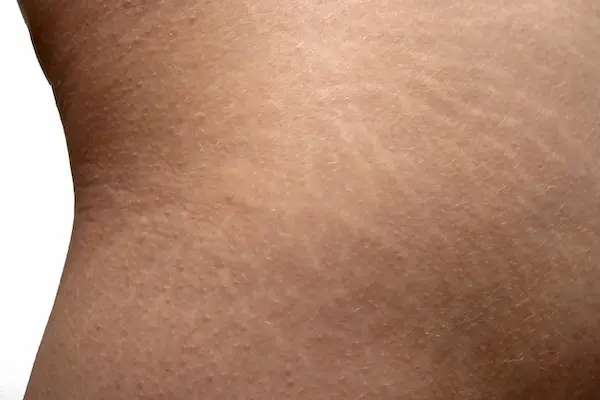
Types of stretch marks
The types of stretch marks vary based on their color and stages of development, and can be classified into two main types, which are as follows:
Red stretch marks:
- Color and appearance: These marks are red, pink, purple, blue, or black, due to the presence of blood vessels that appear through cracks in the dermis layer of the skin.
- Texture: It may be slightly protruding from the surface of the skin, and the person may feel itching or irritation in the affected area.
- Treatability: This stage is considered the most responsive to treatments, as retinoid creams or laser treatment can be used to stimulate collagen production and improve the appearance of the skin.
White stretch marks:
- Color and appearance: Over time, the marks change color to white or silver, become less noticeable and have a different texture than the surrounding skin.
- Texture: It may be slightly below the surface of the skin and appear as fine lines.
- Treatability: These marks are less responsive to treatments than red marks, but some procedures such as chemical peels or fractional laser treatments can help improve their appearance.
Book your consultation now at مركز الجلدية والتجميل At Al Mousa Specialist Hospital.
Tips to prevent stretch marks
To help prevent the appearance of these signs, you can follow the following tips:
- Maintaining a healthy and stable weight: Avoiding rapid weight gain or loss helps reduce the possibility of skin stretching and the appearance of marks.
- Follow a balanced diet: Eating foods rich in vitamins and minerals, especially vitamins A, C, and D, in addition to zinc, supports skin health and elasticity.
- Moisturizing the skin regularly: Using moisturizing creams or oils, especially those containing hyaluronic acid or vitamin E, helps maintain skin elasticity.
- Drink sufficient amounts of water: Keeping the body hydrated enhances skin health and elasticity, which reduces the risk of its appearance.
- Exercising regularly: Physical activity promotes blood circulation and improves overall skin health.
- Avoid excessive use of corticosteroids: Prolonged use of creams or lotions containing corticosteroids may reduce collagen levels in the skin, increasing the risk of stretch marks.
Frequently asked questions
Is it possible for stretch marks to disappear?
Stretch marks do not disappear completely, but they often fade and become less noticeable over time, even without treatment. Some treatments, such as retinoid creams and laser treatment, also help improve their appearance, but they do not completely remove them. Over the years, these marks may become almost unnoticeable, but they remain permanently present.
When do stretch marks appear on the body?
Stretch marks usually appear during periods of rapid growth or sudden physical changes during puberty. Rapid growth may lead to their appearance in adolescents, and during pregnancy they are often observed in the third trimester due to the expansion of the abdomen and breasts. They can also appear as a result of rapid weight gain or loss or due to some medical conditions.
Do stretch marks disappear after losing weight?
Stretch marks do not disappear completely after losing weight, but they may gradually decrease and become less visible over time. Some treatments, such as topical creams and laser treatment, help improve their appearance, but do not remove them completely.
In conclusion, stretch marks are not a serious skin disease, but they are one of the common problems that many people experience at different stages of their lives, and although they may cause discomfort in appearance, understanding their causes and ways to prevent them greatly helps in reducing their appearance, and advances in skin care methods and modern treatments provide effective solutions to improve their appearance, so it is important to pay attention to skin health, continuous hydration, and follow a balanced lifestyle to maintain skin elasticity and prevent any unwanted changes. Al Mousa Health Hospital offers the best treatment programs to treat this stretch marks with the best hands.
Sources and references
Stretch marks – nhs
Stretch Marks – kidshealth