
Treating varicocele is one of the common problems that affect the male reproductive system. It affects a large percentage of men, especially in youth. It occurs as a result of abnormal expansion of the veins surrounding the testicle, which leads to poor blood flow and high temperature in the affected area, which may affect sperm production and quality and sometimes lead to delayed childbearing. Although some cases do not require immediate treatment, the presence of disturbing symptoms or an impact on fertility requires appropriate medical intervention. There are multiple treatment options for varicocele, including surgery, catheterization, and follow-up.
What is the treatment for varicocele?
Varicocele is a common condition that affects many men, especially young men, and may cause problems such as pain or poor fertility, so it is important to know the methods of treating it, which include the following:
- Varicocele treatment begins with accurate diagnosis through a clinical examination by a specialist doctor and performing a vascular Doppler imaging to determine the size and severity of the varicocele.
- In simple cases that do not cause symptoms or fertility problems, the doctor may suffice with periodic follow-up without therapeutic intervention.
- If varicose veins cause persistent pain, poor fertility, or a difference in testicle size, surgical treatment is recommended.
- Traditional surgery involves tying off the affected veins to prevent blood backflow, improve blood flow to the testicle and reduce pressure on it.
- There are modern techniques such as thermal frequency therapy or laser, where the affected veins are closed with a precise device without the need for open surgery.
- These modern techniques provide faster recovery and less pain after treatment.
- The doctor may prescribe medications to relieve pain or improve blood flow, but medications alone do not treat varicocele.
- Continuous follow-up with a doctor is necessary to avoid complications such as testicular atrophy or deterioration of fertility.
- Choosing the type of varicocele treatment depends on the severity of symptoms, the patient's general health condition, and his or her specific needs.
- You must consult a specialist doctor to evaluate the condition and develop an appropriate treatment plan for each individual case.
Varicocele complications
Varicocele may seem at first to be a simple condition that does not cause concern, but neglecting it or delaying treatment of varicocele may lead to health complications that directly affect testicular function and reproductive ability, so it is important to know these complications in detail in order to make the appropriate medical decision at the right time:
- Poor fertility, as varicocele affects sperm production in terms of number, movement, and shape, which reduces the chances of pregnancy occurring naturally.
- Testicular atrophy occurs as a result of tissues being affected by poor blood flow and high temperature around the testicle, which leads to its size shrinking over time.
- Feeling constant or recurring pain. The pain may be mild at first and then gradually increase, especially when standing for long periods or exerting physical effort.
- Disturbances in the level of male hormones, such as testosterone, due to testicular functions being affected by the presence of varicose veins, which may affect general health and sexual ability.
- A negative psychological impact resulting from constant anxiety about delayed childbearing or feelings of discomfort and chronic pain, which affects life and self-confidence.
- The possibility of additional complications such as infections in the affected veins or blood accumulation in the scrotum in some rare cases.
- Gradual deterioration of testicular function if varicocele is not treated in time, which may lead to permanent loss of the ability to produce sperm normally.
Read also: Causes of varicocele Causes and how to diagnose
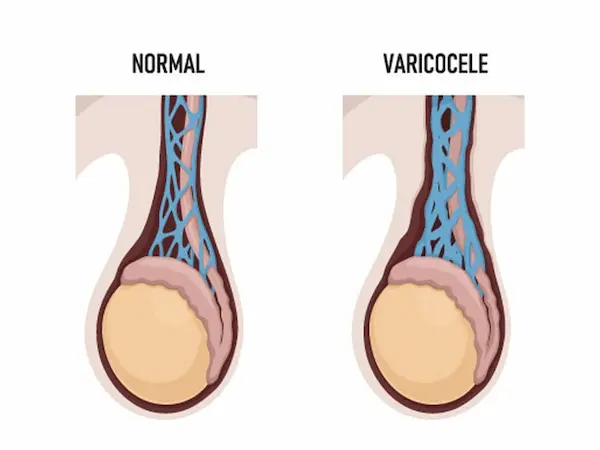
How to prevent varicocele
Preventing varicocele is not completely guaranteed because there are factors beyond one’s control, such as genetic factors or defects in the vein valves, but the chances of developing it can be reduced or its development can be limited by following a set of health guidelines that help maintain the health of blood vessels and improve blood flow in the pelvic area and testicles, which are:
- Maintain a healthy weight, as excessive obesity increases pressure on the blood vessels in the abdominal and pelvic area, which may obstruct blood flow and increase the possibility of varicocele.
- Avoid standing for long periods of time because continuous standing leads to blood pooling in the veins of the lower body, which may contribute to the appearance of varicose veins.
- Do moderate exercise regularly because physical activity helps stimulate blood circulation and strengthen the walls of blood vessels, while avoiding strenuous exercises that increase pressure on the abdomen.
- Refrain from lifting heavy weights frequently or suddenly, as this raises the pressure inside the abdomen and may negatively affect the functioning of the vein valves.
- Wear comfortable, non-tight underwear so as not to put pressure on the thighs and pelvis area, which may hinder normal blood flow.
- Regular medical follow-up, especially if there is a family history of varicocele, in order to detect any early changes and limit their development.
- Make sure to eat a balanced diet rich in fiber to avoid chronic constipation, which leads to increased pressure inside the veins.
- Avoid smoking because it weakens the walls of blood vessels and affects their efficiency, which may increase the chances of varicose veins appearing.
What are the treatment options for varicocele?
Treatment for varicocele varies from one person to another depending on the severity of the condition and the symptoms accompanying it. In some cases, treatment is not necessary if the varicocele does not cause pain or affect fertility, but if there are clear symptoms or a negative effect on testicular function, the doctor chooses from several treatment options according to the careful evaluation of the condition. Below is a detailed explanation of the most important treatment options for varicocele:
- Follow-up without therapeutic intervention: In some cases, varicose veins are simple and do not cause pain or complications and do not affect fertility. In this case, the doctor is satisfied with monitoring the condition periodically without the need for any intervention.
- Drug treatment: There are no medications capable of treating varicocele permanently, but some medications may be used to relieve symptoms, such as painkillers, anti-inflammatory drugs, or nutritional supplements to improve sperm condition, as directed by the doctor.
- Traditional surgery (varicocele ligation): This is the most common method and is performed under general or local anesthesia, in which the affected veins are tied to stop abnormal blood flow and the blood is redirected through healthy veins. Surgery can be performed through several techniques, including open surgery and laparoscopic surgery. This method is effective and helps improve fertility and reduce pain, but it requires a short recovery period.
- Catheter embolization: It is a non-surgical technique performed by inserting a thin tube (catheter) through a vein, usually in the thigh or neck, and directing it to the affected vein. Then, a substance is inserted that works to close the damaged vein, stopping the reflux of blood. This method is characterized by being less painful and does not require a surgical incision, and the patient is often able to return to his normal life quickly.
- Laser or thermal frequency therapy: modern techniques that rely on inserting precise instruments through the skin to close the affected vein, using thermal or light energy. It is similar to a catheter and is used in some advanced centers and requires careful evaluation by the doctor.
Book your consultation now at قسم المسالك البولیة At Al Mousa Specialist Hospital.
Frequently asked questions about varicocele treatment
How do I get rid of varicocele naturally?
There is no natural treatment for varicocele that completely eliminates varicocele, but the symptoms can be alleviated and the condition can be improved by reducing weight, doing light exercise to improve blood circulation, avoiding standing or sitting for long periods of time, lifting weights, following a diet rich in fiber, to avoid constipation, wearing comfortable underwear, and periodic medical follow-up is necessary to monitor the condition and avoid complications.
Can varicocele be cured without surgery?
In some simple cases, varicocele can be controlled without surgery through regular monitoring and lifestyle changes, such as reducing weight, avoiding prolonged standing, and doing moderate exercise. Some medications may help relieve symptoms, but varicocele cannot be completely removed except with surgical intervention or catheterization, so medical follow-up is necessary to determine what is most appropriate for each case.
Does varicocele heal on its own?
Varicocele does not heal on its own. It is often a chronic condition that requires continuous medical follow-up. In some cases, it may remain stable without development or symptoms, but it rarely disappears on its own without intervention. Therefore, it is advised not to neglect it even if the symptoms are mild, because neglect may lead to complications that affect fertility and testicular health.
In conclusion, we have mentioned the treatment of varicocele in detail. Varicocele is considered one of the conditions that should not be neglected, especially if clear symptoms appear or reproductive performance is affected. Although it does not pose a direct threat to life, dealing with it early and choosing the appropriate treatment under medical supervision contributes to preserving testicular health and improving reproductive opportunities. Therefore, it is necessary to continue monitoring and making the appropriate treatment decision according to each case.
Medical references
What is a varicocele – clevelandclinic
Varicocele – mayoclinic