
If we imagine that your body is waging an internal war, but without a clear enemy, then this is the most accurate description of the condition of sarcoidosis patients, as small clusters of inflammatory cells form in any organ in the body, causing mysterious and confusing symptoms. Therefore, doctors sometimes call it inflammation without a cause because its origins are still unknown, which makes the diagnosis journey more like a complex medical mystery. Follow this article with us. We will go on a journey to delve deeper into the mysterious disease sarcoidosis and how doctors at Al Mousa Specialist Hospital arrive at the correct diagnosis through a series of precise examinations.
What is sarcoidosis?
It is one of the chronic diseases and is an inflammatory disease characterized by the formation of granulomas, which are small masses of inflammatory cells in multiple organs of the body. These tumors are not cancerous, but they can affect the function of the affected organ.
It is worth noting that sarcoidosis is not a contagious disease. It affects women more than men. The most common organs affected by sarcoidosis are the lungs, lymph nodes, skin, and eyes, and symptoms vary between patients.
Causes of sarcoidosis
The causes of sarcoidosis are still not completely known, but it is believed to result from an abnormal reaction of the immune system to environmental, genetic, or infectious factors, which leads to the formation of granulomas in various organs of the body. The most prominent possible factors are:
- Abnormal immune response, where the immune system attacks the body's tissues by mistake, causing inflammation and the formation of granulomas, and therefore an increase in the level of some immune cells such as T-cells and macrophages is observed in the affected areas.
- Genetic factors: In some cases, family history indicates a genetic predisposition, as some genes, such as the HLA-DRB1 genes, have been linked to an increased risk of infection.
- Infection, where it is suspected that certain microbes such as Mycobacterium tuberculosis or viruses such as herpes virus may trigger the disease in genetically predisposed people.
- Exposure to chemicals or dust, such as silica or aluminum dust.
- Exposure to mold or organic matter in rare cases.
Risk factors for sarcoidosis
Since the exact cause of sarcoidosis is still unknown, researchers are focusing on identifying risk factors that may increase the likelihood of developing it. These factors do not directly cause the disease, but they may increase a person’s susceptibility to developing it when exposed to certain triggers, including:
- Age. Sarcoidosis is most common among adults between the ages of 20 and 60.
- Gender: Some studies indicate that women are more likely to develop sarcoidosis than men.
- Ethnicity: Sarcoidosis affects some ethnic groups more than others, with people of African and Northern European ancestry being more susceptible.
- Family history, such as having a first-degree relative with sarcoidosis, makes your risk of developing the disease higher.
- Environmental and occupational exposure to certain substances in the environment, especially in people with a genetic predisposition, such as exposure to dust and chemicals or in professions such as firefighters.
- Exposure to metallic materials, such as beryllium.
Learn about: The latest treatment for autoimmune diseases
Symptoms of sarcoidosis
Sarcoidosis affects any organ in the body, leading to a variety of symptoms that vary depending on the affected organ as well as the severity of the disease. Some patients do not show clear symptoms, while others suffer from serious complications. Symptoms include the following:
- Extreme fatigue and exhaustion.
- Unexplained weight loss.
- Fever or high temperature.
- Swollen lymph nodes, especially in the chest and neck.
- Symptoms of lung infection, which represent 90% of cases, include persistent dry cough, shortness of breath, and chest pain.
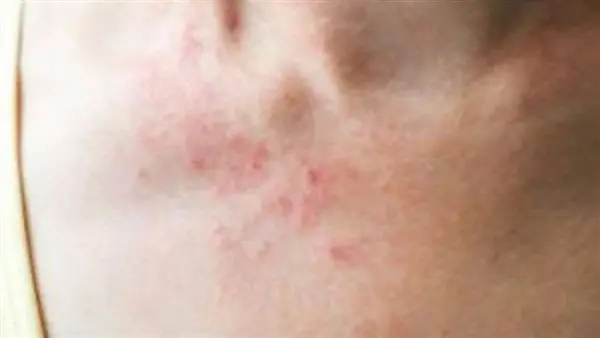
- Symptoms of skin infection, which represent 25% of cases, include a skin rash consisting of red or purple nodules, especially on the legs, dark spots or scars on the face or arms, and sensitivity to light or a rash on the nose and cheeks.
- Symptoms of eye infection, which represent 20-30% of cases, are eye inflammation, blurred vision, sensitivity to light, dry eyes, or increased tears and loss of vision due to iritis in severe cases.
- Symptoms of heart injury, which represent 5-10% of cases, include irregular heartbeat, chest pain similar to angina, and heart failure in advanced cases.
- Symptoms of liver and spleen involvement, which is common among cases but is often asymptomatic or pain in the upper right part of the abdomen, with enlargement of the liver or spleen detected on medical examination.
- Injury to the nervous system, which are rare but serious cases. Symptoms appear in the form of severe headaches, dizziness, and epileptic seizures if the brain is affected, and weakness or numbness in the extremities if the nerves are affected.
- Injury to the joints and muscles is a common condition, and symptoms include joint pain, especially the knees and ankles, and joint swelling and redness.
Complications of sarcoidosis
Sarcoidosis causes serious complications if left untreated or if vital organs such as the lungs, heart, or nervous system are affected. Complications vary in severity, the most prominent of which are:
- Lung complications, lung fibrosis and high pulmonary artery pressure, which may lead to right heart failure.
- Heart complications, heart failure and pericarditis.
- Eye complications, cataracts or glaucoma and damage to the retina or optic nerve.
- Nervous system complications, meningitis, facial nerve paralysis, epileptic seizures or stroke.
- Kidney and liver complications, kidney stones or kidney failure and cirrhosis.
- Skin complications, permanent scars or skin pigmentation and chronic skin ulcers.
- Hormonal and muscle complications, muscle weakness and chronic pain.
Diagnosis of sarcoidosis
In general, there is no single specific test to diagnose sarcoidosis, but rather a group of tests and clinical evidence, including:
- Medical history, where the doctor asks the patient about symptoms and family history.
- Physical examination, checking for swelling of the lymph nodes or skin and lungs.
- CT scan, showing fine details of the lungs and lymph nodes.
- Chest X-ray, showing enlarged chest lymph nodes or fibrosis.
- Magnetic resonance imaging, in cases of suspected heart or nervous system injury.
- Blood tests, measuring angiotensin-converting enzyme (ACE), which is elevated in 60% of cases, but it is not diagnostic alone, checking calcium as it may be high in the blood or urine, measuring inflammatory markers such as CRP and ESR, and checking liver and kidney functions.
- Pulmonary function tests (PFTs), to measure how well the lungs exchange oxygen, may show decreased lung capacity due to fibrosis.
- Biopsy is the definitive diagnosis of sarcoidosis, where a sample of affected tissue is taken, often from the lung, skin, or lymph nodes, and then examined under a microscope to look for granulomas characteristic of sarcoidosis.
- Additional tests depending on the affected organ, such as macular examination or electrocardiogram.
Book your consultation now at قسم الأشعة At Al Mousa Specialist Hospital.
Treatment of sarcoidosis
Doctors at Al Mousa Specialist Hospital point out that treatment is not always necessary for sarcoidosis patients, as the condition may disappear on its own within a few months or years. However, when organ performance is affected, or symptoms that cause discomfort appear, treatment may be necessary, and treatment options include all of the following:
Drug treatment of sarcoidosis
These are medications to control annoying symptoms and include:
- Corticosteroids, which are the basic treatment such as: prednisone and methylprednisolone, to reduce inflammation and suppress the immune system, and it usually takes several months, then the dose is gradually reduced.
- Immunosuppressive medications, in case the patient does not respond to cortisone, such as methotrexate for arthritis or skin, or azathioprine to treat severe cases, or mycophenolate, which is an alternative for patients who cannot tolerate methotrexate.
- Biological drugs for severe resistance, such as infliximab or adalimumab, are used in cases that do not respond to conventional drugs.
- Other medications depending on symptoms, such as pain relievers, calcium-lowering medications, and eye drops.
Non-drug treatments for sarcoidosis
It is a combination of several therapeutic methods, including:
- Regular surveillance, to monitor the progression of the disease.
- Physical therapy and pulmonary rehabilitation, to improve breathing in patients with pulmonary fibrosis.
- Lifestyle changes, from quitting smoking, avoiding exposure to dust and chemicals, and doing light exercise to improve fitness.
Frequently asked questions
Is sarcoidosis a rare disease?
Yes, sarcoidosis is considered a relatively rare disease, but it is not very rare, and infection rates vary according to race and geographical region, and statistics indicate that sarcoidosis affects about 10 to 20 people per 100,000 annually in the United States and Europe.
In some ethnic groups, such as Africans and African Americans, rates are even higher, at 35-80 cases per 100,000. In Arab countries, there are no accurate statistics, but it is diagnosed more frequently than previously thought.
What is the name of the sarcoidosis test?
There is no single test called a sarcoidosis test, but doctors rely on a group of tests, but a biopsy is the surest way to confirm the disease and rule out similar diseases. We have mentioned above the details of the steps for diagnosing sarcoidosis.
What does a sarcoidosis patient eat?
There is no specific diet for sarcoidosis, but some foods may help reduce inflammation and boost immunity, while others may make symptoms worse. We advise you to fortify your food with the following:
- Anti-inflammatory foods, such as leafy green vegetables such as spinach and cabbage, and fruits such as berries, pomegranates and apples.
- Fatty fish rich in omega-3, such as salmon and sardines.
- Olives and extra virgin olive oil;
- Garlic, turmeric and ginger, to reduce inflammation and support the immune system.
- Nuts and seeds, such as walnuts and flaxseeds, are good sources of omega-3.
- Foods rich in vitamin D, such as egg yolks and fish, especially if the patient suffers from a vitamin deficiency.
- Foods that help healthy lungs, such as carrots and sweet potatoes because they are rich in vitamin A, and green tea because they contain antioxidants that protect the lungs.
- Avoid refined sugars, such as sweets and soft drinks, as they increase inflammation.
- Avoid trans fats in fried foods, fast food, and processed red meat such as sausages and luncheon meats.
- Prevent foods that raise calcium if it is high in the blood, such as dairy products and supplements containing calcium or vitamin D.
- Abstain from alcohol and caffeine, as they may interact with sarcoidosis medications.
In conclusion, sarcoidosis remains a medical challenge that requires high awareness and deep understanding by patients and doctors alike. The journey of diagnosing and treating it may be long and complex, but it is not impossible, especially with the continuous progress in medical research and the availability of modern treatment methods. It has become possible to control the disease.
Its symptoms and improve the quality of life of those affected.
Because accurate diagnosis and integrated treatment are the basis for dealing with this disease, the presence of specialized and equipped medical institutions is an absolute necessity, and at Al Mousa Specialist Hospital, patients find a multidisciplinary medical team with the necessary experience to diagnose complex cases and develop individual treatment plans that suit each patient, providing them with full support in every step of their treatment journey.
فلا تتردد في زيارتنا للحصول على الاستشارة والعلاج الأمثل أو الاتصال على الأرقام المدونة على الموقع للمزيد من التفاصيل والحجز والاستفسار.
Sources
Sarcoidosis – webmd
Sarcoidosis – medlineplus
