
Are you looking for a treatment for swollen feet after surgeries?
This swelling is not just a random swelling, but rather a natural reaction to your body's response to inflammation, as your body sends white blood cells and nutrients to the surgical site.
So, if you would like to know the different ways to treat swollen feet after surgeries, and what are the causes that lead to their occurrence?
The importance of treating swollen feet after surgeries
Treating swollen feet after surgery plays an important role in the healing process, as it helps with the following
- Faster recovery, by returning normal blood flow to the affected area.
- Improving mobility, because treatment may help you reduce swelling, which will restore your ability to move normally.
- Enhancing comfort by reducing pain and discomfort resulting from swelling pressure on the surrounding nerves and tissues.
- Preventing complications, as leaving the swelling untreated may lead to serious complications, such as the following
- الوذمة.
- Blood clots.
- Joint stiffness.
- العدوى.
- Deep vein thrombosis.
Learn about: Foot surgery Types, most common cases, and advantages of surgical treatment
Methods for treating swollen feet after surgeries
The swelling of the feet should disappear on its own, but the following methods may help you control and reduce that swelling, including:
- Raising the feet
The doctor may advise you to raise your feet on pillows when sitting, or to lie down so that they are above the level of your heart.
If you do not follow the doctor's instructions, gravity may cause fluid to accumulate in the foot, leading to pain and slowing the healing process.
Therefore, you must adhere to the doctor’s instructions about the number of times and for how long to raise your legs, in order to treat swelling of the feet after surgeries.
- الراحة
Getting enough rest plays an essential role in the success of the healing process, as the body secretes natural hormones that promote healing during sleep.
- Apply ice compresses
Applying ice packs to the affected area is known as cryotherapy, which is most effective for acute injuries (i.e. in the first few days after surgery).
Therefore, the doctor may advise you to apply cold compresses to the affected area several times throughout the day, with an interval of one hour between treatment sessions.
You should avoid direct contact of ice compresses with your skin, by wrapping them with a cloth while applying them for 20 minutes each time.
- Avoid strenuous exercise
You should avoid strenuous exercise that involves the legs, knee joints, or feet until your doctor allows you to do so.
- Use compression stockings to treat swollen feet after surgeries
Your doctor may advise you to wear compression stockings to promote better blood circulation and help treat swollen feet after surgeries.
Therefore, you must follow your doctor's instructions for wearing these stockings, which may include wearing them during the day and taking them off at night, in order to control swelling.
- Wear loose clothing
Wearing comfortable clothing during recovery is a practical, comfortable option that will help facilitate the healing process.
- Avoid smoking
Smoking may negatively affect blood circulation.
- Take prescribed medications regularly
After surgery, your doctor may prescribe some medications for you, such as anti-inflammatories and pain relievers.
Common medications include ibuprofen to treat inflammation, or acetaminophen to relieve pain, which help treat swollen feet after surgeries.
- Physical therapy
Commitment to a plan promises Physical therapy One of the most important things that helps you reduce swelling and restore body functions after surgery.
Book your consultation now at Surgery center At Al Mousa Specialist Hospital.
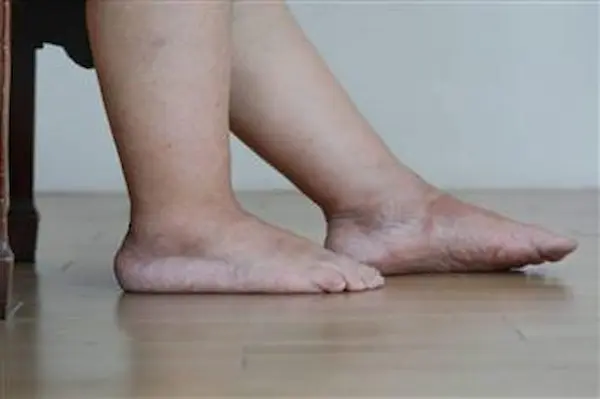
Causes of foot swelling after surgery
If you are looking for a treatment for swollen feet after surgeries, you must know the causes that led to this swelling, in order to determine the appropriate treatment.
The causes that lead to swelling of the feet include the following
- Inflammation
Your body may trigger an inflammatory response in the surgical area, which is part of the natural healing process.
- Side effects of medications
The doctor may advise you to take some medications after surgery, and these medications may lead to fluid accumulation as a side effect, which is why swelling occurs.
- Tissue trauma
Some tissues may be damaged during surgical procedures, and as the body attempts to rebuild those tissues, fluid accumulation may occur.
- Lack of movement
Lack of movement after surgeries may impair the work of the muscles that help pump lymph fluids and blood from the lower extremities to the heart, so fluids accumulate in the feet.
- Gravity
Failure to raise your feet on pillows while sitting or lying down may lead to fluids naturally accumulating in the feet due to gravity.
Treatment of foot swelling after plate and screw surgery
There are several safe and effective methods to treat swollen feet after surgical operations, such as surgery to install plates and screws, and they include the following:
- Raise your leg above your heart level while resting, using pillows to support it comfortably on the bed or sofa.
- Do not stand or sit for long periods.
- Apply ice to the swollen area for 15 to 20 minutes every two hours.
- Your doctor may recommend using compression stockings to improve blood circulation.
- Move regularly, by doing some light exercises, such as walking, because light movement may contribute to enhancing blood flow.
- Keep your body hydrated, because drinking water may help eliminate excess fluids from your body.
- Eat healthy food, especially anti-inflammatory foods, to support healing.
- Wash, dry, and moisturize your feet to avoid inflammation.
- Do not wear clothes, socks, or shoes that are too tight.
- Commitment to physical therapy exercises that contribute to improving movement and stimulating blood circulation.
Everything you need to know before undergoing Ankle surgery step by step
Frequently asked questions about treating swollen feet after surgery
If you are looking for a treatment for swollen feet after surgery, you may have many questions in mind, such as:
When does the swelling go away after surgery?
Some swelling is expected for several weeks after surgery, especially in the lower body.
What is the quickest treatment for swollen feet?
If you want to quickly treat swollen feet after surgeries, you must adhere to the doctor’s instructions to get rid of that swelling, which include:
- Raise your leg so that it is above the level of your heart.
- Apply ice compresses for 15 to 20 minutes at a time, with an hour interval between sessions.
- Use compression stockings, if your doctor advises you to do so.
- Commitment to physical therapy exercises.
- Keep your body hydrated.
- Wear loose clothing.
- Avoid smoking.
Does walking relieve swollen feet?
Yes, walking may help treat swollen feet after surgeries, because it may help improve blood circulation and promote fluid drainage.
Conclusion
In conclusion, I now realize, dear reader, what is the treatment for swollen feet after surgeries?
Therefore, if you are suffering from this medical problem, you must go to Al Mousa Specialist Hospital, in order to find out the cause of the swelling, and determine the appropriate treatment methods for you.
Sources
Managing Swollen Ankles and Swollen Feet After Surgery – orthonj
