
It is impossible to ignore the fact that sagging of the ulna, known as the wings of a bat, is a source of nuisance to many, whether men or women. This aesthetic problem is not limited to the elderly only, but may also be faced by young people for various reasons. Sagging of the arms varies in degrees, from simple, which can be treated with exercises, to severe, which may require medical intervention. Follow this article with Al-Mousa Specialist Hospital. We will review in detail the types of flabby ulnar and their causes, as well as methods of treating each degree of it in the hospital, starting with natural solutions.
What is sagging elbows?
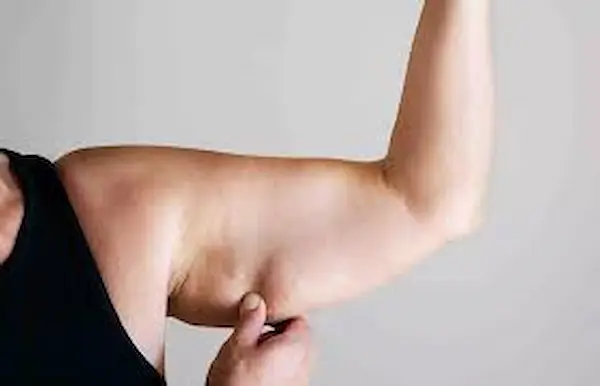
Before explaining the types of sagging arms, let us introduce you to them. The term sagging arms or bat wings refers to the appearance of sagging arms, which is a common condition that leads to sagging skin and the accumulation of fat in the upper area of the arms, giving them a drooping appearance.
What are the causes of sagging elbows?
Sagging arms is a common condition that affects many men and women with age or due to some other factors. The main reasons for the appearance of different types of sagging arms include the following:
- Loss of muscle mass or muscle atrophy is one of the common causes of sagging ulnas, and it is the primary cause in most cases, as the triceps muscle is the main muscle in the back of the arm, and over time, if it is not used and strengthened, it loses its size and strength.
- As we age, starting in our 30s, the body naturally begins to lose muscle mass, the supporting tissues weaken, and the arms become less toned and more flabby.
- Lack of physical activity and not doing strength exercises targeting the arms leads to weakness and atrophy in the muscles.
- Rapid and significant weight loss, the skin loses its elasticity and may not be able to return to its natural shape, leaving excess and loose skin in various areas, including the arms.
- Large fluctuations in weight, repeatedly gaining and then losing weight, cause the skin to stretch and gradually lose its elasticity, eventually leading to permanent sagging.
- Genetic factors, as genes play a major role in skin type, elasticity, distribution of fat in the body, as well as the ability to build muscles.
- Excessive exposure to the sun, because ultraviolet rays destroy collagen and elastin fibers in the skin over time, which accelerates the process of losing elasticity and leads to sagging skin.
- Poor nutrition and a diet that lacks muscle-building proteins and essential vitamins and minerals can contribute to weak muscles and skin.
- Dehydration and drinking insufficient amounts of water can make skin appear less vibrant and more prone to sagging.
- Smoking, because it reduces blood flow to the skin and destroys collagen and elastin, which greatly accelerates the appearance of signs of aging and sagging skin.
Types of sagging joints
Sagging arms can be mainly classified into two types, depending on the main cause, in addition to another classification based on the degree of sagging:
The types of sagging elbows can be divided into two main types, and the combination between them is often the cause. They are:
- Sagging resulting from sagging skin. In this type of sagging skin, the skin is loose and flabby and hangs clearly to resemble a wing as a result of the skin losing its elasticity due to the loss of collagen and elastin in the skin with age, or after a large and rapid weight loss, as the skin expands and then loses its ability to return to its original shape.
- Sagging resulting from the accumulation of fat and lack of muscle mass. The cause of this type of sagging is an increase in the fatty layer under the skin, along with weakness or atrophy in the triceps muscle located at the back of the arms. This makes the arm appear full and not tight, as a result of lack of physical activity, unhealthy diet, and genetic factors that determine fat storage areas in the body.
Learn about: Suction of ulcers using the latest technologies used To remove fat
What are the degrees of sagging of the joints?
The types of sagging ulcers can be classified into degrees based on the severity of the sagging and the amount of excess skin and fat. This classification helps determine the appropriate treatment method, whether it is exercises, non-surgical procedures, or surgery, and includes:
- First degree: Mild sagging, where there is slight sagging or the beginnings of sagging and it appears when the person stands with his arm extended straight in the form of a slight wave or the beginning of the skin drooping from the lower part of the arm. This is often due to a slight decrease in the elasticity of the skin with a slight lack of muscle mass and the presence of a thin layer of fat.
- The second degree: moderate sagging, where sagging is clearly noticeable when the arm is raised or moved, and there is a clear drooping of the skin and tissues. When the arm is in line with the body, sagging can be seen without the need to lift it. The reason is a combination of moderate accumulation of fat, a noticeable loss of skin elasticity, and muscle weakness.
- Third degree: severe sagging, where there is significant sagging and excess skin that hangs in a way that resembles a large wing. The sagging is also evident even in a relaxed position and without any movement. This is often the result after very significant weight loss.
The degree of sagging of the ulna can be assessed through a simple test that you can try called the pinch test, where you can stand straight and extend your arm parallel to the ground, and using your thumb and index finger pinch the skin and tissue in the middle of the back of the arm, the triceps area, if:
- If what was pinched was less than 2.5 cm, the arm is normal or suffers from very slight sagging.
- What was pinched was between 2.5 to 4 cm, this is a mild to moderate degree.
- If what was pinched is more than 4 cm, this is a moderate to severe degree, and often requires surgical intervention to obtain a satisfactory result.
Book your consultation now at مركز الجلدية والتجميل At Al Mousa Specialist Hospital.
What is the treatment for sagging elbows?
Treatment of the types of sagging elbows depends entirely on the degree of sagging and its main cause. The treatment options available at Al Mousa Specialist Hospital include the following:
First: non-surgical cosmetic procedures
They are effective methods for mild to moderate sagging resulting from excess fat or the beginnings of loss of skin elasticity, and they include:
- Cryolipolysis, that is, freezing and breaking down fat cells, is suitable for people who suffer from stubborn fat in the arms but with elastic skin, as it does not tighten the skin.
- Energy skin tightening devices, to stimulate collagen production in the deep layers of the skin, leading to gradual tightening. Examples include the Thermage radiofrequency device, the Ultherapy device for intense ultrasound, and the laser device.
- Liposuction, which is a simple surgical procedure to remove excess fat, is suitable for people who suffer from excess fat but have elastic skin that shrinks after the fat is removed.
Second: Surgical procedures
It is an arm lift procedure, and it is the only effective solution to remove skin for moderate to severe sagging, as a strip of skin and excess fat is removed along the inner or back of the arm through a long surgical incision from the armpit to the elbow, then the remaining skin is tightened to give the arm a tighter and smoother appearance.
The arm lift procedure is characterized by a rapid, radical improvement in the appearance of the arm.
In conclusion, sagging upper arms remains a common problem that can be dealt with effectively. After knowing the types of sagging upper arms and methods of treating them, whether the sagging is simple or severe and requires surgical intervention, the options available today give hope for restoring the toned and attractive appearance of the arms.
Remember that the best solution is the one that suits your individual case, so do not hesitate to consult a specialist doctor at Al Mousa Specialist Hospital to obtain a customized treatment plan that suits your needs and aspirations. Do not hesitate to contact us on our numbers listed on the website for more details, reservations, and inquiries.
Frequently asked questions
What is the best solution for tightening the joints?
There is no single best solution for everyone, but there is the best solution for you based on your condition and the doctor’s evaluation of three factors: the amount of sagging skin, the amount of subcutaneous fat, and the degree of skin elasticity you have.
If you suffer from slight sagging, that is, little fat, and your skin is still elastic, we recommend strength exercises, a healthy diet, and radiofrequency or laser tightening sessions.
In the case of moderate sagging and you notice visible fat and the skin is somewhat flabby when moving, we advise you to have liposuction or a limited arm lift.
While in the case of severe sagging, and you have excess skin that hangs like a wing even at rest, you should undergo full arm lift surgery. This is the only effective solution to remove excess skin and fat.
What is the best device for tightening sagging arms?
There is no single magical device, but there are different devices that treat the causes of different types of sagging elbows, examples of which include:
- If the problem is mainly excess fat and your arm is still flexible, cryolipolysis devices are suitable for you. They reduce the arm circumference, but do not tighten the skin.
- If the problem is loss of skin elasticity and sagging, there are radiofrequency and focused ultrasound devices.
- Laser devices, such as the Fraxel laser or the Erbium laser, heat the tissue under the skin to stimulate collagen, which is also suitable for cases of loss of skin elasticity and sagging.
- If the problem is excess fat and slight sagging of the skin, the best solution is to combine techniques such as sessions to break down fat and radiofrequency sessions to tighten the skin.
What are the sessions for tightening sagging arms?
These are non-surgical or minimally invasive cosmetic procedures aimed at improving the appearance of the arms by reducing localized fat or stimulating collagen production to tighten and lift sagging skin.
These sessions are an alternative to surgery for those who do not suffer from severe sagging or do not wish to undergo surgery or deal with the recovery period and scars.
The technique used depends on the main cause of sagging, between fat dissolving sessions through cold or cold laser, or skin tightening and lifting sessions using radiofrequency or focused ultrasound.
Sources
