
The story may have an unnoticed beginning through simple symptoms that may not attract attention, but sometimes they are an indicator of the presence of head cancer, one of the most complex and influential tumors on human life. In fact, this disease affects multiple areas inside the head, and the slow progression of its symptoms makes detection difficult, but awareness of it and early diagnosis increase the chances of recovery.
From this standpoint, in this article we will discuss this disease from various aspects, explaining how it develops and what its most important signs are, in addition to methods of diagnosis and treatment and the latest medical findings in this field.
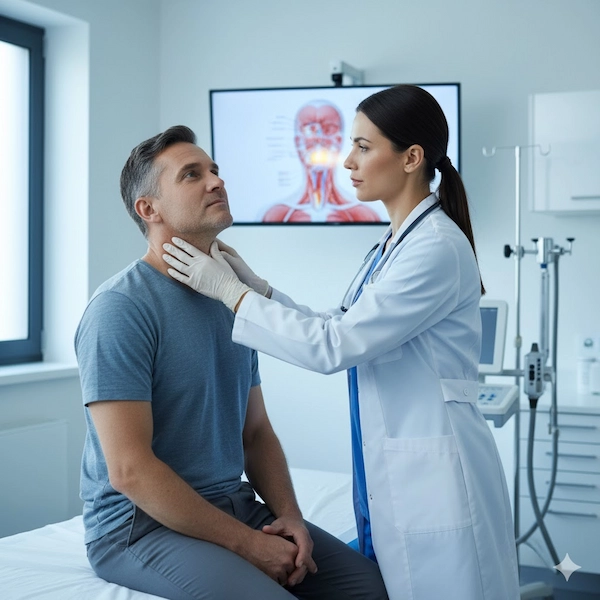
What is head cancer?
Head cancer is a serious disease that affects the tissues and organs in the head and neck area, for example the mouth, nose, larynx, salivary glands, and pharynx. Most often, the disease arises as a result of abnormal growth of cells lining the internal surfaces of those organs, which consequently leads to the formation of tumors that may spread rapidly and directly affect multiple vital functions within the body.
How does head cancer occur?
The infection begins when healthy cells in this area are subjected to genetic changes that cause them to lose their ability to divide regularly, so they begin to grow abnormally until they form a mass or malignant tumor that can extend to neighboring tissues or move to other organs if early treatment is neglected.
What does a head cancer patient feel?
The sensation of symptoms may differ from one person to another, as head cancer does not usually appear with one clear sign, but rather with a group of changes that may seem simple at first without it being expected that the reason behind this is a tumor in one area of the head.
Here it is important to distinguish between symptoms and signs:
- Symptoms are what the patient feels and describes to the doctor, and includes pain, fatigue, or dizziness.
- The signs are the manifestations that the doctor can notice during the clinical examination, for example, the presence of swelling, a change in the pulse, or a disturbance in blood pressure.
Many people mistakenly interpret the first symptoms of this disease as similar to simple infections or problems in the throat and sinuses. Therefore, paying attention to any unusual change is an essential step for early diagnosis and prevention, and this is discussed in detail in the following paragraphs.

Symptoms of head cancer
Before going into the details of the symptoms, it is worth noting that the signs of head cancer do not appear all at the same time, but rather vary according to the location of the tumor and its development, and may gradually worsen and require medical intervention.
Early symptoms of head cancer
At the beginning of the disease, the symptoms may seem mild or similar to simple conditions, but as they continue, changes appear that require a doctor’s visit. The most important early symptoms are as follows:
- Recurring head pain or a feeling of pressure.
- Fatigue and feeling weak for no apparent reason.
- Difficulty eating or speaking.
- A difference in the tone of the voice or persistent hoarseness.
- Mild soreness or swelling in the face or neck area.
Symptoms of head cancer from the back
If the tumor is concentrated in the back of the head or the base of the skull, distinct symptoms may appear that differ from other types. Include:
- Recurring headache in the back of the head that increases over time or upon waking.
- Dizziness or loss of balance while walking or standing.
- Hearing loss or ringing in the ears.
- Blurred vision or double vision.
- Pain or numbness in the back of the head that sometimes extends to the neck or shoulders.
Moderate symptoms (locally advanced)
As the tumor progresses, symptoms become more pronounced. ومنها:
- Frequent bleeding from the nose or mouth.
- Difficulty breathing or swallowing food.
- Pain extending to the ear or jaw.
- Decreased ability to hear or see.
- Weak sensation in certain areas of the face or neck.
Symptoms of brain cancer in its final stages
When the disease develops and reaches advanced stages, the symptoms intensify and become more noticeable. Among the most important are:
- Constant severe headache.
- Loss of desire to eat and weight loss.
- Noticeable difficulty swallowing or breathing.
- Impaired balance or movement.
- Weak sensation or partial paralysis in some areas of the face.
- A constant feeling of fatigue or intermittent cases of partial loss of consciousness.
After clarifying the possible symptoms and signs of head cancer, it is important to take any of them seriously and not ignore them, especially if they persist or increase in severity over time. In this context, he is committed to Al Mousa Specialist Hospital Providing integrated care that ensures accurate diagnosis, effective treatment, and psychological support for the patient.
Causes and risk factors of head cancer
This disease arises as a result of a disorder in the cell division mechanism within the tissues of the head or neck, where some cells begin to grow abnormally, which leads to the formation of tumors that may turn into malignant cells capable of invading tissues and spreading the disease.
Exposure to some harmful substances, including chemicals and radiation, also contributes to causing genetic mutations that hinder cell regeneration, especially those found in tobacco smoke, paints, and pesticides.
Risk factors
Although head and neck cancer is possible at any age, some factors increase the likelihood of it occurring: Among the most important are:
- Smoking of all kinds, whether cigarettes or shisha.
- Drink alcohol regularly.
- Combining smoking and alcohol, which greatly increases the risk of infection.
- Weakened immune system or human papillomavirus (HPV) infection.
- Chronic exposure to chemicals or industrial irritants in the workplace.
اقرأ أيضاً: معامل تحاليل الاورام: أحدث التقنيات المستخدمة ودورها في التشخيص المبكر للسرطان
Complications of head cancer
This disease, whether due to the development of the tumor or as a result of the treatments used, may lead to a group of complications that affect the patient’s quality of life. Include:
- Recurring infections of the mouth and throat.
- Problems with the gums and teeth.
- Change in the nature of saliva or persistent dry mouth.
- Difficulty chewing or swallowing due to tissue damage.
- Increased risk of tooth decay and loss.
The difference between head cancer and brain cancer
Some may confuse head cancer with brain cancer, but there is a clear difference between them. Head cancer affects the tissues and organs in the head and neck area, including the mouth, throat, and sinuses, while brain cancer affects the cells and tissues of the brain inside the skull.
تعرف أيضاً على: Brain tumors in children: causes, symptoms and modern treatment methods
Ways to confirm head cancer
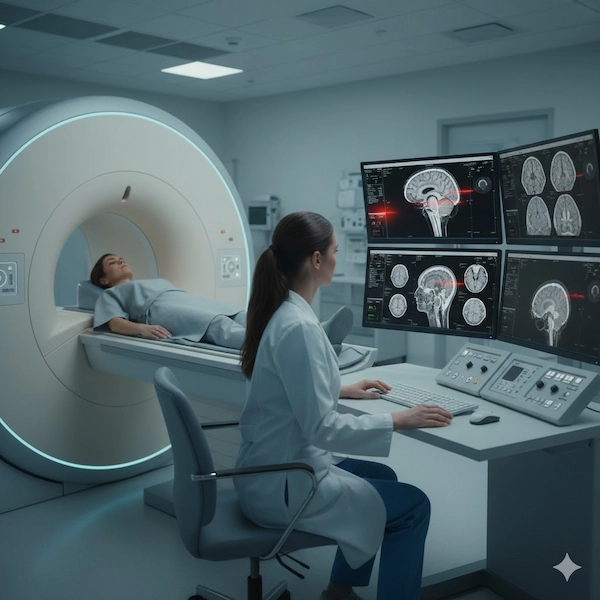
In the next stage of diagnosis, the specialist doctor conducts a comprehensive evaluation to determine the cause of the symptoms and rule out similar conditions. Then he begins with a careful clinical examination of the head to feel any lumps or abnormal changes. After that, he moves on to imaging tests that help determine the location of the tumor and the extent of its spread. Include:
- Ultrasound To detect superficial changes in tissues.
- التصوير بالرنين المغناطيسي (MRI) To clarify precise details about organs and deep tissues.
- Computed tomography (CT) To create 3D images that make it easier to see the tumor accurately.
- Positron emission tomography (PET-CT) To evaluate cell activity and determine the extent of their spread within the body.
- The final step in diagnosis It is done by taking a tissue biopsy from the suspicious area, for laboratory analysis and confirmation of the type of cells, which precisely determines the appropriate treatment plan.

Head cancer treatment
The treatment plan for head cancer depends on the type of tumor, its stages, and its spread. Based on this, doctors determine an integrated treatment program targeting the elimination of cancer cells while preserving vital organs.
The following are the most important treatment methods used to deal with this type of cancer:
First: surgical intervention
This option is often the first step in treatment to remove the cancerous mass, and may involve removing part of the surrounding tissue, sometimes followed by radiation or chemotherapy to ensure the remaining cells are eliminated.
Second: radiation therapy
This type of treatment depends on precisely directing high-energy rays towards the tumor to destroy its cells and prevent them from dividing, while preserving the surrounding healthy tissue as much as possible.
Third: Chemotherapy
This treatment is mainly used in advanced stages or when the tumor has spread, where drugs are given that target rapidly dividing cancer cells, and it is often combined with radiation to increase its effectiveness.
Fourth: Targeted treatment
This approach represents a paradigm shift, as it targets mutations or proteins that fuel cancer cells, gradually weakening them and reducing their ability to divide, while preserving healthy tissue as much as possible.
Fifth: Immunotherapy
This treatment is one of the modern methods of combating cancer, as it relies on activating the patient's immune system to help it recognize cancer cells and attack them more effectively. It is often used when there is poor response to traditional treatments, and it also reduces the possibility of the tumor returning.
اكتشف المزيد عن: اعراض ورم الدماغ الحميد وكيفية التعامل معها بالشكل الصحيح
Why is Al Mousa Specialist Hospital the most appropriate solution for treating head cancer?
Treating head tumors requires extreme precision and cooperation between a group of medical specialties, which is why we provide in our hospital an integrated treatment system that combines Experience And efficiency and modern technologies within a safe and advanced environment. Our team also includes an elite group of consultants specializing in head tumors, united by one goal, which is to provide accurate and integrated medical care that takes into account the needs of each individual patient.
In order to ensure the most accurate results, we provide the latest imaging and medical examination techniques that help reach a rapid diagnosis and effective intervention in the early stages of the disease. In continuation of our commitment to comprehensive care, we are keen to provide psychological and rehabilitative support that helps the patient regain his health and self-confidence.
Conclusion
Dear readers, we have reached the conclusion of this medical guide in which we have explained one of the most complex types of cancer that affects the quality of life, which is head cancer. We remind you that awareness and timely attention may give a real chance of survival and recovery.
Therefore, take the initiative to check on your health, andBook your consultation At Al Mousa Specialist Hospital and start your journey with reliable and integrated medical care.
Frequently asked questions
In an effort to provide a clearer picture of this disease, Below we present the most frequently asked questions related to head cancer and their simplified answers:
How long does a head cancer patient survive?
Survival rates vary depending on the type of tumor, its level of progression and spread, in addition to the patient’s age and response to treatment, as the chances of survival increase with early diagnosis and decrease in advanced stages.
Can head cancer be cured?
Yes, it is possible to recover when the disease is detected in its early stages and appropriate treatment is started, as recovery rates increase with adherence to the treatment plan and regular follow-up.
How long can head cancer go undetected?
The tumor may remain unnoticed for months or years, especially if symptoms are mild or intermittent, so paying attention to persistent changes is key to early diagnosis.
Do head cancers grow quickly?
The speed of disease development varies from one case to another. There are tumors that grow slowly and respond easily to treatment, and others that progress quickly and require urgent intervention, so early detection and continuous follow-up remain the basis for controlling the condition.