
Lung sarcoma is one of the rare types of cancer that affects the supporting tissues of the lung, such as muscles or blood vessels. It is considered one of the medical challenges that requires accurate diagnosis and an integrated treatment plan. Despite the rarity of lung sarcoma compared to various other lung cancers, its danger lies in the speed of its development and the difficulty of detecting it in its early stages. Treatment of lung sarcoma also depends on many factors, including the size of the tumor, its location, and the extent of its spread, and includes a combination of surgery, chemotherapy, and radiation therapy. In the following lines, we shed light on Al Mousa Hospital.
What is lung sarcoma?
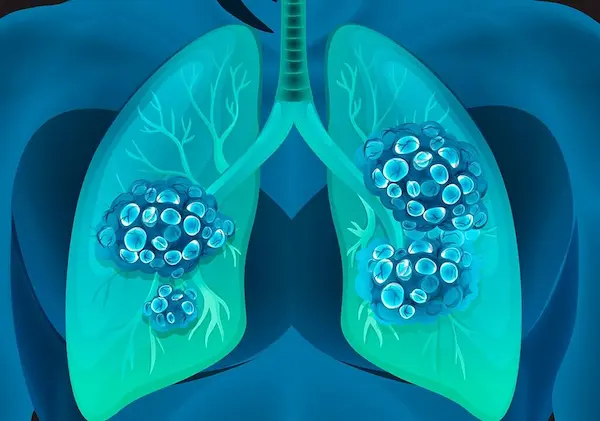
Lung sarcoma is considered a rare type of cancer. It is the result of soft tissues or those supporting tissues inside the lung, such as muscles, blood vessels, or fibrous tissue. It does not occur in the cells lining the bronchial tubes, like the most common lung cancers. Sarcoma is also considered one of the malignant tumors that can grow quickly, and it spreads to various other organs, and its symptoms may appear to be similar to respiratory diseases such as a persistent cough, shortness of breath, or chest pain, which makes detecting sarcoma difficult in stages.
The difference between sarcoma and common lung cancer
Before we learn about the methods of treating lung sarcoma, let us learn together about the difference between sarcoma and lung cancer. It should be noted that the difference lies in the type of cells from which the tumor begins and the nature of spread and treatment. Below we explain the most prominent differences between sarcoma and lung cancer:
| وجه المقارنة | Sarcoma | سرطان الرئة |
| Cell type | They arise from supporting or soft tissues within the lung such as muscle, blood vessels, or fat. | It begins in the cells lining the bronchial tubes, and is often of the adenocarcinoma or squamous cell type. |
| Spread | Sarcomas are very rare in the lung and represent a small percentage of lung cancers. | Common lung cancer is more common and is often linked to smoking. |
| الأعراض | Cough, chest pain, and shortness of breath develop silently for a longer time. | Cough, chest pain, and shortness of breath |
| Treatment methods | Sarcoma requires special treatment, mainly surgery, and may be less responsive to conventional chemotherapy. | Common lung cancer is treated with a range of options such as surgery, chemotherapy, radiation and immunotherapy, depending on the stage and type. |
Causes and risk factors for lung sarcoma
In fact, the causes and risk factors are still not fully understood since sarcoma is rare compared to other types of cancer, but research indicates that there are some factors that may increase the likelihood of infection, including the following:
- Most cases of lung sarcoma are caused by non-inherited genetic mutations, which cause cells to grow abnormally and out of control.
- Those people who have had previous radiation therapy to the chest area may be more likely to develop sarcoma later on.
- Long-term exposure to carcinogenic substances such as asbestos or some types of industrial materials may increase the risk of infection.
- People with chronic diseases or medications that weaken the immune system may increase the likelihood of developing rare tumors, especially sarcoma.
- Although sarcoma is not often hereditary, a rare family history of certain genetic syndromes may be associated with an increased risk.
Learn about: دليل شامل عن الفرق بين الساركوما والكارسينوما
Symptoms of lung sarcoma
The symptoms of lung sarcoma may not be very clear in the early stages, but they become more clear as the disease progresses, and in fact they are often similar to the symptoms of other lung diseases, the most prominent of which are:
- A persistent cough that does not go away and may get worse over time.
- Feeling chest pain, which can be severe or mild and increases with deep breathing or coughing.
- Shortness of breath due to the effect of the tumor on lung function.
- Cough accompanied by blood in some advanced cases.
- Weight loss for no apparent reason.
- Feeling general fatigue and weakness in the body.
- High temperature for no apparent reason.
- There are also other symptoms that result from pressure on nearby organs, such as difficulty swallowing or hoarseness.
Methods of diagnosing lung sarcoma
When you feel any of the above-mentioned symptoms, you should go to the doctor to diagnose lung sarcoma, which requires a set of precise examinations due to the rarity of the disease and the similarity of its symptoms to various other lung cancers. The basic diagnostic methods include the following:
- Initially, the doctor begins by evaluating general symptoms such as cough, pain, and shortness of breath, and learns about the patient’s medical history.
- Using CT scans to detect the presence of masses or tumors inside the lung, and this helps determine their exact size and location.
- MRI helps evaluate whether the tumor has spread to surrounding tissues.
- The use of a chest X-ray is often the first step when a lung mass is suspected.
- Using a PET scan, which determines the activity of cancer cells and determines whether the tumor has spread or not.
- Through bronchoscopy, the doctor can see the inside of the bronchial tubes and take samples for examination.
- A lung biopsy is taken, which is considered the crucial step in the diagnosis process, as a sample of the tumor is taken for laboratory analysis and to determine the type of cancer cells.
- Genetic and histological tests also help identify the type of sarcoma and determine appropriate lung sarcoma treatment based on the molecular characteristics of the tumor.
Lung sarcoma treatment options
There are different methods for treating lung sarcoma, and choosing the most appropriate one by the doctor depends on several factors such as the type of sarcoma, the size of the tumor, its location, and the extent of its spread, in addition to the patient’s general health condition. Treatment methods for lung sarcoma include the following:
Surgery
It is considered the main treatment option when deciding to completely remove the tumor, in which the tumor is removed along with part of the affected lung or lobe, and may include the removal of nearby lymph nodes if necessary.
Chemotherapy
It is used to eliminate circulating cancer cells or to reduce the size of the tumor before surgery, preferably in types that respond well to chemotherapy such as soft tissue sarcoma.
Radiotherapy
It is used as an adjuvant treatment after surgery to reduce the chance of relapse and tumor recurrence, or this method is used among the methods of treating lung sarcoma as a primary treatment in cases where surgery cannot be performed.
العلاج الموجه
Targeted therapy is used in some rare cases, where targeted drugs can be used that target specific mutations or receptors in cancer cells, after conducting genetic analyzes of the tumor.
Immunotherapy is not currently widely used in lung sarcoma, but research is currently being conducted to determine the effectiveness of immunotherapy in some types.
Psychological care
It is suitable for individuals with advanced stages of lung sarcoma, and it works to relieve symptoms and improve quality of life, whether by using analgesics, breathing support, or psychological support.
Book your consultation now at Oncology center At Al Mousa Specialist Hospital.
New in lung cancer treatment
There are a group of the latest developments in lung cancer treatment, which are as follows:
Targeted therapies and new drugs
- An ADC drug that targets the TROP2 protein and is used to treat refractory EGFR-mutated non-small-cell lung cancer (NSCLC) was recently approved in the United States.
- The ADC targets the c‑MET protein and was approved by the FDA in May 2025 for the treatment of NSCLC.
- A dual HER2-HER3 monoclonal antagonist, approved in December 2024 for the treatment of NSCLC with NRG1 gene fusions.
- The use of a powerful ALK inhibitor, approved in December 2024 to treat ALK-positive NSCLC, is effective against brain tumors.
- A novel inhibitor of KRAS‑G12C mutations that has been used in early trials to treat advanced NSCLC.
Immunotherapy
- Most notable among them are ADCs such as datoptamab deruxtecan and trastuzumab deruxtecan and have been included in the treatment list for lung sarcoma as they offer improvement in cases of cancer metastasis to the brain or mucosa.
- Dual- or triple-specific antibodies, such as ivonescimab, AXN‑2510, and TAVO412, target multiple pathways such as PD‑1, VEGF, and EGFR/c‑MET and have shown remarkable results in overcoming drug resistance.
Accurate diagnosis and personalized care
- Liquid Biopsy technology has been formalized in the NHS in England to more quickly identify the most appropriate treatment genetically, allowing early initiation of appropriate treatment and minimizing systemic damage.
- mRNA-based therapeutic vaccines, such as the One‑two‑punch vaccine, stimulate the immune system to actively attack the tumor, and are considered one of the most important steps towards future universal therapeutic vaccines.
Cellular immunity
- As for cellular immunity, it is among the list of the latest lung sarcoma treatment, Tarlatamab, approved to treat advanced cases of small-cell lung cancer. It is a lung sarcoma treatment that reduces the risk of death by 40% compared to conventional treatment, with fewer side effects.
- CAR-T-Cell therapies are currently in clinical trials to treat lung cancer, and have shown clear progress.
- Tumor‑Treating Fields technologies encapsulate advances such as EIT and help enhance the effectiveness of tumor-breathing electrotherapy, representing a non-invasive approach that enhances existing treatment.
Learn about: Soft tissue sarcoma symptoms causes and treatment options
Cases recovered from sarcoma
Of course, the first question you ask yourself after you become certain that you have the disease is, “Are there any cases of sarcoma that have been cured?”
Frequently asked questions
Will a lung cancer patient recover?
A lung cancer patient can be cured in some cases, especially if the disease is detected in its early stages and treated quickly and effectively. Recovery also depends on the type of non-small-cell or small-cell cancer, the stage of spread, and the patient’s general health. The treatment plan may include surgery, chemotherapy, radiation, or immunotherapy and targeted therapies. The earlier the detection, the greater the chances of recovery and the improved quality of life.
What is the best treatment for sarcoma?
The best treatment for sarcoma depends on its type, location, and stage, but surgery remains the main option to completely remove the tumor, followed by radiation or chemotherapy to reduce the risk of relapse. In some cases, targeted or immunotherapies are used if the sarcoma contains targetable genetic mutations. It is preferable for the treatment to take place within medical centers specializing in tumors to ensure the best results.
Can sarcoma in the lungs be treated?
Sarcoma in the lungs can be treated, especially if it is detected early and is operable. Removal of the tumor is the primary treatment option. In cases of spread or non-resectable tumors, chemotherapy, radiation, or targeted therapies can be used. Treatment results vary from one case to another depending on the size of the tumor, the type of sarcoma, and the body’s response to treatment.
With Al Mousa Specialist Hospital, lung sarcoma is diagnosed accurately and the appropriate treatment is determined according to each case. If you suffer from any of the symptoms mentioned above, do not hesitate and book your appointment until you undergo the diagnosis and begin a safe treatment journey with the best oncologists in the Kingdom of Saudi Arabia.
Medical references
What to Know About Lung (Pulmonary) Sarcoma – healthline
Sarcoma Treatment – hopkinsmedicine
