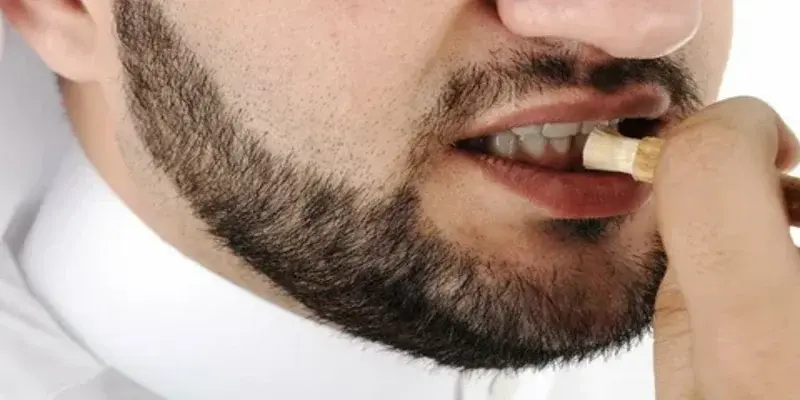
The mouth toothpick is considered one of the ancient customs used in oral and dental care. The toothpick is a small stick made from tree branches that contain antiseptic properties that are beneficial for oral health. Through this article, we will discuss the benefits of the toothpick, its different types, as well as ways to obtain it.
Benefits of mouth miswak
Miswak contains many health benefits for the mouth and teeth, thanks to it containing natural materials.
The most prominent of these benefits are the following:
- A toothpick works As an antidote For bacteria.
- Miswak removes unpleasant odors.
- Miswak cleans teeth effectively.
- It contains natural ingredients that promote gum health.
- Miswak works to reduce the accumulation of plaque on the teeth.
- Limit Tooth decay.
Benefits of siwak for the stomach
In continuation of our talk about the mouth toothpick and its many benefits, do you imagine that it is very useful after a heavy meal?
Among the benefits of the siwak for the stomach is that it helps in treating stomach ulcers and is a diuretic, which helps in treating stomach and kidney problems. It is worth noting that paying attention to oral hygiene and getting rid of bacteria stuck in the teeth using the siwak leads to protecting the stomach from any infection transmitted from the mouth.
Benefits of siwak for slimming
Some people recommend grinding arak sticks and boiling them to use them to treat obesity, thinking that drinking them reduces appetite and makes the person lose some weight. In fact, there is no definitive proof of the benefits of the siwak for slimming, but it may help in indirect ways in slimming the body by regulating and improving the digestive process, as we mentioned with the treatment of stomach disorders.
Side effects of miswak
Although the miswak has many benefits such as cleaning the mouth and improving gum healthTeeth whiteningHowever, there are some side effects that occur as a result of incorrect or excessive use, including the following:
- Enamel erosionExcessive use of the toothpick or using it with excessive force may lead to enamel erosion. The toothpick should be used gently and with moderate pressure to avoid this problem.
- Gum sensitivity: In some cases, people may suffer from an allergy to the miswak, which leads to gum irritation and redness.
The task of balancing the use of the Miswak and adhering to proper brushing techniques will help you benefit from the benefits of the Miswak without exposing your dental health to potential problems. It is also recommended to consult with your dentist to obtain specific guidance for your personal condition.
Types of miswak
There are many types of mouthpieces that people use to cleanse the mouth and clean the teeth. The types of toothpicks vary according to the type of tree they are extracted from, as we explain in the following lines:
- Olive sticks
Olive sticks are considered a type of mouth siwak, which can be used to purify the mouth and clean the teeth, based on the words of the Messenger of God, may God bless him and grant him peace: “The best siwak is the olive from a blessed tree. It freshens the mouth and removes holes. It is my siwak and the siwak of the prophets before me.”
- Arak toothpick
It is also called arak tree stick, as it is extracted from the arak tree, and it is considered one of the most common and most widely used types in the Arab world. This miswak is also distinguished by its special benefits, as it is a natural sterilizer and contains substances that help kill bacteria and clean the mouth effectively.
- Neem tree toothpick
The people of some Asian countries, such as India and Pakistan, use neem sticks as toothpicks for the mouth and to clean the teeth. This toothpick is extracted from the neem tree, which is widespread in areas with high temperatures.
- African ebony toothpick
Although the name of the African ebony toothpick refers to the presence of these trees in Africa, the uses of this toothpick are limited to a large number of Americans of African descent residing in the United States of America.
The African ebony tree grows in several countries, including Japan, the Philippines, North and South America, and the continent of Africa.
Book your consultation now at Dental center At Almoosa Specialist Hospital
Other types of mouth toothpicks
It is worth noting that there are sticks, roots and branches of trees used in Africa to clean the mouth and teeth, such as lemon and orange trees, as well as mivaka trees.
In Ethiopia, a large number of its citizens use the branches of the mifaka tree as toothpicks to clean the mouth and teeth. This tree is considered widespread in Ethiopia.
In the regions of West Africa, some peoples use lemon and orange trees as toothpicks to cleanse and clean the mouth and teeth.
Buy a mouth toothpick
When buying a miswak, you should pay attention to some important factors such as the materials used in its manufacture and the quality of the branches, so it should be sold in reliable and safe places, such as pharmacies, organic stores, or even online.
The best way to use a toothpick
To get the best results from using the miswak, you can follow these steps:
Moisten the toothpicks
Before using the miswak, you should wet the miswak with water for a short time until the tip becomes slightly damp, as this helps dilute the juice and make it more usable.
Scrub teeth
Gently scrub the teeth and gums with the toothpick in small circular motions, then try to reach all surfaces of the teeth, including the front, back, and sides.
Use the correct side
You should use the flat side of the toothpick to scrub the surface of the teeth, while you can use the sharp side to clean the tight spaces between the teeth.
Taking care of the gums
Do not forget to gently massage your gums while using the miswak. You can use the tip of the miswak to lightly massage the gums to improve blood circulation and strengthen the tissues.
Mouth rinse
After you finish using the miswak, rinse your mouth well with plain water to get rid of the residue and juice from the miswak.
You must follow these methods constantly to achieve the best results. It is also recommended to visit the dentist regularly to examine your dental health and obtain professional advice.
The number of times a miswak is used per day
It is recommended to use the miswak after each meal, i.e. three times a day. This means that it is preferable to use the miswak after breakfast, lunch and dinner. However, you can also use it between meals if there is a need for that, such as after eating a snack or a colorful drink.
But you must know that using the miswak regularly is the important thing, by following the correct method and directing the miswak on all dental surfaces and between the teeth, so that the process of cleaning the teeth with the miswak should take about 2-3 minutes each time.
It is also important to know that using the miswak is not a complete substitute for the brush and paste, and it is recommended to combine the use of the miswak and the toothbrush to obtain comprehensive oral and dental hygiene.
FAQs
The mouth toothpick is considered one of the easy options used by many Arab people, especially within the Kingdom of Saudi Arabia, especially since the use of the toothpick is one of the noble Prophetic traditions.
On this basis, there are many frequently asked questions to learn more information, which we will review in the following lines
What is miswak toothpaste?
Miswak paste is miswak powder with some other natural ingredients added. This paste provides a unique oral cleaning experience and helps soothe gums and whiten teeth.
What is the difference between the siwak and the miswak?
Miswak is the general name for the stick used to clean teeth naturally, while miswak is a specific type of siwak extracted from the arak tree.
Does the siwak remove tooth yellowing?
Using the siwak regularly helps whiten teeth naturally, because the siwak contains natural substances that contribute to removing surface stains on the teeth and improving their color. However, it should be noted that the effectiveness of the siwak in whitening teeth depends on several factors, such as the original color of the teeth and the cause of their yellowing.
Is it permissible to swallow water from the siwak?
There is still no evidence of any harm resulting from swallowing some of the water that is produced while using the siwak. However, it is preferable to rinse your mouth with plain water after you finish using the siwak to get rid of any residue or deposits. Therefore, it is preferable to refrain from swallowing any part of the siwak itself or any other added ingredients that may be unfit for consumption.
Advice from Almoosa Health Group
We can say that the mouth miswak is a healthy and natural option for taking care of oral and dental health, especially since it has multiple benefits and provides a distinctive oral cleaning experience.
Whether you prefer to buy miswak or use miswak paste, you should make sure to choose high-quality products, in addition to using miswak regularly with a regular toothbrush to maintain oral and dental health.
Almoosa Health Group includes a dental clinic center that treats all oral and dental problems, including teeth whitening and removing cavities.
The article was reviewed by Dr. Shahad Ramadan Al-Quraishi