
There are many treatment options available to treat a herniated disc in the neck, and they vary between treatment with medication, physical therapy, and surgical intervention. Follow this article with us to learn about the different methods of treating neck disc at Al Mousa Specialist Hospital, and what are prohibited for disc patients.
What is the treatment for neck disc?
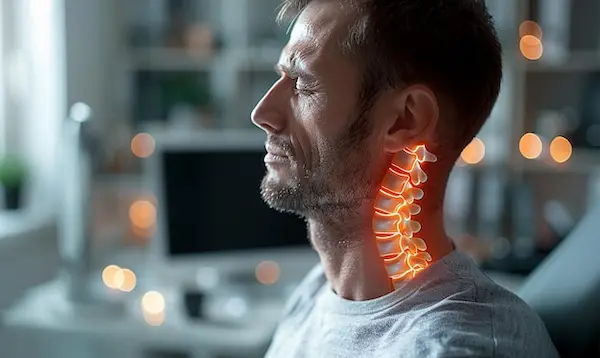
Neck disc, or a herniated disc in the neck, is one of the common spinal disorders, which causes the discs between the neck vertebrae to rupture and wear out, leading to pressure on the nerves emerging from between the vertebrae or on the spinal cord, or both.
Neck disc can be treated at Al Mousa Specialist Hospital in several ways, the choice of which depends on the severity of the condition as well as its symptoms. Treatment options include the following:
Non-surgical treatment includes:
- Medications, such as analgesics, anti-inflammatory drugs, muscle relaxants, and corticosteroids.
- Physical therapy, such as exercises, manual therapy, and heat or cold therapy.
- Corticosteroid injections.
Surgical treatment, including:
- Anterior cervical discectomy and spinal fusion.
- Artificial cervical disc replacement.
- Posterior cervical discectomy.
The duration of neck disc treatment often ranges from about 4 to 6 weeks with medications and physical therapy, while severe cases require several months.
The best treatment for neck disc
There is no single best treatment for all cases. Rather, the best treatment for a neck disc varies in each case, as it depends on the severity of the condition and the accompanying symptoms. In general, the treatment of a herniated disc in the neck can be divided into non-surgical and surgical options, which include:
Non-surgical treatments:
- Home treatment, in cases of simple neck discs, when the patient suffers from mild to moderate pain and does not spread to the arms or hands, or if the pain in the neck is caused by sitting for long periods in the wrong position, he may be able to relieve it with home treatments.
- Treating neck disc pain with medications, in cases of mild to moderate pain, where non-prescription painkillers can be used, such as ibuprofen or paracetamol, or the doctor may prescribe some other medications to relieve symptoms.
- Corticosteroid injections to treat neck disc disks, which are suitable for cases that suffer from severe, persistent pain that spreads from the neck to the upper extremities, and if the symptoms do not respond to other treatments and when there is significant inflammation and swelling around the affected disc and nerves. It is used as a temporary treatment or as an alternative to surgery in some cases.
Surgical treatment of neck disc:
Surgical intervention is used to treat neck disc herniation if other treatments fail to relieve the symptoms, or when the symptoms are severe and affect the patient’s daily activity, such as:
- Severe pain in the neck and arms persists for a long time and does not respond to non-surgical treatments such as physical therapy and medications.
- Weak muscles in the neck, arms or hands, affecting the ability to carry out daily activities.
- Persistent tingling and numbness in the arms and hands, which did not improve with other treatments.
- The neck disc presses on the spinal cord, which can lead to serious problems such as loss of bowel or bladder control.
- Symptoms do not improve after a period of non-surgical treatment, or if symptoms worsen.
Treating neck disc at home
Home methods for treating neck discs help relieve pain, but they do not replace consulting a doctor. Here are some general instructions for treating neck discs at home:
- Rest and avoid activities that increase pain, with light movement from time to time.
- Maintaining the correct sitting and sleeping position. Keep your back and neck straight while sitting, and use a neck support pillow while sleeping.
- Avoid sleeping on the stomach, sleeping on the back or side.
- Avoid straining, carrying heavy objects, or making sudden movements that increase pressure on the neck.
- Apply cold compresses to the neck for 15-20 minutes several times during the day, especially in the first days of the onset of pain.
- After the first days, warm compresses can be used to relieve muscle spasms and increase blood flow to the affected area.
- Do simple neck stretching exercises, such as tilting the head forward, back and sides, and rotating the head slowly.
- Start exercises to strengthen the neck muscles, but they must be done under the supervision of a physical therapist.
Get to know Symptoms of neck disc Causes, methods of diagnosis and treatment
Treating neck disc with medications
Treating neck disc pain with medications depends mainly on reducing pain and inflammation. The types of medications used vary according to the severity of the symptoms, and some of the common medications used in treating neck disc disease include the following:
- Painkillers, including over-the-counter paracetamol and ibuprofen, can relieve mild to moderate pain.
- Opiate pain relievers, in cases of severe pain, must be prescribed by a doctor, and are for a short period.
- Non-steroidal anti-inflammatory drugs, to help relieve pain and inflammation.
- Muscle relaxants, to relieve muscle spasms that accompany neck disc.
- Neurological medications, to treat nerve pain that may result from disc pressure on nerves.
- Steroid injections. In cases of severe pain, your doctor may recommend injecting them into the area around the nerves to reduce inflammation and pain.
Physical treatment for neck disc
It is an essential part of neck disc treatment, and aims to relieve pain, improve neck function, and strengthen the surrounding muscles. The physical therapy center team at Al Mousa Specialist Hospital consists of qualified specialists with high experience in providing physical therapy services. The center’s physical therapy techniques used in treating neck disc include the following:
- Evaluation, examination, and diagnosis, where the physical therapist examines the slip area, examines neck movement, muscle strength, and neurological symptoms, to determine a customized treatment plan appropriate to the patient’s condition.
- Manual therapy pain relief technique, to relieve pain and muscle spasms and improve joint mobility.
- Heat and cold therapy, where hot or cold compresses are used to relieve pain and inflammation.
- Ultrasound therapy, used by the specialist to relieve pain and muscle spasms and increase blood flow to the affected area.
- Transcutaneous electrical nerve stimulation, where the specialist uses a specialized device to send mild electrical pulses to the nerves to relieve pain.
- Physical therapy exercises, such as stretching exercises to increase flexibility of the neck muscles and improve range of motion, strengthening exercises to strengthen the neck and shoulder muscles to improve support and stability, and posture exercises to improve the posture of the neck and spine to relieve pressure on the intervertebral discs.
Book your consultation now at Orthopedic center At Al Mousa Specialist Hospital.
Treating neck disc with exercises
Neck exercises are very useful in relieving neck disc pain and improving flexibility, but it is important to consult a physical therapist before starting any new exercise program, especially if you suffer from severe pain or other symptoms.
Stretching exercises that may help relieve neck disc pain include:
- Lateral neck stretch exercises
Sit or stand up straight, then slowly tilt your head toward your right shoulder, and try to bring your ear close to your shoulder. Hold this position for 15-30 seconds, and then repeat the exercise on the left side.
- Front and back neck stretching exercises
Sit or stand upright, then slowly lower your chin towards your chest, hold this position for 15-30 seconds, then slowly raise your head and look up, and hold this position for 15-30 seconds.
- Shoulder muscle stretching exercises
Rotate your shoulders back and forth in slow circular motions, then pull your shoulders back for a while and then relax them.
While muscle strengthening exercises in cases of neck disc include the following:
- Resistance exercise: Place your hand on your forehead and press your head against your hand, with your hand resisting the movement of your head. Continue in this position for 5-10 seconds, and repeat the exercise with your hand on the back of your head and sides of your head.
- Chin pull exercise: Sit or stand straight, then gently pull your chin toward your chest without moving your shoulders. Continue in this position for seconds, then relax and repeat the exercise several times.
ما هي Causes of neck pain؟ وما هي طرق تشخيصها؟
Important tips after treatment
- Commitment to physical therapy sessions after surgery or during conservative treatment.
- Maintain a healthy weight to reduce pressure on the spine.
- تجنب الجلوس أو الوقوف لفترات طويلة دون حركة.
- Exercise regularly to improve muscle strength and neck support.
Successful treatment of neck disc symptoms requires the patient’s commitment to the complete treatment plan, whether conservative or surgical, and continuous follow-up with the doctor to ensure complete recovery and prevent recurrence of the injury, as is available at Al Mousa Specialist Hospital مركز العلاج الطبيعي Who can help you with your treatment plan.
Frequently asked questions
Is it possible to recover from neck disc?
Yes, in some cases, neck disc can be cured, especially with early diagnosis and appropriate treatment. Recovery depends on several factors, including:
- Severity of the condition: Most cases of neck disc are mild to moderate and improve with non-surgical treatment.
- Follow the treatment plan, and adhere to the instructions of the doctor and physical therapist.
- A healthy lifestyle, maintaining a healthy weight, exercising regularly, and avoiding stress on the neck helps prevent recurrence.
Can a disc in the neck be cured without surgery?
Yes, a herniated disc in the neck can be cured without surgery, in mild and moderate cases of herniated disc, as non-surgical neck disc treatment depends on several elements aimed at relieving pain and improving neck function, which include the following:
- Rest and lifestyle modification to suit the health condition.
- Physical therapy and manual therapy techniques such as massage.
- pharmaceutical.
Is neck disc dangerous?
Determining the severity of a neck disc depends on several factors, as follows:
- The severity of the slip, when the slip is mild or moderate, it can be treated effectively without surgery, but in cases of severe slip that puts pressure on the spinal cord or nerves, it results in serious symptoms.
- The accompanying symptoms, if the patient suffers from severe pain, numbness or weakness in the arms or hands, or problems with walking or balance, are more serious.
- The site of the slip and pressure on the spinal cord, causing severe weakness in the arms or legs, loss of sensation in them, difficulty walking or maintaining balance, and loss of bowel or bladder control.
What are prohibited for patients with herniated disc disease?
What is contraindicated for neck disc patients depends mainly on the location and severity of the herniated disc, but in general, there are some activities and movements that should be avoided or modified to avoid worsening the condition, for example:
- Avoid activities that increase pressure on the spine, such as lifting heavy objects, sitting or standing for long periods, frequent or sudden bending, as well as driving long distances and engaging in strenuous sports.
- Avoid incorrect positions, such as sitting or standing in an incorrect position, sleeping on the stomach, or using an inappropriate pillow to support the neck.
- Quit smoking, as it negatively affects blood flow to the intervertebral discs, which increases the risk of their deterioration.
- Refrain from certain movements and exercises, such as stretching exercises that require excessive forward bending of the spine, and weight lifting exercises that put pressure on the spine.
- Avoid being overweight as it increases pressure on the spine.
- Stress and tension, because they exacerbate back pain.
Treating neck discs early, applying appropriate treatment, and following up with a skilled doctor or physical therapist increases the chances of recovery.
The Physical Medicine, Rehabilitation and Specialized Care Teams at Al Mousa Specialist Hospital focus on the concept of restoring function and restoring movement in the treatments we provide. Restoring function includes helping you regain the best options for your quality of life, retain as much muscle capacity as possible, and generally reach the best capabilities available according to your specific needs.
You can obtain more information about the Physical Therapy Department at Al Mousa Specialist Hospital by visiting the hospital’s website or calling us on our numbers listed on the website.
Sources
Cervical Herniated Disk – ufhealth
Cervical Disc Herniation – ncbi
