
Phlegm is a thick, sticky mucous substance that is also felt in the back of the throat. It is present in children in the event of some types of viral diseases, including colds. It differs between temporary phlegm and permanent phlegm, which accompanies a cough. As for treating phlegm for children, there are several home methods that are resorted to in simple cases of phlegm. As for difficult cases, a specialist pediatrician should be consulted to work on diagnosing the condition, including prescribing the treatment that suits the condition of the child with phlegm.
Methods of treating phlegm for children
Some children suffer from the problem of phlegm as a result of weather changes, as the child catches a cold and shows many signs and symptoms. Methods of treating phlegm for children are as follows:
Phlegm treatment for infants
- Salt and water: One of the effective methods for treating phlegm for infants is by dissolving a little salt in distilled water, which serves as a saline solution in which the child’s nose is dripped two or three times per day. This solution thins the thickness of the phlegm and reduces the occurrence of swelling of the child’s airways.
- Upright position: One of the ways to protect against the problem of phlegm is to place the child in an upright position, where the mother places the child’s head on her shoulder and pats his back, and here the phlegm comes out of his chest.
- Pillow method: Placing an additional pillow or small towel under the child’s head while he sleeps helps the child breathe easier.
- Nasal aspirator: It is a manual device through which mucus is suctioned from the child’s nose, thus facilitating his breathing.
- Breastfeeding: Increasing the number of times the infant is breastfed or artificially fed, if the child is less than six months old.
- Fluids: Increase doses of fluids, whether juice or water, if the child is more than six months old.
Phlegm treatment for one-year-old children
- Provide children with warm drinks made from natural herbs, including anise, chamomile, or fennel drink, and add a little honey and lemon to these drinks.
- Drinking plenty of fluids, such as water, juice, or warm drinks, is one of the ways to treat phlegm for one-year-old children.
- Give the child a drink of warm water with a spoonful of honey dissolved in it.
- Giving the child a drink of cinnamon, ginger and honey in the morning after breakfast.
Phlegm treatment for two-year-old children
- It is important to feed the child half a teaspoon of honey three times a day.
- The child should be given a teaspoon of lemon juice once every three hours.
- The child should eat chicken and vegetable broth, because they help treat infections that affect the respiratory system, including removing phlegm.
Book your consultation now at Al Mousa Hospital through Pediatric Center
Types of phlegm for children
Phlegm is one of the pathological conditions that causes major discomfort in children. The most important types of phlegm are the following:
- Clear phlegm for children: clear, normal phlegm that increases in certain cases, including some lung diseases.
- Gray phlegm for children: White or gray phlegm, which is normal phlegm, but it may be in large, increased quantities in the case of some lung diseases.
- Bloody sputum in children: It can be a serious condition because it is sometimes a sign that a person has lung cancer, and this occurs in 7 to 35% of people.
- Pink phlegm for children: Phlegm comes as a result of pulmonary edema, which is a medical condition in which fluid and small amounts of blood leak from the capillaries and leak into the alveoli in the lungs.
- Brown phlegm for children: Brown phlegm results from the presence of tar, and the group most affected by it are smokers. It may be brown or black in color as a result of the presence of old blood, and this type is common in the case of black lung in people.
- Dark yellow or green sputum for children: This is a type of white blood cell called neutrophils and is green in color.
Learn about: Phlegm vomiting in children: causes and safe treatment
When is phlegm dangerous for a child?
Phlegm appears as a thick mucous liquid with a dark green color. It has been explained that phlegm is a natural secretion in the human respiratory system, and when winter sets in, these secretions witness a significant increase. The condition becomes dangerous as the color of the phlegm secreted by the respiratory system changes, as this indicates that the person is suffering from health problems. It is stated that an increase in the rate of secretion is a sign that the cause is pathological and not normal.
The pathological causes are colds, sinusitis, as well as chest allergies and bronchitis. The condition can be detected by the color and thickness of the phlegm in the respiratory tract, which contains white and transparent mucus. This is normal phlegm, but when its color and thickness change, it indicates that the condition is pathological. If a child suffers from bronchitis or a cold, the color of his phlegm changes to become yellow or green.
There are cases in which the phlegm is accompanied by spots of blood in the event of an infection, a bacterial infection, or a viral infection in the child’s respiratory system, or a burst in the capillaries that feed the bronchi. A doctor should be visited immediately if the mucus is accompanied by thick blood in order to avoid contracting pulmonary tuberculosis.
In addition, there are cases in which mucus secretion increases and the child suffers from bronchial constriction. These are dangerous cases that require consulting a specialist doctor and the need to treat phlegm for children immediately. Also difficult cases are the infection of mucus with an increase in body temperature or a feeling of constriction in the bronchial tubes, which is confirmed by the rapid breathing condition that affects the child.
تعرفى على : How to treat fever in children
Tips to prevent phlegm accumulation in children
There are many tips that prevent the accumulation of phlegm in children, which were provided by the American Pediatric Society, the World Health Organization, and also the Egyptian Ministry of Health, which we reveal below:
- The child should be given the seasonal influenza vaccination from the age of six months.
- It is important to commit to giving children all periodic vaccinations, according to the vaccination schedule given to children from birth.
- Attention should be given to proper nutrition for children, especially in schools.
- Paying attention to hygiene, the most important of which is washing hands before and after eating foods.
- Children should wear clothes made of cotton.
- Children who suffer from a very high body temperature or who suffer from a cold should not go to school, because this increases the severity of the disease and spreads it to other children.
- Good ventilation for classrooms to avoid the spread of these diseases among children.
- Children should eat foods that contain omega-3, including fish, tuna, and nuts.
- It is important that each child has his or her own tools and not use the tools of colleagues.
How can: Relieves cough in infants during sleep
When should you visit a doctor to treat phlegm for children?
Although phlegm is a normal condition, in other cases it is abnormal and indicates that the child has a medical condition, and the child must be taken to the doctor and phlegm should also be treated for children, especially when the phlegm has been bothering the child for a month or more and there is no improvement after using home methods that help get rid of phlegm, as the matter requires medical consultation, and informing the doctor of all the symptoms that appear in the child, which are that he suffers from chest pains, feels difficulty breathing, and is exposed to spitting up blood.
Symptoms of phlegm accumulation in children
A child who suffers from phlegm will exhibit many symptoms, including the following:
- The child appears uncomfortable.
- There is extreme difficulty in the child's breathing.
- The child experiences nasal congestion.
- There is a large accumulation of phlegm in the child's chest, and it is often accompanied by coughing or coughing.
- Some children experience chest pain.
- There are some cases in which a child is exposed to spitting blood.
The best phlegm treatment for children
Phlegm is a condition that affects children, and there are different ways to treat phlegm in children with these conditions, including drug treatment, herbal treatment, or home methods, and the following is an explanation of that:
Treating phlegm with medication
The treatment method varies according to the type and severity of the disease in the child, and the specialist doctor is the one who diagnoses the condition and prescribes the appropriate treatment. There are medications that do not require a doctor, including decongestants that work to reduce the amount of mucus in the nose, as they reduce the occurrence of swelling in the nose and help open the airways. They are considered decongestants that are taken orally, and are available in the form of tablets or liquid syrup, including effervescent ones with different flavors.
In addition to expectorant medications, which are good medical drugs for thinning mucus in children and preventing it from accumulating in the back of the throat or chest. They are called expectorant medications because they help remove mucus by thinning and thinning it. As for these medications, they may last up to 12 hours without a prescription, but it is necessary to follow the instructions attached to the package to know the details of taking the medications and the number of times.
Treating phlegm at home
There are many methods that contribute to treating phlegm in children, and they are effective home methods. First of all, the air surrounding the child must be more humid because this helps in softening and thinning the mucus. It is possible to use a cold-air humidifier, and give the child plenty of fluids, as this helps in rapid recovery, especially warm drinks, which give an effective result in the flow of mucus.
Drinking water is also an effective way to get rid of congestion, because it helps in the movement of mucus, in addition to the importance of eating foods that enhance the health of the respiratory system in children, including lemon, garlic, as well as ginger, and spicy foods such as hot pepper, which help in clearing the sinuses.
Tips for mothers to deal with phlegm in infants
One of the annoying conditions for infants is phlegm, and here mothers suffer from dealing properly with infants. Therefore, we offer a set of important tips that facilitate the proper dealing with these conditions, which are as follows:
- The mother must keep her infant's head in an elevated position, as this greatly helps in draining mucus through the nose and helps in clearing the chest of phlegm.
- It is important to rely on warm mustard oil with garlic to massage the infant’s chest. The temperature of the oil should be appropriate so as not to harm the baby’s skin.
- Fumigation should be a good way to deal with children who suffer from phlegm, as it provides comfort to them in terms of working to dissolve the phlegm accumulated on the chest, and even helps in moistening the dried mucus, and here the airway obstruction does not occur.
- It is noteworthy that the process of gently massaging and rubbing the bridge of the child’s nose and eyebrows, as well as the cheekbones and hairline, and the area under his head, is important, as it works to calm the infant who is disturbed by the accumulation of phlegm.
- The infant must be kept away from any irritants, including not smoking, not using candles, and keeping the child away from pets, with the importance of changing the vacuum cleaner’s air filter.
- Warm water helps treat phlegm in children and also contributes to keeping the child entertained and distracted from the discomfort that occurs due to phlegm. Here, the child should be placed in warm water in the bathtub, as it greatly helps in getting rid of nasal congestion and works to drain the phlegm well.
Frequently asked questions
How do I make my child expel phlegm?
Phlegm expulsion is easy if children drink plenty of fluids, because this reduces the severity of phlegm accumulation, and is very beneficial in the event of nasal congestion. Infants can be treated for phlegm by increasing the rate of breastfeeding through breast milk or artificial milk.
Do steam sessions dissolve phlegm for children?
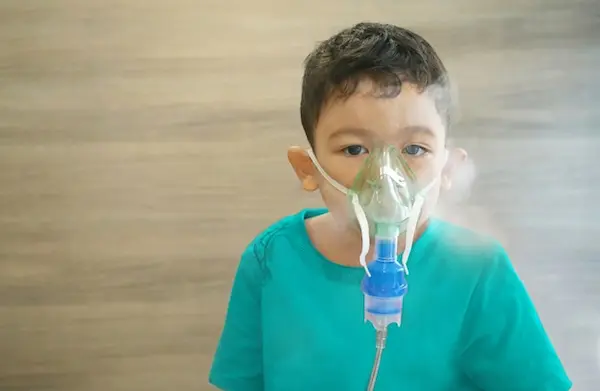
Steam sessions and steam inhalation are among the most effective ways to get rid of phlegm, because the steam enters the respiratory tract and helps maintain the consistency of the phlegm in its liquid form, from which it is easily eliminated. To benefit from this, the child should bathe with hot water twice a day for up to 10 minutes.
What is the solution that is placed in the steamer?
In some cases, saline solution needs to be added to the medications used in the steam device, which is a sterile saline solution obtained from the pharmacy. We advise against preparing a saline solution at home so that there is no harm or health risk.
How do I know that my child has congested phlegm?
There are symptoms that confirm that the child is infected with phlegm, and that it is congested with it, including the emergence of a rattling sound in the child’s chest as a result of the increased percentage of phlegm and secretions, as this indicates a viral infection affecting the upper respiratory system, meaning the nose and throat, and these secretions could be in the bronchial area, and here the child’s rattling sound changes to a whistle, and this indicates the presence of narrowing in these bronchi.
Treating phlegm for children in simple cases is easy, whether with drops of saline solution, which works to moisten the nose and reduce mucus, or drinking fluids, or patting the child’s back and chest as well, and other methods. However, there are cases that require medical intervention by visiting a specialist doctor in the presence of severe symptoms, as the doctor provides good treatment methods.
Sources
What are some techniques to help your child cough up mucus? – myhealth.alberta
What Can I Do to Help My Child Cough Up Phlegm – vibhavadi
