
Severe burns are one of the most complex injuries because they lead to complete damage to the layers of the skin. Therefore, the patient becomes in urgent need of rebuilding the skin after deep burns using many techniques that help restore skin tissue, opening new horizons in improving the outcome of treatment. Therefore, we will learn together about those methods and techniques that contributed to the return of hope to patients with deep burns.
What are the degrees of burns and their effect on the skin?
Degrees of burns are divided into four degrees that differ in the depth of the injury and its effect on the skin, and can be detailed as follows:
First degree burns
These are superficial burns on the outer layer of the skin, in which redness of the skin appears with swelling and mild pain. They include minor sunburns and other types of external burns that heal within days without leaving a trace.
Second degree burns
Second-degree burns extend to the second layer of skin, which is called the dermis. Its symptoms are severe redness with swelling and pain, and the appearance of bubbles or blisters. They take at least two weeks to disappear and may leave minor scars.
Third degree burns
From here, we can talk about cases that need to rebuild the skin after deep burns. Third-degree burns extend further, destroying all layers of the skin until they reach the fat layer. One of their most important symptoms is the appearance of the skin in a white or charred black color, and they are sometimes painless due to damage to the nerve endings.
Fourth degree burns
As for fourth-degree burns, they are the most dangerous types of burns, which extend to the muscles and tendons and also reach the bones in some cases. The most important symptoms are severe damage to the skin and nerves with a black, charred color. Often, over time, the patient does not feel any pain due to nerve damage. These burns require multiple and complex surgeries.
Methods of rebuilding skin after deep burns
In the event that the skin is completely damaged in the late degrees of burns, as we explained previously, the doctor begins to develop a comprehensive plan for the patient that ensures the reconstruction of the skin after deep burns and includes several different methods, the most prominent of which are:
Skin grafts
Skin Grafting is one of the most common methods of reconstructing skin after deep burns and is divided into:
- Autologous grafting: healthy skin is taken from another area of the patient’s body and transplanted or grafted to skin damaged by burns. This method helps the wound heal quickly and reduces the chances of infection because it relies on skin from the patient’s own skin.
- Partial-thickness grafting: Here, the outer or upper layer of skin is taken and used to patch large burn areas. It is also a safe method and helps with rapid healing.
- Full-thickness grafting: Here, the skin is taken in all its layers and is suitable for sensitive areas or visible areas of the body, such as the face, because it needs more elastic skin. The obstacle here is that the area where the skin is taken requires a longer period to heal.
Reconstructive surgery
Reconstructive Surgery is a surgical procedure that aims to modify scars and skin deformities resulting from deep burns and improve the overall shape and function of the skin. This surgery includes reshaping organs damaged by burns, such as restoring the ear or nose, and is usually performed in multiple stages to ensure the best result.
Skin substitutes
It is a method used in cases of very severe burns, as it relies on an alternative to self-patchwork and includes:
- Artificial substitutes: These are laboratory-manufactured substitutes that are similar to natural human skin. Examples include Integra, which consists of a collagen layer and a silicone layer, and is used in the event that there is a deficiency in natural skin or there is a large area affected by a burn.
- Donor grafting: Doctors sometimes use skin taken from a human donor, as provided by a skin bank, and it is used temporarily to cover and protect the damaged area. Sometimes, the patient’s body may not accept it and reject it.
Stem cell therapy
Stem cell therapy It is one of the best techniques that help rebuild the skin after deep burns. It helps stimulate skin growth and cell regeneration in a safe and effective way, and is done by either directly transplanting stem cells into the burn site, or combining them with other modern medical materials.
The role of physical therapy after deep burns
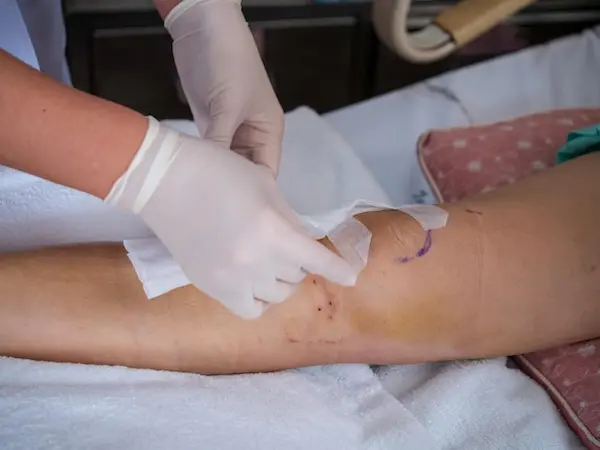
Some may be surprised by the importance of the role of physical therapy after deep burns, as it is actually part of a comprehensive rehabilitation program in the stages of skin reconstruction after deep burns. Below we discuss its importance in detail:
- Reduce pain and swelling resulting from burns using cold therapy or medical massage.
- Improving breathing function in cases of neck or chest burns that affect breathing movement.
- Improving skin shape through skin tightening exercises and therapeutic massage to reduce scars and improve skin elasticity.
- Some cases prevent movement of the affected part for a period, so physical therapy helps in gradually restoring it.
- Improving the flexibility of muscles and joints that are stiff due to burns near the knee, shoulder or elbow.
- Physical therapy helps rehabilitate the patient psychologically and socially after the harsh conditions he went through and helps him regain his self-confidence.
The Physical Therapy and Rehabilitation Center of Al Mousa Specialist Hospital provides distinguished medical services and care for patients with deep burns. It is a distinguished center that includes a group of the best physical therapy doctors and includes the latest and best technologies and devices that help in rehabilitating the patient physically and psychologically during skin reconstruction after deep burns.
Book your consultation now at مركز الجلدية والتجميل At Al Mousa Specialist Hospital.
Cream to unify skin color after burns
Many patients ask about the best cream to unify skin color after burns. There are many creams that must be used under medical supervision in simple and moderate cases to achieve a good result, including:
- Hydroquinone 4% cream, which is known for its strong effect in lightening pigmentation, should be used temporarily.
- Creams containing niacinamide help unify skin color and lighten it without causing irritation.
- Mederma cream is intended for treating scars after burns, which contains substances that reduce pigmentation and improve skin elasticity.
How does the skin heal after deep burns?
The skin usually heals after deep burns in several stages, which vary in duration from one case to another after medical intervention aimed at rebuilding the skin after deep burns. These stages include:
- Inflammatory stage: During the first five days, the body tries to defend itself, and the skin appears swollen and painful.
- Formation stage: The skin begins to form new cells, and this stage may be delayed in cases of deep burns and complete skin damage. In that case, the doctor must intervene with reconstructive surgery or skin grafting to cover the burn area.
- The building stage: This stage may take from months to years, as the skin begins to take a more regular shape, and some scars may appear that require physical therapy and the skin-tightening exercises that we mentioned previously.
Even if the process of rebuilding the skin after deep burns is complex and delicate, there is always renewed hope with the doctors of Al Mousa Specialist Hospital, who have long experience in treating burns with various techniques, so never despair and contact us. The earlier you start the treatment journey, the easier and faster your recovery becomes. Your health and safety are our first concern.
اسئلة شائعة
Below we answer the most common questions about skin reconstruction after deep burns:
Does the skin return to normal after a burn?
In the case of minor first-degree burns, the skin returns to normal after the burn. As for deep burns, the skin may not return to normal after the burn unless skin grafts are performed or artificial skin substitutes are used.
How long does it take for the skin to regain its color?
The time required for the skin to regain its color varies depending on the degree of burns. In simple burns, it takes two weeks, and in moderate burns, it takes months. However, in deep burns, permanent changes may occur that are treated using a laser or patching.
Why does the skin become white after a wound?
The skin becomes white after a wound due to the loss of pigment cells and the formation of scar tissue, or due to a temporary lack of blood flow, or due to skin damage after burns.
Sources and references
Reconstruction Post Burn – physio-pedia
Burns degrees – clevelandclinic
