
Rehabilitation of accident patients is an integrated plan aimed at rebuilding life in all its details. We do not only seek to strengthen muscles and repair tissues, but rather we work to restore independence, revive hope, and enable the patient to return to the maximum possible levels of performance in his daily and social life.
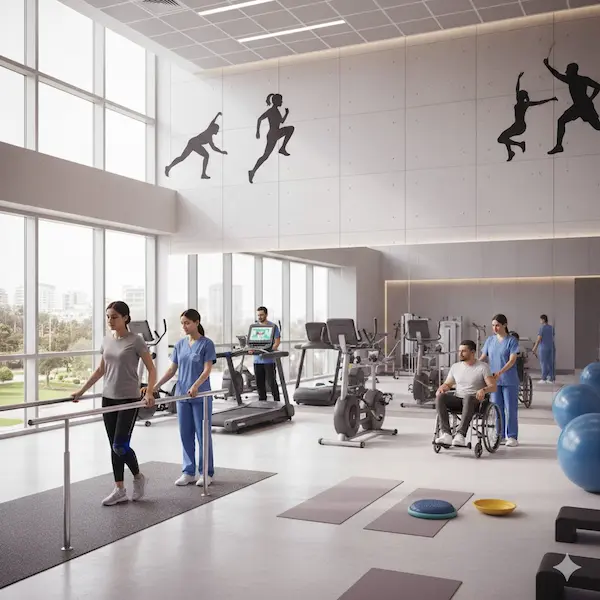
Treating injuries resulting from accidents
When an accident occurs, the damage extends to include a group of physical injuries that require therapeutic intervention and careful rehabilitation to restore body functions. Here are the most prominent injuries that are focused on within rehabilitation programs for accident patients as follows:
- Spinal and back injuries:
These include vertebral fractures and spinal cord injuries, and require extensive rehabilitation to restore mobility and prevent long-term complications.
- Neck injuries (sprains and fractures):
It is one of the most common injuries in car accidents, and requires careful treatment plans to relieve pain and restore neck flexibility and strength.
- Fractures of the pelvis and extremities:
These include complex fractures that may require surgical intervention followed by intensive physical therapy to restore the ability to walk and load on the joints.
- Knee and joint injuries:
Such as tears and damage to cartilage and ligaments, which directly affect the quality of life and daily movement.
- Soft tissue injuries:
Such as severe muscle and ligament tears that may result from severe trauma, and require treatment to relieve pain and swelling and restore muscle strength.
اقرأ ايضاً: دليل شامل عن مركز تأهيل عضلات الحوض
Benefits of rehabilitation
Rehabilitation is an essential step that represents a real investment in an individual’s future and quality of life and opens the way to optimal recovery. Rehabilitation programs for accident patients offer substantial benefits. It includes the following:
- Reducing the effects of diseases, injuries and the negative repercussions of a wide range of health conditions, whether acute such as accidents and fractures or chronic.
- It acts as an essential complement to medical and surgical interventions, ensuring that the patient has the best possible recovery outcome.
- It helps prevent or reduce the severity of complications that may follow major injuries, such as movement problems after strokes or spinal fractures.
- It slows the disabling effects of diseases such as diabetes, cancer and heart disease, by providing sufferers with strategies for self-management and treatment of the pain and associated complications.
- It contributes to maintaining individuals’ ability to live healthier lives as they age.
- Enables individuals to return to work or maintain their ability to perform household and daily life tasks independently, reducing the need to depend on others.
- It is an economically feasible investment, as it reduces expensive health care expenses, helps reduce the length of stay in the hospital and avoids the need for further hospitalization.
- Reducing the need for financial or caregiver support, because it returns individuals to the cycle of production and self-reliance.
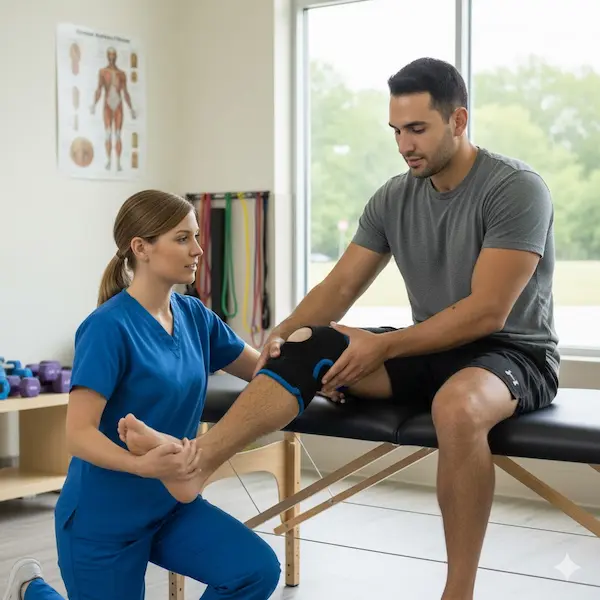
When do we announce the end of physical therapy sessions?
This decision is based on an assessment of the patient’s progress and achievement of therapeutic goals, and then consideration is given to ending the sessions or moving to the self-care phase within the rehabilitation plan for accident patients. as follows:
- When the joints regain their normal or maximum range of motion achievable for the patient's condition.
- When the strength of the affected muscles reaches a level that enables the patient to perform his daily functions efficiently and stably.
- The ability to perform normal life tasks such as dressing, walking, or driving without difficulty or assistance.
- When the pain completely disappears, or is reduced to a level that the patient can easily live with and manage without affecting their quality of life.
- Ensuring that the patient’s general health condition is stable and does not require additional intensive therapeutic intervention.
- The patient feels satisfied with the results achieved and feels ready to move forward with self-maintenance of fitness.
اقرأ ايضاً: Types of muscle physical therapy techniques and how to start
Choosing the right specialist after the accident
Choosing the right specialist is an important part of successful accident rehabilitation that will lead you safely through the difficult road of recovery after an accident, and to ensure the best results are achieved, Emphasis should be placed on quality and experience as follows:
- Make sure that the specialist has a proven track record and deep experience in dealing specifically with accident injuries. This specialization ensures the development of a recovery plan that fully knows the nature and type of injury you have suffered.
- The therapist who constantly develops his skills is the most trustworthy, and it is necessary to look for centers that pay attention to this aspect, as Al Mousa Specialist Hospital is considered one of the centers that is interested in qualifying its staff on the latest treatment protocols followed internationally.
- The therapist must allocate sufficient time to carefully evaluate your condition, design a detailed treatment plan that suits your individual needs, and continuously modify it based on your progress.
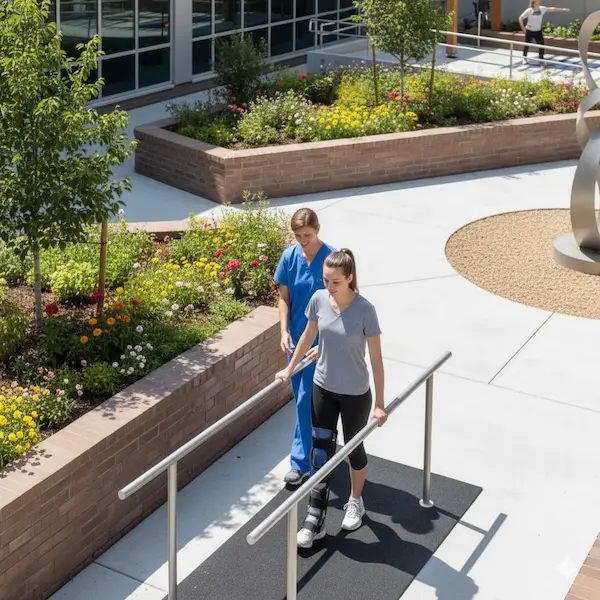
Types of rehabilitation exercises for accident patients
Treatment programs always include a variety of exercises designed within the framework of trauma rehabilitation to target your weaknesses and pain points. The basic exercises in these programs include the following:
- Stretching and Flexibility Exercises These gentle exercises help relieve stiffness and tightness in the affected areas, and restore the natural flexibility of the tissues. For example, targeted stretching of the neck relieves the symptoms of impact injuries, while stretching the hamstrings helps relieve pressure on the lower back.
- Strengthening and muscle rebuilding exercises aim to rebuild muscle strength around the affected joints. This provides them with the necessary support and prevents recurrence of the injury. Techniques such as light weight exercises, resistance bands, and body stabilization exercises are used to strengthen the muscles surrounding the spine.
- Balance and coordination exercises After suffering a severe injury or concussion, balance becomes a challenge. These exercises, such as standing on one leg or walking in a straight line, retrain the brain and muscles to work together, which improves stability and significantly reduces the risk of falling in the future.
- Core stabilization exercises: These exercises are very necessary to treat back and pelvic injuries, as they provide long-term internal support for the spine, and include movements such as pelvic tilts and deadlift exercises.
اقرأ ايضاً: Discover the most important steps in the effective physical therapy rehabilitation process
Timetable for rehabilitation of accident patients
Determining the ideal timing to start physical therapy is part of the rehabilitation plan for accident patients without causing any additional damage. where The duration varies depending on the severity of the injury as follows:
- For mild injuries such as bruises and minor sprains, rehabilitation can begin very early, often 24 to 48 hours after stabilization to reduce stiffness.
- Moderate injuries that require initial stabilization. The patient may need an initial rest and stabilization period ranging from one to two weeks before starting the treatment program.
- For simple limb fractures, treatment usually begins after 4 to 6 weeks, that is, immediately after removing the cast or splint, when the goal is to restore lost movement and strength.
- Complex or post-operative injuries In these cases, a longer period of surgical recovery is required, so rehabilitation often begins 2 to 4 weeks after the operation or immobilization.
- Spinal injuries, due to their sensitivity, must be waited until the medical condition has completely stabilized, which may take from one to three weeks, in order to ensure the safety of the spinal cord and bone structures.
What happens in the first physical therapy session?
If you're preparing for your first physical therapy session, you're bound to feel a little nervous or curious, but knowing what awaits you can give you peace of mind and make your experience more positive. وهي كالتالي:
- Review the medical history, discuss the case, and examine range of motion, pain, and physical ability.
- Set realistic goals for recovery, such as reducing pain or improving mobility.
- Design a personalized treatment plan that includes appropriate exercises and techniques.
- Start light exercises such as stretching, and may use aids such as heat therapy or ultrasound.
- Knowing the steps gives you comfort and confidence, and regular participation ensures better results.
Prevent complications after accidents
Accident injuries may seem simple at first, but if they are not treated properly, they can turn into chronic problems such as: Pain Persistent or weak movement, and here comes the importance of adhering to the physical therapy plan until the end.
It is important to complete the entire treatment program, even if the pain begins to subside, because stopping prematurely may lead to incomplete recovery and increased risk of relapse.
Lifestyle modification also plays a major role in recovery, such as improving sitting posture, exercising regularly, and avoiding incorrect movements.
Periodic follow-up with a specialist is no less important, as it helps monitor progress and modify exercises as needed to ensure continued improvement.
Adhering to these simple steps can make a big difference in preventing long-term complications, and give you a chance to return to your life with greater energy and quality.
اقرأ ايضاً: What are the most important uses of shock waves in modern medicine?
How do you ensure successful rehabilitation after accidents?
To ensure the success of your accident rehabilitation program, it is important to follow some practical tips that will facilitate your recovery journey وهي كما يلي:
- Start gradually and do not rush the results, as the body needs time to adapt.
- Stick to the specific schedule for training and sessions, as regularity is the basis of improvement.
- If you feel pain, take a break and don't push yourself.
- Do not hesitate to inform the specialist of any new symptoms that appear during treatment.
- If there is an accompanying medication or diet, be sure to adhere to it to support the results.
- Persistence and follow-up are the key to reaching the best possible result.
Frequently asked questions
Are physical therapy sessions at home effective?
Yes, physical therapy sessions at home are effective if they are carried out under the supervision of specialists and with an appropriate treatment plan. They provide comfort, reduce stress, and increase adherence to treatment, especially for the elderly or those who have difficulty moving around.
How are traffic accident patients treated?
Traffic accident patients are treated with integrated care that begins with rapid medical evaluation and stabilization of the injuries, then developing a treatment plan that includes physical therapy, psychological support, and continuous follow-up. At Al Mousa Specialist Hospital, this care is provided within comprehensive rehabilitation programs aimed at restoring movement, alleviating pain, and improving the quality of life, under the supervision of a team specialized in dealing with accident cases.
How do you deal with the accident?
When exposed to an accident, remain calm, check your safety and the safety of others, call an ambulance immediately, avoid moving the injured, document the details of the accident, then continue treatment and rehabilitation as directed by doctors to ensure full recovery.
Conclusion
Rehabilitation of accident patients is a real opportunity to regain strength, movement, and self-confidence. Every step in the treatment program brings the patient closer to his normal life and gives him new hope. Al Mousa Specialist HospitalIt provides rehabilitation in a thoughtful way that suits each case.
If you are looking for a fresh start after an injury, FCommunicate with the hospital It is the first step on the path to recovery. Your health deserves attention, and returning to life stronger is the goal.
