
Did you know that there are some signs that appear in the skin of the scalp that require immediate medical diagnosis? They may be an indicator of scalp cancer, which appears in an area that is far from being noticed. Some people believe that it is immune to any disease, but the matter requires immediate intervention in order for the disease to be treated at an early stage. Follow this article to learn about the causes and symptoms of this type of skin cancer and effective treatment methods.
What is scalp cancer?
Skin cancer on the scalp is a type of skin cancer that affects the scalp area. It is one of the common skin cancers that affects people with thin hair or those who suffer from baldness. It arises as a result of abnormal growth of skin cells due to many factors that we will learn about below.
Types of scalp cancer
There are many types of scalp cancer, including 3 different types:
- Basal cell carcinoma: Basal Cell Carcinoma is the most common type and often appears in areas of the scalp most exposed to the sun. It appears as a transparent bump and has slow growth. It rarely spreads throughout the body, but causes damage to surrounding tissues if treatment is neglected.
- Squamous cell carcinoma: Squamous Cell Carcinoma is more aggressive than basal cell carcinoma and appears in the form of rough, scaly patches. It sometimes spreads to the lymph nodes or some nearby organs if not treated early.
- Melanoma: Melanoma is the most dangerous type of skin cancer and often develops from a mole to a new dark spot. It has characteristics such as asymmetry, irregular borders, and changes in shape over time.
Causes of scalp cancer
The factors and causes of scalp cancer vary and can be detailed as follows:
- Chronic exposure to sunlight: especially ultraviolet rays, which is the main cause of most types of skin cancer, especially in those suffering from baldness, because the scalp becomes more exposed to direct sunlight.
- Family history: Anyone who has a family history or hereditary genes for skin cancer may be more susceptible to developing skin cancer of the scalp.
- Weak immunity: such as someone who has had some organ transplants or has an immune disease that prevents the body from resisting the growth of abnormal cells.
- Exposure to harmful chemicals: such as exposure of the scalp to arsenic, tar, or strong chemical dyes that increase skin irritation and the possibility of cancer.
- Chronic wounds on the scalp: such as constant exposure to ulcers or old burns that do not heal and turn into cancerous cells over time.
- Infection with the human papilloma virus (HPV): and some viruses associated with skin cancer that contribute to the development of cancer cells, especially squamous cell carcinoma.
- Risk factors: The probability of developing skin cancer on the scalp increases in the elderly or with old age due to the accumulation of damage from both environmental factors and sunlight on the skin.
Get to know انواع سرطان الدماغ دليلك لفهم الفرق بينها
Symptoms of scalp cancer
Symptoms of scalp cancer are the first signs that help diagnose the disease and include the following:
- The appearance of a strange mass or tumor in the form of a bump or nodule that gradually enlarges and is painless.
- The shape, size, or color of moles on the scalp changes and appears in a new, unusual shape.
- Some tumors may be accompanied by an itching or burning sensation in the scalp with local pain.
- A sore on the scalp that does not heal and begins as a simple wound and then begins to secrete fluid or appear to bleed.
- Hair loss or hair loss directly above the tumor due to skin damage.
- The presence of a scaly, discolored spot that appears either red, brown, or black in color with a rough surface.
- Repeated bleeding in multiple areas of the scalp without a clear cause such as allergy or dandruff.
If you develop symptoms, take action Book your consultation at Oncology center At Al Mousa Specialist Hospital
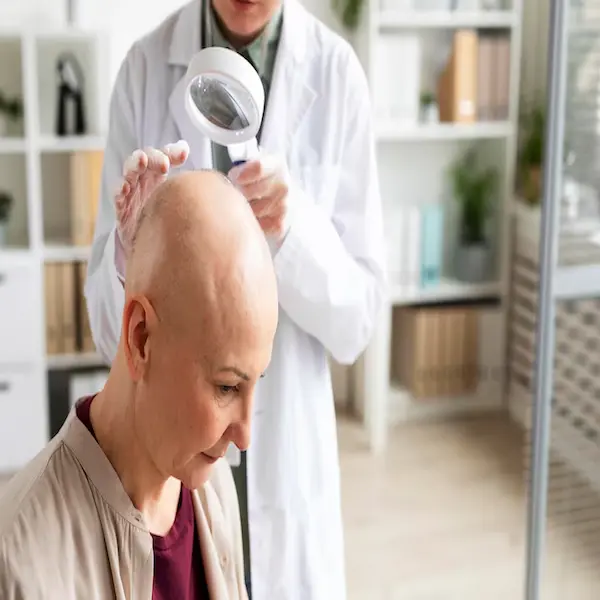
Methods of diagnosing scalp cancer
Scalp cancer is diagnosed through multiple medical steps aimed at confirming the presence of a cancerous tumor and clarifying its type and stage, which include:
- Clinical medical examination: By conducting a personal and family medical history for the patient, then asking about the signs, examining them, and examining the lump that appears on the scalp, its size, and whether it causes any pain.
- Use of dermatoscope: It is a special device used to magnify and examine the surface of the skin with high precision to help see the details of the tumor.
- Laboratory tests: It includes a blood test and some other analyzes to detect weak immunity or any chronic diseases.
- Imaging examinations: It includes several methods, including CT scan or MRI to see deep tissues and lymph nodes, and also a PET scan to determine the extent of the cancer’s spread in the body.
- Biopsy: It is the decisive and most important step in diagnosing the disease. It is done by taking a sample from the visible lump or sore and sending it to the laboratory for examination, which confirms the infection and the type of tumor.
How to treat scalp cancer?
After accurate diagnosis and determining the size, type, and grade of the tumor, the doctor begins to choose the appropriate method or combine more than one method to treat scalp cancer, which includes the following:
- Surgical resection: It is the first choice for doctors if the tumor increases in size and is present in one area, so the doctor removes it completely along with the surrounding portion of healthy tissue.
- Mohs Surgery: This surgery is used in various types of skin cancer that are recurrent or located in sensitive areas of the body, such as the scalp. It is a surgery that allows the preservation of the largest possible amount of healthy tissue.
- Radiotherapy: Radiotherapy is used when surgery cannot be performed to treat cancer or as an adjunct after resection, and targets remaining cancer cells.
- Chemotherapy: Chemotherapy is used for advanced cases or when the tumor has spread to the scalp and other areas. It relies on medications that are given to the patient intravenously that contribute to killing cancer cells but may destroy some healthy cells in the body.
- Immunotherapy and targeted therapy: These methods can be used in cases of advanced melanoma by relying on medications that enhance the body's immunity to fight cancer cells, or by targeting specific mutations in cells without harming any healthy cells.
- Scalp care during and after treatment: The doctor recommends some instructions for taking care of the scalp, such as constantly moisturizing the skin, protecting it from the sun, and paying attention to periodic follow-up with the doctor for early detection of any recurrence of the disease.
Get to know Symptoms of head and neck cancer And 6 tips to prevent it
Ways to prevent scalp cancer
Doctors at Al Mousa Specialist Hospital recommend several methods that help prevent scalp cancer, the most prominent of which are:
- Protect the scalp from the harmful rays of the sun by using a hat or head covering while going out at peak times.
- Self-examination and regular follow-up to ensure that the scalp is safe from any injury or the appearance of strange lumps or moles.
- Avoid using unreliable chemicals, especially dyeing, and wash your hair well afterward.
- Work to strengthen the immune system through healthy nutrition, adequate sleep, and reduced stress.
- Quit smoking because it increases the risk of skin cells turning into cancerous cells.
Contact the specialist doctors at Al Mousa Specialist Hospital if any signs of scalp cancer appear, especially the feeling of a strange lump under the skin, in order to make the necessary comprehensive medical diagnosis and early treatment for the cancer before it develops and spreads to other areas of the body. Do not hesitate and seek medical help immediately and you will receive comprehensive medical care.
Frequently asked questions
Below we answer the most common questions we receive about scalp cancer:
Is headache caused by cancer?
No, headaches are not necessarily caused by cancer, but sometimes they occur because the tumor has spread to deeper tissues, or if it is of an aggressive type, or when the tumor has spread to the brain.
What is the cause of a hard lump on the scalp with pain?
There are several reasons for the appearance of a hard lump on the scalp with pain, such as the presence of a sebaceous cyst on the scalp, an abscess, inflammation of the hair follicles and skin, or a tumor pressing on the nerves in the scalp.
What does a cancerous mass on the scalp look like?
A cancerous lump on the scalp can take many forms, such as a firm or moving hard bump, a sore that does not heal, a thick crust that bleeds, or a change in the shape and size of a previous mole.
Medical references
Symptoms of non-melanoma skin cancer – nhs
What You Need to Know About Skin Cancer on the Scalp – healthline
