
Are you wondering about the difference between the fifth and seventh nerves, when you feel sharp and sudden pain in your face, or have difficulty smiling, or closing your eyes?
The reason behind these feelings and expressions lies in a complex network of nerves, and the fifth and seventh nerves are among the most important nerves in that network.
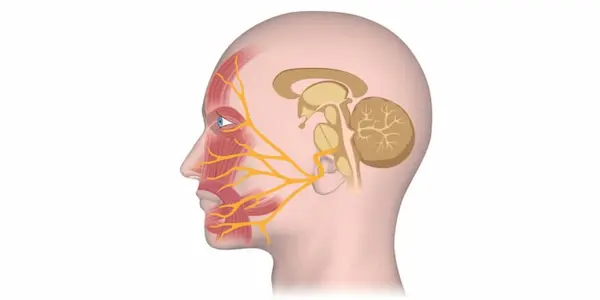
They play a pivotal and important role in the face, as one is responsible for sensation, and the other is responsible for facial expressions, such as making smiles and frowns.
So if you want to know the difference between them in symptoms, causes, and treatment methods, follow this article with me.
The difference between the fifth and seventh nerve
You can differentiate between the fifth and seventh nerve in terms of function by the following:
- Fifth nerve: –
The trigeminal nerve is also known as the trigeminal nerve, because it consists of three branches, which include:
- In kind.
- maxilla.
- mandible.
It is one of the largest cranial nerves, and you have two trigeminal nerves, one on each side of your face.
Function of the trigeminal nerve:
- It contributes to sending signals from your brain to your face, and vice versa.
- Provide sensation to large parts of your face.
- Allows you to chew food.
2. Seventh nerve:
Also known as the facial nerve, it is one of the important cranial nerves in the body.
- Function of the seventh nerve:
It contributes to sending signals from your brain to parts of your face and vice versa, because it is responsible for many functions, such as: –
- Stimulate the salivary glands;
- Stimulating the tear glands to secrete tears.
- It plays a key role in hearing, because it helps nourish the ear canal, tympanic membrane, and external pinna.
- Transfer of taste sensations from the anterior two-thirds of the tongue.
- Control the forehead muscles.
- Help close your eyes.
- It helps the inner ear respond to loud sounds.
- Allows you to move your nose, eyelashes, and chin.
The difference between the fifth and seventh nerve in terms of symptoms
The difference between the fifth and seventh nerve in terms of symptoms lies in the following:
Symptoms of trigeminal nerve
Trigeminal neuralgia is more common in older people (ages 50 and older).
Its symptoms include the following:
- Episodes of sharp, severe, electric shock-like, stabbing pain in the cheek or jaw.
- Pain attacks may be triggered by touching anything to the face or teeth, such as:
- Shaving.
- Putting on makeup.
- Teeth cleaning.
- Touching the tooth.
- Facial honey.
- Exposure to cold air.
- eater.
- Drinking.
- Speaking.
- Smiling.
- Seizures may come and last from a few seconds to two minutes, then suddenly disappear.
- Between attacks of pain, you may feel the following sensations:
- Numbness.
- Heartburn.
- palpitation.
Symptoms of the seventh nerve
Seventh neuropathy is known as Bell's palsy, and its symptoms usually appear on one side of the face.
Some people may experience mild weakness in the facial muscles, while others suffer complete paralysis.
Its symptoms include the following:
- Disorder of movement of the muscles that control the face, such as:
- Smiling.
- التحديق.
- Closing the eyelid.
- Blinking.
- الصداع.
- Drooling.
- Loss of sense of taste in the front two-thirds of the tongue.
- Hypersensitivity to sound in the affected ear.
- Dry eyes.
- Difficulty speaking, eating, or drinking.
- Inability to close the eye on the affected side of the face.
- Humming in the whine.
- Pain in the face or ear.
- Streaming tears.
- Drooping of the affected side, such as:
- Eyelid.
- The eyebrow.
- The eye.
- Front.
- Corner of mouth.
Read also: Symptoms of seventh nerve infection Causes, treatment and how to diagnose
The difference between the fifth and seventh nerve in terms of causes
The causes that lead to the occurrence of both the fifth and seventh nerves vary, and include the following:
Causes of trigeminal neuropathy
Trigeminal neuralgia usually occurs spontaneously, but is sometimes associated with facial trauma or medical (dental) procedures.
Trigeminal neuralgia is divided into three main types, such as:
- Classic trigeminal neuralgia: –
This type occurs as a result of the following: -
- Pressure on the trigeminal nerve near where it enters the brainstem (the lower part of the brain that fuses with the spinal cord).
- Pressure of an artery (usually the superior cerebellar artery) or vein on a nerve.
In some people, pressure on the nerve may erode the protective outer layer (myelin sheath), causing pain signals to be transmitted along the nerve.
- Secondary trigeminal neuralgia:
This pain results from a medical condition or other health problem, such as:
- Multiple sclerosis.
- Tumor.
- Arteriovenous malformation (abnormal tangle between arteries and veins).
- Facial injury.
- Damage resulting from surgery, including dental surgery.
- stroke.
- Cysts (fluid-filled sacs that grow near the trigeminal nerve).
- Pain of unknown cause:
Doctors diagnose the pain as idiopathic, when there is no clear cause for your facial pain.
Causes of seventh nerve disorder
Inflammation and compression of the seventh nerve is the main cause of Bell's palsy. The results of studies have shown that some of the following viral infections may stimulate this inflammation, including:
- Herpes simplex (a virus that causes mouth infections, such as cold sores).
- كوفيد 19.
- Epstein-Barr virus (mononucleosis).
- Varicella zoster (chickenpox and shingles).
Bell's palsy may also sometimes be associated with the following health conditions:
- داء السكري.
- High blood pressure.
- Toxins.
- Guillain-Barré syndrome.
- الساركويد.
- Lyme disease.
- السمنة.
- الحمل.
- Autoimmune diseases.
Book your consultation now at مركز العلوم العصبیة At Al Mousa Specialist Hospital.
The difference between the fifth and seventh nerve in terms of treatment
Treatment of the fifth and seventh nerves varies according to the cause that led to the disorder, and includes the following: –
Treatment of trigeminal neuralgia
There are many treatments that your doctor may advise you to control pain, including the following: –
- الأدوية:
Medication is the first treatment that doctors may recommend to you, especially if you suffer from classic trigeminal neuralgia of unknown cause, and it includes the following:
- Antiepileptic drugs, such as: –
- Carbamazepine.
- Cascarbazepine.
- Gabapentin.
- Pregabalin.
- Lacosamide.
- Topiramate.
- Phenytoin.
- Muscle relaxants, such as baclofen.
- Surgery:-
Your doctor may advise you to undergo surgery in the following cases: –
- Medication did not manage the symptoms.
- The medication has caused you persistent and annoying side effects.
- You suffer from secondary trigeminal neuralgia.
Surgery includes the following:
- Microvascular decompression:
It is the most effective in preventing pain in the long term, and includes relieving blood vessel pressure on the trigeminal nerve that touches it.
- Radiosurgery:
It is a relatively new surgery, and it uses focused radiation;
- Neuroradiculotomy:
This surgery involves destroying the root of the trigeminal nerve, through chemical injection or thermal coagulation.
- Peripheral nerve resection:
This surgery includes damaging the trigeminal nerve, through the following:
- Glycerin injection.
- Radiofrequency therapy.
- Balloon pressure.
Treatment of seventh nerve disorder
Most cases of Bell's palsy may improve without treatment.
- Eye drops or ointments:
Your doctor may prescribe eye drops or ointments to be applied at night to protect the eyes from dryness and soothe irritation.
- Antiviral medications, such as acyclovir, which may speed up the healing process.
- Oral corticosteroids, such as prednisone, to help reduce nerve swelling and restore facial movement faster.
- Electrical stimulation.
- Acupuncture.
- Physical therapy؛ لتحفيز العصب الوجهي.
- Treatment with vitamins, such as vitamin B12, B6, and zinc.
Ways to prevent problems with the fifth nerve and seventh nerve
If you are wondering about the difference between the fifth and seventh nerve in terms of prevention methods, the answer will be that there is no difference between them.
Trigeminal neuralgia cannot be prevented, because it results from pressure from the veins and arteries on the nerve.
You also cannot prevent Bell's palsy (seventh neuropathy), because it is linked to some types of viral infections, and not everyone who gets these infections gets it.
But you can manage certain medical conditions, such as diabetes, high blood pressure, and obesity, to help reduce your risk of developing the disease.
Frequently asked questions about the fifth and seventh nerve
If you are looking for an answer to the question: What is the difference between the fifth and seventh nerve?
Does the trigeminal nerve affect the shape of the face?
The trigeminal nerve does not affect the shape of the face, because it is responsible for providing sensation in the face and for the movement of the muscles responsible for chewing food.
How do I know if I have trigeminal neuralgia?
If you experience sudden attacks of sharp, severe facial pain that feels like electric shocks or stabbing, you may have trigeminal neuralgia.
These attacks may be regular for days, weeks, or months, and sometimes they may disappear, then return again.
What vitamin treats the trigeminal nerve?
Vitamin B plays a critical role in maintaining healthy nerve cells. Vitamin B12 deficiency may cause neurological damage and worsen symptoms of trigeminal neuralgia.
In conclusion, I have now realized, dear reader, what is the difference between the fifth and seventh nerve in terms of function?
We also answered some questions that may be on your mind regarding the trigeminal nerve. Al Mousa Specialist Hospital This is so that the best doctors can help you diagnose your condition using the latest technologies, find out the causes that led to the occurrence of this disease, and determine the appropriate treatment for your condition.
Sources
Trigeminal Nerve – clevelandclinic
Bell’s Palsy – hopkinsmedicine
