
Dental crowns are not just a cosmetic procedure, but rather an effective treatment solution that restores the teeth to their natural function and protects them from future damage.
In this article, we provide you with a comprehensive guide to dental crowns, including the reasons for using them, their types, steps, materials used, frequently asked questions, and post-application care tips.
What is dental crowns?
A dental crown is a covering that is specially made to completely or partially cover a natural tooth, and is attached to it using a strong adhesive.
The crown is designed to mimic the shape of a natural tooth in terms of size and color, and is made of different materials such as zirconium, porcelain, or metal, according to medical and cosmetic needs.
Reasons for using dental crowns
Dental crowns are used In the following cases:
- After root canal treatment (root filling) to protect the tooth from fracture.
- In cases of fracture or severe tooth wear.
- To cover large fillings that weaken the tooth structure.
- To improve the shape of the front teeth and the symmetry of the smile
- As part of a dental implant to cover a metal implant.
- To correct occlusion or slight overlap between teeth.
- To protect weak teeth in the elderly or diabetics.
Types of dental crowns
Dental crowns are classified according to the material used to me:
- Zirconia Crown
- High hardness ceramic material
- Resistant to breakage and pressure
- Natural color similar to teeth
- Used for back and front teeth
- Contains no metal, suitable for allergies
- Porcelain Crown
- Transparent and very aesthetic
- Use for front teeth only
- Less hard than zirconium
- Gives a very natural look
- Metal Crown
- Very durable
- Unaesthetic
- Use for back teeth only
- Suitable for situations requiring high strength
- Porcelain with metal (PFM)
- It combines the beauty of porcelain with the strength of metal
- It is used in multiple situations
- Mineral may appear as the gums recede
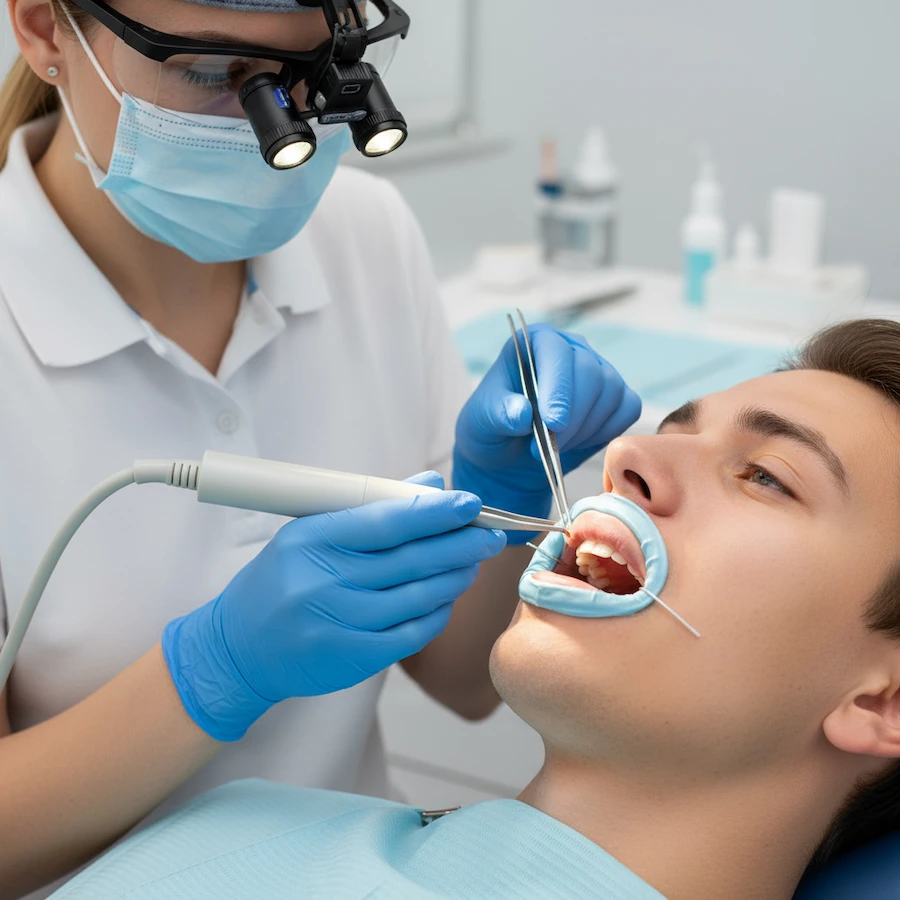
Dental crowns steps in detail
- Examination and evaluation
- X-ray imaging of the tooth.
- Evaluate the tooth structure and the extent of the need for crowns.
- Choose the appropriate type of crown.
- Tooth preparation
- Removing part of the tooth to make room for the crown.
- Clean the area well.
- In the case of root canal treatment, the root is closed first.
- Take measurements
- Using a traditional template or a digital scanner.
- Send the measurements to the laboratory to manufacture the crown.
- Installing a temporary crown
- To protect the tooth until the final crown is prepared.
- It is made of plastic or acrylic.
- Installing a permanent crown
- Attached using strong adhesive.
- Occlusion and height adjust precisely.
- The patient is reviewed after a few days to ensure comfort.
The difference between zirconium and porcelain
| Item | Zircon | Porcelain |
| power | Very high | Medium |
| beauty | very good | Excellent in transparency |
| Endurance | Resistant to breakage and pressure | More susceptible to cracking |
| Cost | Relatively higher | Less expensive |
| الاستخدام | Back and front teeth | Front teeth only |
| Allergies | Does not contain metal | May contain metal in some types |
Is dental crowns painful?
The procedure is performed under local anesthesia, and does not cause pain during preparation or installation.
Care after dental crowns
To ensure that the crown lasts for many years, Recommended:
- Brushing teeth twice daily.
- Gently use dental floss around the crown.
- Avoid biting hard objects such as ice or nuts.
- See your doctor periodically to examine your crown and gums.
- Use an antibacterial mouthwash.
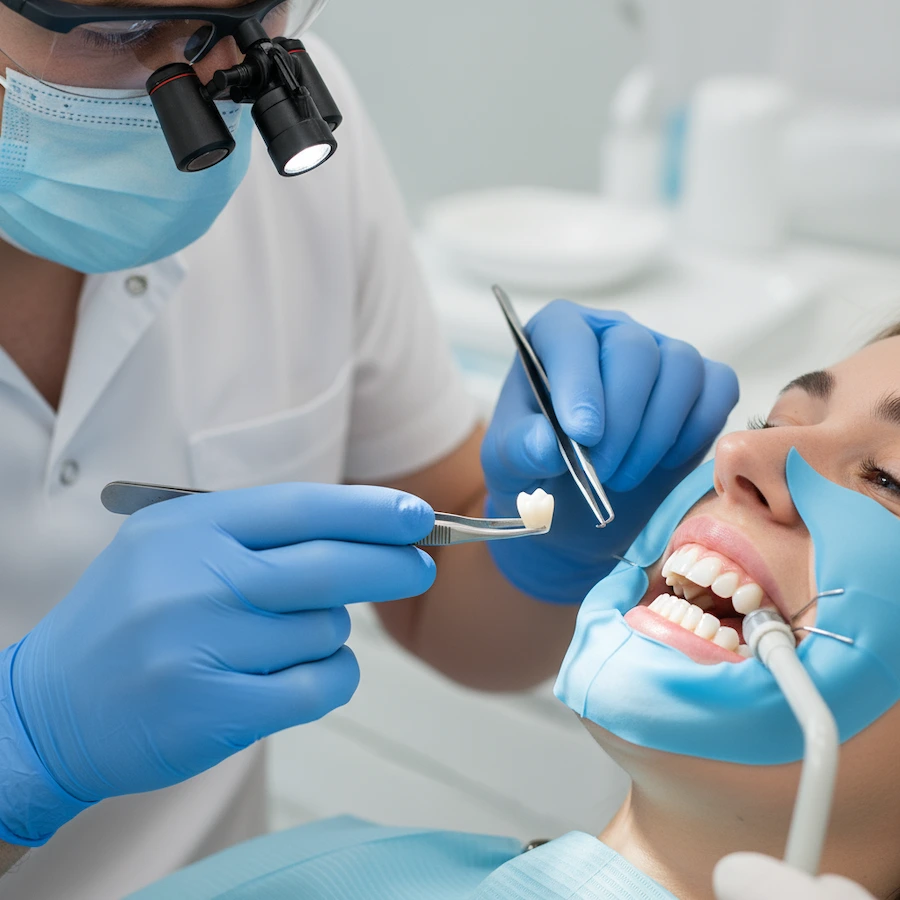
Reasons for failure of dental crowns and when they should be replaced
Although dental crowns are designed to last for years, there are cases that may lead to their failure, which requires medical intervention or replacement. like :
- Caries under the veneer:
Caries may creep into the remaining portion of the tooth under the crown if the edges are not tight or if cleaning is neglected, leading to a weakening of the supporting structure.
- Broken crown or panel:
Veneers may break due to excessive pressure, such as grinding teeth or biting hard foods.
- Receding gums:
Over time, the gums may recede from the base of the crown, exposing part of the tooth's root and increasing the size of the tooth Caries risk Or allergies.
- Persistent pain or inflammation:
If the patient feels chronic pain or inflammation in the surrounding gums, this may indicate a problem with the attachment or an infection under the crown.
- Change in bite or discomfort:
If crowns become misaligned with opposing teeth, they may affect chewing or cause headaches and jaw pain.
Learn about: Health services provided by Al-Mousa Health Group
When should the paneling be replaced?
When any of the above symptoms appear, or after more than 10-15 years have passed since the installation, it is recommended to see a doctor to evaluate the need to replace the crown.
Dental crowns after root canal treatment: Why is it necessary?
Root canal treatment (canal extraction) saves the tooth from extraction, but leaves it brittle and weak and causes Next:
- Loss of nerve nutrition:
After the nerve is removed, blood flow to the tooth stops, making it more vulnerable to fracture.
- Weak internal structure:
Removing the inner pulp weakens the tooth from the inside, especially in the back teeth, which bear a lot of pressure during chewing.
- The role of the paneling:
The crown works as an external shield that protects the tooth from fracture, restores its natural shape and function, and prevents the leakage of bacteria.
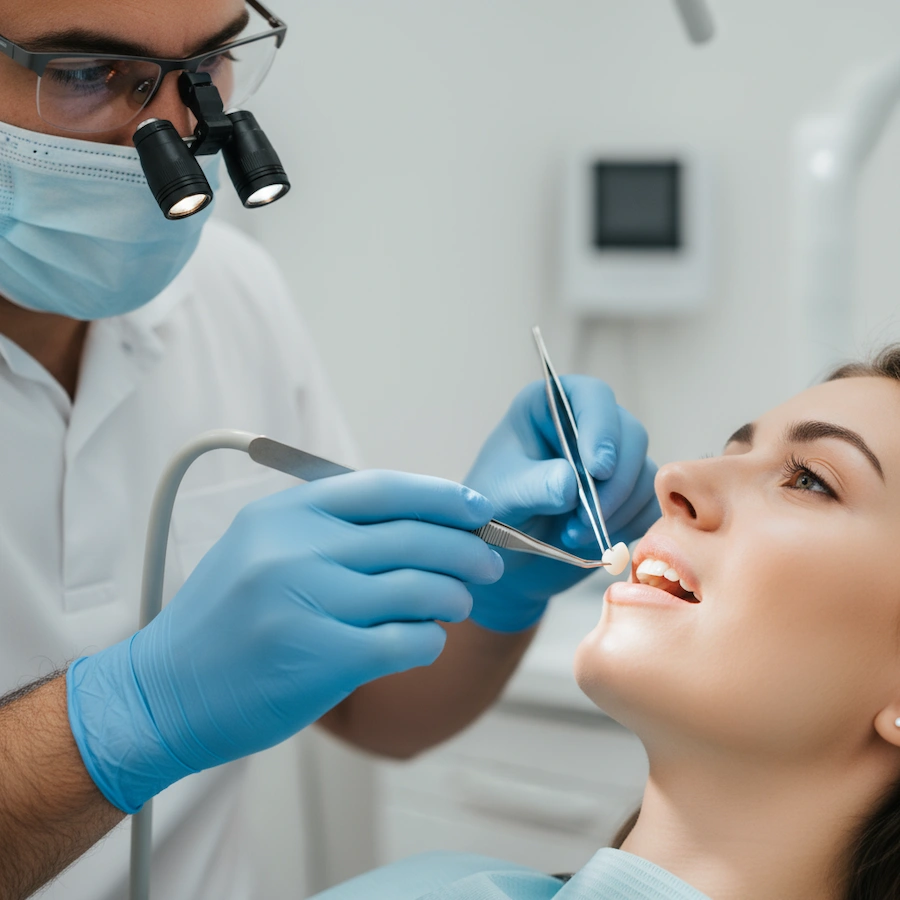
note:
In some cases, crowns may not be necessary for front teeth if they are structurally sound, but the final decision is up to the doctor's assessment.
The difference between a dental crown and a dental bridge
Although both are used to restore teeth,... There are fundamental differences:
| Item | Dental crowns | Dental bridge |
| التعريف | A cap placed over a single tooth to protect or beautify it | A prosthetic composition used to fill a gap caused by a missing tooth |
| الاستخدام | To protect a broken tooth or after root canal treatment | To replace a missing tooth by using adjacent teeth as supports |
| Number of teeth | Only one tooth | Three or more teeth (missing tooth + two braces) |
| Installation | It is attached to a natural tooth after it has been filed | It is attached to the teeth adjacent to the space |
Can they be combined?
Yes, in some cases, crowns are used as part of a bridge, where the abutment teeth are covered with crowns to hold the artificial tooth in the middle.
Dental crowns for children: Is it safe?
Dental crowns are not limited to adults only, but are also used for children Certain cases:
- Severe caries in baby teeth:
When a baby tooth is severely damaged, a crown is used to protect it until it falls out naturally.
- After nerve treatment for children:
Baby teeth that have undergone root canal treatment become weak, and crowns protect them from fracture and prevent infection.
- Congenital problems or weak enamel:
Some children are born with weak or misshapen teeth, and crowns are used to improve form and function.
Is it safe?
Yes, stainless steel or zirconia crowns for children are safe, effective, and widely used in pediatric dentistry.
Cosmetic considerations: How do veneers affect the smile?
Dental crowns are not only used to protect damaged teeth, but are also an essential element in smile beautification plans, especially when implemented accurately in terms of color, shape, and general symmetry.
Here's how crowns affect the beauty of a smile Below
Choose the appropriate color
- The color of the crown is carefully chosen to match the color of the adjacent teeth.
- A digital or optical color guide is used to determine the shade closest to natural teeth.
- In cases of complete makeup, a uniform color is chosen for all coverings to achieve perfect harmony.
- Zirconium and porcelain offer multiple color options, with the ability to adjust transparency and brightness.
Choosing the wrong color may make your crown appear artificial or asymmetrical, so coordination with your doctor is crucial.
The effect of crowns on tooth symmetry
- The crown is designed to mimic the shape of a natural tooth in terms of size and curvature.
- The edges, angles, and spaces between the teeth are consistent.
- Digital technologies are used to adjust occlusion and pressure distribution during chewing.
- In cases of an asymmetric smile, crowns are used to correct minor deviations or gaps.
A good crown goes unnoticed, but rather blends seamlessly into the smile.
Can veneers be used in smile makeover plans?
Yes, very effectively, especially in The following cases:
- Covering stained or discolored teeth.
- Correcting the shape of short or asymmetric teeth.
- Closing the gaps between the front teeth.
- Improving the symmetry of the smile in the smile line.
- Replacing old fillings with a more aesthetic appearance.
Crowns are sometimes used as an alternative to veneers, especially if they are...Teeth need strengthening in addition to cosmetic surgery.
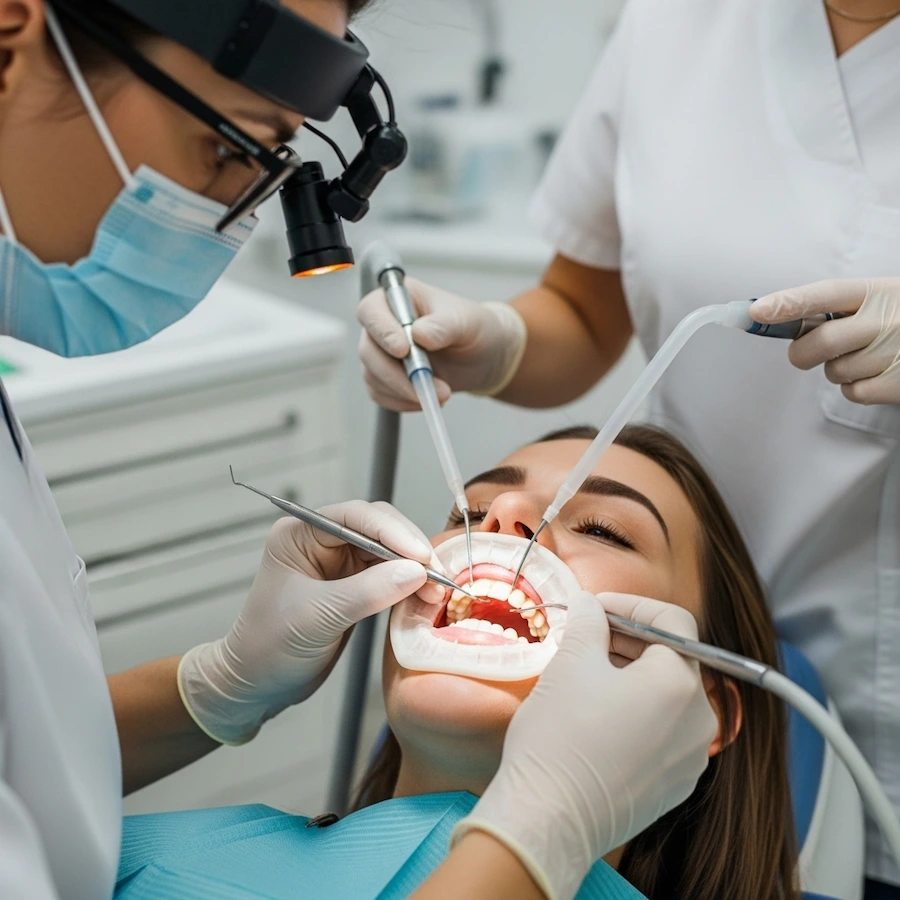
Al Mousa Health Group: experience and technology in dental crowns
At Al Mousa Health Group, we provide services Dental crowns via:
- Comprehensive evaluation using 3D digital imaging.
- Choose the most appropriate material according to the situation and budget.
- Preparing the crown with modern CAD/CAM technology to ensure accuracy.
- Precise installation that takes into account occlusion and aesthetic appearance.
- Periodic follow-up to ensure the stability of the crown and the comfort of the patient.
Book your appointment today, and restore your smile with confidence and high quality.
Frequently asked questions about dental crowns
Can dental crowns cause bad breath?
Yes, if the area around the paneling is not cleaned well, bacteria may accumulate and lead to an unpleasant odor.
Can the paneling be repaired if it breaks or does it have to be replaced?
It depends on the type and location of the fracture.They are cosmetic materials, but in cases of major breakage or loss of a large part of them, it is preferable to replace them completely.
Does dental crowns affect tooth sensitivity?
Some patients may feel temporary sensitivity after installation, especially when eating hot or cold foods.
What is the difference between a crown that is placed on a natural tooth and one that is placed on an implant?
A crown on a natural tooth is fixed over the tooth after it has cooled, while a crown on an implant is attached to a metal support implanted in the bone.
Is it possible to change the color of the paneling after it is installed?
No, most types of crowns, such as zirconia or porcelain, cannot be bleached after installation.
Does plastering affect chewing food or speech?
If properly designed, it does not affect chewing or pronunciation.
Dental crowns are not just a treatment procedure to protect a damaged tooth, but rather an investment in oral health, chewing comfort, and the beauty of a smile.
Whether you are looking for a solution to a deep cavity, a chipped tooth, or improving the appearance of your front teeth, crowns are an effective and safe option. Al Mousa Health Group The specialist restores comfort and beauty to you in a professional and humane manner.
