
Recently, caesarean section has become a preferred option for many women, whether for comfort or to avoid labor pain, but the most important question remains: When does the doctor decide for caesarean section?
When does the doctor decide for a caesarean section?
Caesarean section is not a decision taken randomly or based on the mother's desire alone. Rather, it is a necessary medical intervention taken by the doctor when he deems that natural birth may expose the mother or fetus to serious complications.
-
Labor stops progressing (labour failure)
If the cervix does not dilate enough despite regular contractions, or the fetus stops descending into the birth canal, or labor continues for hours without progress, which exhausts the mother and increases the risk of complications.
-
There are signs of fetal suffering
During labor, the doctor monitors the fetal heartbeat (CTG). If indicators such as a slow or irregular fetal heartbeat appear, or a lack of oxygen that may lead to brain damage or even death, a cesarean section must be intervened quickly.
-
If emergency complications arise
Conditions may suddenly appear before the doctor, such as a prolapse of the umbilical cord, which puts pressure on it and prevents blood from reaching the fetus, or separation of the placenta from the wall of the uterus before birth, which leads to internal bleeding and a great risk to the fetus, so the decision to perform a cesarean section is made immediately.
-
Failed vaginal delivery after a previous cesarean section
If the mother has undergone a previous caesarean section and showed signs of a rupture or weakness in the uterine wall, or labor was delayed or complications arose.
-
The mother's health condition deteriorated
During pregnancy or labor, complications may occur for the mother, such as severe high blood pressure or preeclampsia, or the mother may exhibit worrying cardiac or respiratory symptoms, or severe bleeding may occur that is difficult to control, so the decision to perform a cesarean section is the most appropriate procedure.
-
Confirming the inadequacy of natural birth
In the last month of pregnancy or during childbirth, the doctor may find that the pelvis is too narrow to allow the fetus to pass, or the fetus's position is breech or transverse without responding to attempts at adjustment, or the presence of a placenta previa that prevents the fetus from passing through the cervix, then the decision is made to perform a cesarean section.
At Al Mousa Specialist Hospital, the doctor determines when the doctor decides for a cesarean section based on the doctor’s careful assessment of the condition of the mother and fetus, in order to ensure the highest levels of safety.
اقرا ايضا: ما هو The right time to do a pregnancy ultrasound؟
Is it possible to give birth naturally after a cesarean section?
Yes, in some cases it is possible to give birth naturally after a cesarean section, and this condition is known as “vaginal birth after cesarean section” (VBAC), but provided that certain medical criteria are met:
- If the previous incision in the uterus was low, horizontal (rather than longitudinal).
- There were no complications during the first cesarean section.
- There are no current problems in the pregnancy such as placenta previa or abnormal fetal position.
- There is a sufficient time interval between the two pregnancies, preferably more than a year and a half.
- If the fetus has an appropriate weight and is not too large.
When does the doctor decide for a caesarean section after a previous caesarean section?
The doctor decides to resort to cesarean section when he feels that natural birth may pose a risk. The most prominent cases include:
- If signs of stretching or weakness appear in the uterine wall during labor.
- If labor stops or the opening of the cervix is abnormally delayed.
- If the fetal ECG shows signs of hypoxia or distress.
- When the old cesarean scar is weak or very thin, the mother is at risk of uterine rupture.
Common reasons why a doctor suggests a caesarean section
-
Abnormal fetal position
The fetus's head is supposed to be facing down and facing the mother's back, but in some cases the fetus may be in the opposite position, such as the breech or transverse position, and these positions hinder the safe exit of the fetus.
-
Narrow pelvis in the mother
If the mother's pelvis is narrow or the size of the fetus is large, it may be difficult for the fetus to pass through the birth canal, causing difficulty in natural birth.
-
Cessation of labor or obstructed labor
It often happens that labor occurs and the cervix does not open sufficiently, contractions stop or become weak, and the fetus does not descend into the birth canal, which causes fatigue for the mother and poses a danger to the fetus.
-
Health complications in the mother
If the pregnant woman suffers from severe high blood pressure or preeclampsia (high blood pressure with albuminuria and serious symptoms), the doctor may decide to perform a cesarean section, to protect the mother and fetus.
-
Having problems with the placenta
Such as cases of placenta previa (the placenta partially or completely covers the cervix), or premature separation of the placenta from the uterine wall before birth, both conditions prevent natural birth and may cause serious bleeding.
-
The umbilical cord hinders birth
When the umbilical cord descends into the birth canal before the fetus, it may cause compression that prevents oxygen from reaching the baby, which is considered an emergency that requires immediate intervention by caesarean section.
-
The presence of an infection in the mother
Like active genital herpes or HIV, it may be transmitted to the fetus during its passage through the birth canal, so a cesarean section is preferred in this case.
-
Previous caesarean section in less than two years
Here an important question arises: When does the doctor decide for a caesarean section?
-
Giving birth to twins or multiple pregnancies
In some cases of pregnancy with twins or more, natural birth may be possible. However, if the fetuses are in an inappropriate position or there are complications, it is preferable to perform a cesarean section to ensure the safety of everyone.
-
Problems with the fetal heartbeat
When monitoring the fetal heartbeat, signs of distress or lack of oxygen may appear, such as a slow or irregular pulse.
Book your consultation now at مركز صحة المرأة At Al Mousa Specialist Hospital.
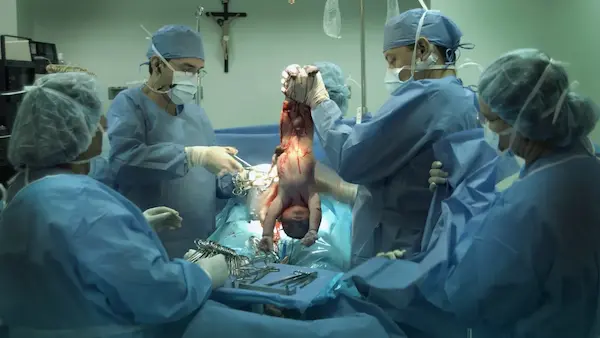
The difference between elective and emergency caesarean section
Elective caesarean section
- It is an operation that the doctor decides to perform after prior coordination with the mother, and its date is often set, but the expected date of birth is two weeks or more.
- It is resorted to in the event of previously known medical reasons, such as a previous cesarean section, an abnormal position of the fetus, or any other medical reason from the previously mentioned reasons, or based on the mother’s desire for health or psychological reasons.
- It is performed in stable conditions, which gives the medical team sufficient time to prepare and reduces the possibility of stress or surprises during childbirth.
Emergency caesarean section
So when does the doctor decide for an emergency caesarean section?
- While elective cesarean delivery is scheduled in advance, the decision for emergency cesarean delivery comes quickly when sudden complications occur during labor or late in pregnancy.
- It may be necessary to save the life of the mother or the fetus, including conditions such as slow fetal heartbeat, placental abruption, umbilical cord prolapse, or failure of natural birth.
- There is not enough time to fully prepare, and surgery is performed quickly under emergency conditions to maintain safety.
Tips before undergoing a cesarean section
It is important for the mother to be physically and psychologically prepared before undergoing childbirth, so here are some tips before undergoing a cesarean section to have a safe experience with satisfactory results:
- Follow fasting instructions carefully. You must stop eating and drinking 6 to 8 hours before the operation or as directed by your doctor.
- Prepare your maternity bag in advance, at the beginning of the ninth month, just in case, put comfortable clothes for you, personal hygiene items, and clothes for the baby in it.
- Discuss the anesthesia plan with your doctor, know the difference between spinal and general anesthesia, and ask which is most appropriate for your condition.
- Ask your doctor to explain the steps of the procedure, to help you understand what will happen, and thus reduce stress and psychological preparation.
- Arrange to have a companion with you after the birth. You will actually need a companion with you after the caesarean section, in hospital and at home for at least 10 days.
- Make sure to sleep well before the operation, to boost your immunity and help you recover better after giving birth.
- Prepare psychologically and communicate with the medical team. Do not hesitate to ask your questions, and trust that the team is working to ensure your safety and the safety of your child.
- Ask about the timing of stopping certain medications, especially if you are using chronic medications or blood thinners.
- Do pre-operative tests on time, such as blood analysis, blood type, and anesthesia evaluation.
- Avoid wearing cosmetics or perfumes on the day of the operation. The skin must be clean, to maintain sterility, and important vital signs must be seen during anesthesia.
- Prepare your documents and insurance papers in advance, to facilitate entry procedures and register the child.
Frequently asked questions
What tests are necessary before a cesarean section?
The tests that must be done before the operation are:
- Complete blood count (CBC) analysis.
- Blood type and Rh factor analysis.
- Blood compatibility test.
- Liver and kidney function analysis.
- Blood sugar analysis.
- Blood clotting test (PT and aPTT).
- Complete urinalysis.
- Viral tests (such as HIV, hepatitis B and C).
- ECG in some cases.
- Anesthesia evaluation (clinical examination and tests as needed to determine appropriate anesthesia).
How many hours of fasting before a cesarean section?
Pregnant women are usually required to fast and completely abstain from food and liquids before the cesarean section. At least 6 to 8 hours before the surgery date, drinking water may be allowed until 2 to 4 hours after the procedure.
In the end, caesarean section remains a safe and necessary medical option in some cases, determined by the doctor based on what ensures the safety of the mother and fetus.
Sources
Caesarean section – nhs
