
Hair loss is not just an aesthetic problem, but it may affect a person's self-confidence, his social life, and even his psychological state. With the development of cosmetic medicine, hair transplantation has become one of the most effective and sustainable solutions, especially when it is performed within a reliable medical center that combines medical expertise, modern technologies, and personal care.
What is hair transplant?
Hair transplantation is a cosmetic procedure used to restore hair in areas suffering from baldness or thinning, whether due to genetics, stress, or scalp diseases. This is done by moving hair follicles from a dense area (often the back of the head) to empty areas.
Many resort to this procedure because:
- Provides permanent and natural results.
- Restores self-confidence and improves overall appearance.
- It is performed with precise techniques that reduce pain and scarring.
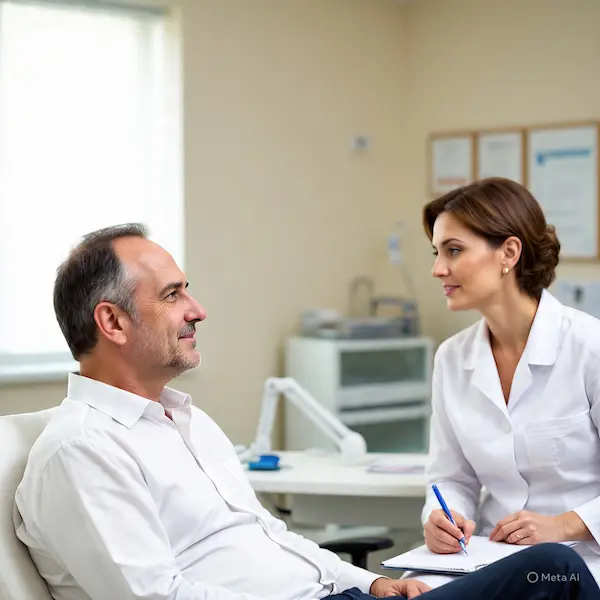
Types of hair transplant techniques used
We provide the latest hair transplant techniques, ومنها:
- FUE technique
In which the follicles are extracted one by one and implanted precisely, but without the need for a large surgical incision, this technique is ideal for those looking for a quick recovery and natural results.
- Direct Pen Technology (DHI)
Fine pens are used to implant the follicles directly without opening channels beforehand, which reduces bleeding and increases the density of the transplanted hair.
- FUT chip technology
Although it is less commonly used currently, it is suitable for some cases that require a large number of grafts in one session.
Each technique is chosen based on the patient's condition, hair density, and baldness pattern, and is supervised by a specialized team within the center.
Read also: Learn about the causes of alopecia and whether alopecia can heal on its own.
Stages of the hair transplant process
Hair transplantation is a delicate procedure that requires thoughtful planning and professional implementation to ensure the success of the process and achieve natural results. In our center, each case is treated with the utmost care, from the initial evaluation to the follow-up after transplantation. The process then goes through several integrated stages aimed at providing a safe and comfortable experience for the patient, with a focus on the quality of the transplanted follicles, the safety of the scalp, and the speed of recovery.
- Initial consultation:
Scalp condition, hair density, and hair loss pattern are assessed, with a detailed explanation of appropriate techniques.
- Preparing for the operation:
The necessary tests are performed, and the patient is given pre-transplant instructions, such as stopping smoking or taking certain medications.
- Execute the action:
Local anesthesia is used, and the follicles are implanted precisely according to the chosen technique, in a session that takes 4 to 8 hours.
- Follow-up after the operation:
The patient is monitored and given care instructions, such as washing hair and avoiding friction or excessive sweating.
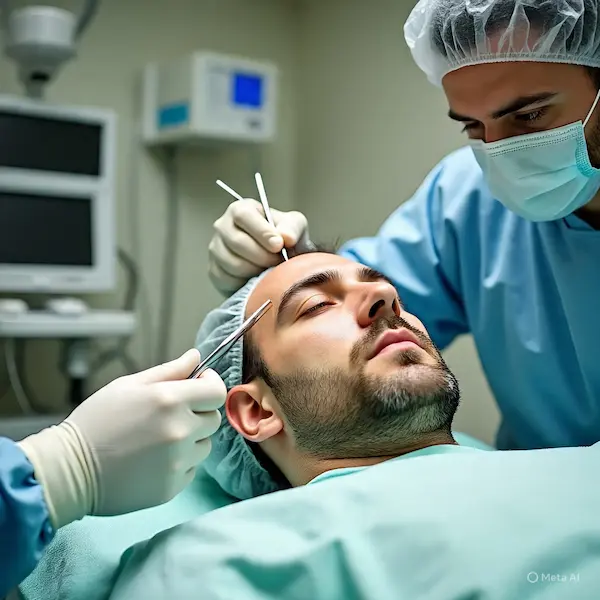
Who are the ideal candidates for hair transplant?
The ideal candidate for hair transplantation is someone who has a set of medical and aesthetic conditions, such as the presence of a good donor area (from which hair follicles can be taken), stable health condition, and a clear baldness pattern. It is also preferable for the patient to be realistic in his expectations and look for a permanent solution instead of relying on temporary or local treatments. Below are the most prominent ideal candidates:
- Those suffering from hereditary baldness or local thinning
- Those who have an area from which hair follicles can be taken, at the back of the head, for example
- People who are in good general health and do not suffer from active skin diseases
- Those looking for a permanent solution rather than temporary treatments
Read also: مع ديرما رولر للشعر وداعًا للفراغات المزعجة ومشكلة التساقط.
Advantages of performing a hair transplant in our health group
Choosing the appropriate medical center to perform hair transplantation is no less important than choosing the technique itself. The success of the operation depends on the accuracy of implementation, the experience of the team, the quality of the equipment, and the care after the procedure. Our health group is one of the most prominent medical centers in the Kingdom that provides an integrated and safe experience, thanks to a set of advantages that make it the ideal choice for those looking for natural and sustainable results. Below are the most important features that make us the first destination for those looking for guaranteed results:
1- Doctors specializing in hair transplantation
The center includes an elite group of doctors and consultants specialized in this technique, who have long experience in dealing with various cases of baldness and thinning.
2- Accurate and internationally certified devices
Both groups rely on modern implant devices approved by international medical bodies, such as DHI micro-pens and advanced FUE extraction systems. These devices include:
- Accuracy in extracting and cultivating follicles
- Reduce bleeding and scars
- Speed up recovery time
- Improving the density of transplanted hair
3- A safe and sterile medical environment
Hair transplantation operations are performed in operating rooms equipped with the highest standards of sterilization and safety, which reduces the possibility of infection or complications. Strict protocols are applied in handling tools, and a comfortable environment is provided for the patient before, during and after the procedure.
4- Natural results without visible scars
Thanks to the use of precise techniques such as FUE and DHI, the follicles are implanted in a way that mimics the natural growth of hair, without leaving visible traces or scars. The follicles are also carefully distributed to ensure the consistency of the final shape, giving the patient a natural appearance that is difficult to distinguish from the original hair.
5- Careful follow-up after the operation to ensure the success of the transplant
Medical care does not end with the end of the operation. Rather, the careful follow-up phase begins, which includes:
- Provide detailed instructions for scalp care
- Prescribing medical preparations that support follicle growth
- Responding to patient inquiries and providing psychological and medical support
This follow-up ensures the stability of the results, and gives the patient a feeling of confidence and reassurance throughout the recovery period.
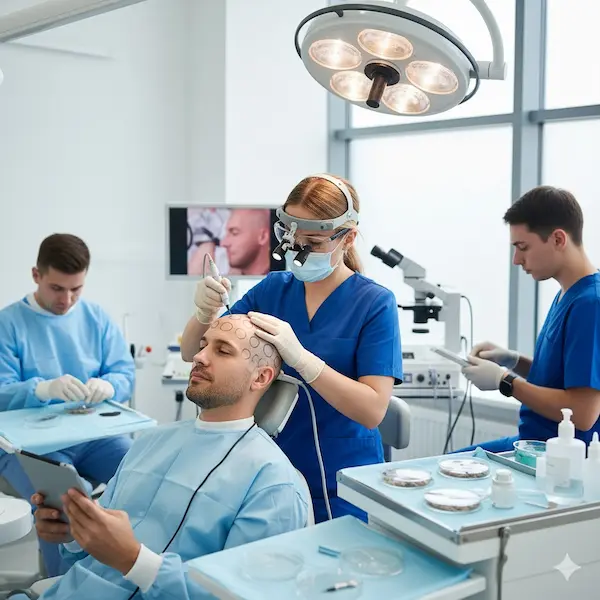
Tips before and after hair transplantation to ensure the best results
These tips and instructions are directed by our medical team to achieve the best results. And from her
Before the operation:
- Stop smoking and alcohol a week before.
- Avoid medications that affect blood flow.
- Wash hair well as instructed by the doctor.
- Eat a light meal the morning of the operation.
After the operation:
- Do not touch the transplanted area for 3 days.
- Sleeping in an elevated position to reduce swelling.
- Gently wash hair after the third day.
- Avoid exercise and excessive heat for two weeks.
- Use precisely prescribed medications and preparations.
- It is recommended to avoid wearing tight hats during the first week, and it is preferable to sleep in an elevated position to reduce swelling in the first days.
Read also: مينوكسيديل I لتعزيز صحة الشعر ونموه.
The difference between hair transplantation and non-surgical treatments
When facing the problem of hair loss or baldness, many people find themselves faced with multiple options, ranging from surgical procedures such as hair transplantation, to non-surgical treatments such as plasma injections or topical preparations. In this paragraph, we review the most prominent differences between this technique and non-surgical treatments, to help you choose the most appropriate solution for your condition.
|
المقارنة |
Hair transplantation |
Non-surgical treatments (such as plasma) |
|
Results |
Permanent and natural | Temporary and requires repeated sessions |
|
Number of sessions |
Usually one session |
Several sessions over a period of months |
|
Long term cost |
Relatively less |
Higher due to redundancy |
|
Impact on trust |
Immediate and sustainable |
Gradual and limited |
Before you decide: How do you choose the most appropriate technique for hair transplantation?
Choosing the appropriate technique for implantation is no less important than choosing the medical center or the timing of the procedure, as each technique has its own characteristics and advantages, and is suitable for certain cases rather than others. In our center, the patient is not left to choose alone, but rather is provided with a comprehensive assessment of his condition, with a detailed explanation of each available option based on medical and aesthetic factors.
Factors that determine the most appropriate technique:
- Donor area density:
If the area from which hair is taken for transplantation (usually the back of the head) is rich in follicles, the FUE or DHI technique can be used. Density Limited, it may be preferable to use the strip technique (FUT).
- Bald pattern:
In cases of partial baldness or local thinning, the DHI technique is ideal because it allows precise transplantation into spaces without affecting the surrounding hair. However, in cases of complete or advanced baldness, the FUE technique may be more effective to cover large areas.
- Hair Type:
Curly or thick hair needs precise distribution of follicles to avoid overlapping or uneven shapes, which makes the DHI technique a suitable option. As for fine hair, it can be easily transplanted using FUE or FUT.
- Desire for quick recovery:
If the patient is looking for a quick recovery and a quick return to work, the FUE or DHI technique is preferable, because it does not leave visible scars and allows healing within a few days.
- Available budget:
The cost of each technique varies depending on the number of follicles, the duration of the session, and the devices used.
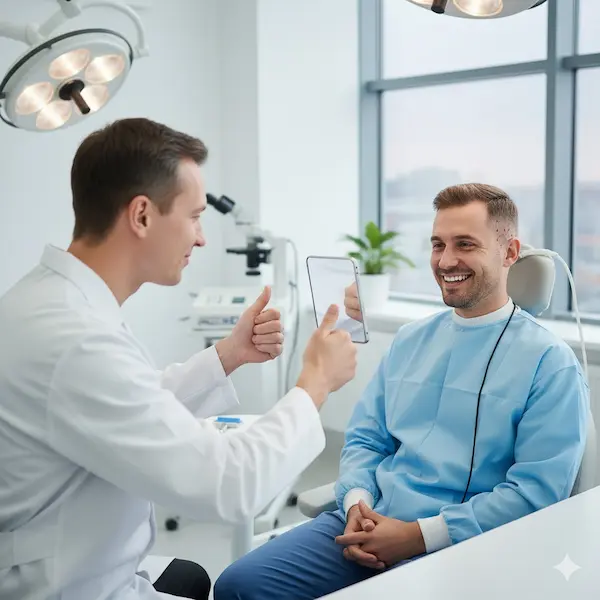
Successful experiences of patients who underwent hair transplantation within the center
Many patients expressed their complete satisfaction after undergoing hair transplantation in our center. Where they noticed:
- A clear improvement in hair density
- Natural results without scars
- Psychological and medical support before and after the operation
- Close follow-up by the medical team to ensure the success of the transplant
Frequently asked questions about hair transplantation
Is the procedure painful?
No, hair transplantation is performed using local anesthesia in the scalp, which prevents feeling pain during the procedure, and only some pressure or light tingling may be observed in the treated area.
How long does the process take?
The duration of hair transplantation ranges between 4 to 8 hours, depending on the number of follicles required and the targeted area. In cases that require high density or include more than one area, the procedure may be divided into two sessions.
When do the results appear?
The transplanted hair begins to grow gradually 3 to 4 months after the procedure, as the follicles enter a resting phase first, and then begin natural growth. The final results usually appear within 9 to 12 months, and are permanent if medical instructions are adhered to.
Is it possible to return to work after the operation?
Yes, most patients can return to work within two to three days, especially if the work does not require significant physical effort or exposure to excessive heat.
Are there side effects?
Side effects of hair transplantation are often limited and temporary, and include: slight swelling in the forehead or around the eyes, the appearance of small scales in the transplanted area, itching or tingling in the scalp, and temporary loss of the transplanted hair during the first weeks (a natural phenomenon known as follicle shock). All of these symptoms gradually disappear over a period of days to weeks, and the medical team at our center is keen to follow up on the condition and provide the necessary instructions to speed up recovery.
Hair transplantation is not just a cosmetic procedure, but a step towards regaining self-confidence and improving the quality of life, and with an integrated medical center like ours, this step becomes safer and more comfortable. Al Mousa Health Group Where we put your comfort first.