
Health is one of the most precious blessings that a person possesses, and among the silent diseases that may threaten this blessing is aortic aneurysm. It may develop without the patient realizing it except in advanced stages, especially with neglecting to monitor any changes that occur in the body. It is considered one of the most difficult challenges that require timely medical intervention. Through this article, we will learn about its causes, symptoms, and the most important methods of diagnosis and effective treatment.
What is aortic aneurysm?
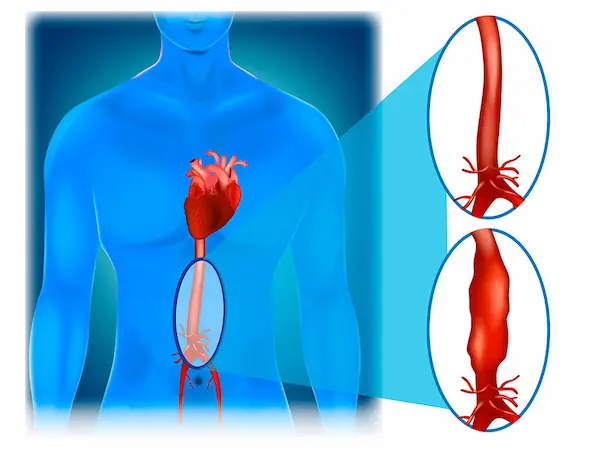
Aortic aneurysm is an abnormal dilation or swelling in the wall of the aorta due to a weak wall or other reasons that we will learn about later. This dilatation may lead in some cases to a rupture of the artery, which poses a threat to life. The aorta is known to be the largest artery that transports blood from the heart to the rest of the body’s organs.
Causes of aortic aneurysm
There are many causes of aortic aneurysm, some of which are hereditary, and some of which are lifestyle disorders, so we will learn about them in detail below:
- Vascular diseases:
Such as chronic high blood pressure, which affects the artery wall, and injury With atherosclerosis Due to the accumulation of cholesterol and fats, and chronic inflammation in the blood vessels resulting from immune diseases. - Genetic factors:
It is known that a single family may carry some hereditary genes for some diseases, such as aneurysms, or a family history of some disorders, such as Marfan syndrome, which affects the elasticity of tissues. - Some infectious diseases:
Exposure to infectious diseases such as syphilis or bacterial endocarditis may cause the aorta to weaken, resulting in an aneurysm. - Wrong lifestyle:
The most important and dangerous of them is obesity and lack of physical activity, which increases the risk of various heart diseases and atherosclerosis.
Risk factors for aortic aneurysm
One of the most important risk factors for aortic aneurysm is smoking, which is considered one of the most dangerous factors as it affects the walls of the arteries and weakens them, and increases the risk of rupture, in addition to some environmental factors such as exposure to strong trauma to the chest or abdomen, exposure to a car accident, and also a rare bacterial infection that affects the blood vessels.
Symptoms of aortic aneurysm
The symptoms of aortic aneurysm are not clear at the beginning of the disease or in the early stages. As the disease develops and the artery expands, thoracic and abdominal symptoms begin to appear, such as:
- Chest symptoms:
Symptoms include sudden pain in the chest and back, difficulty breathing, chronic cough, and difficulty swallowing due to severe pressure on the esophagus. - Abdominal symptoms:
They include severe, deep, and persistent pain in the abdomen or back, feeling a strong pulse in the abdomen similar to a heartbeat, a constant feeling of fullness and bloating, and discomfort after eating. - Severe tear symptoms:
These are symptoms of emergency situations that require immediate intervention and include sudden and severe pain in the chest, abdomen, or back, along with a sharp drop in blood pressure, rapid heartbeat, and in some cases, it leads to fainting and loss of consciousness.
Diagnosis of aortic aneurysm
Aortic aneurysms must be diagnosed by specialized vascular doctors, and approved diagnostic methods include the following:
- Clinical examination and medical history: The doctor may notice a pulsating mass in the abdomen upon clinical examination in cases of severe dilation. The doctor also asks about the patient’s medical history to find out the cause of the injury.
- Computed tomography: which provides an accurate picture of the aneurysm, showing its size and extent of spread. It is also usually used in the case of surgical intervention.
- Tests and analyses: The doctor requests some tests and analyzes for diagnosis, such as measuring the cholesterol level in the blood, measuring sugar, liver and kidney function tests, and CPR inflammatory index analysis.
- Magnetic resonance imaging: This is to obtain a detailed image of the artery and evaluate the surrounding tissues and their extent.
- Ultrasound imaging: It is one of the most common diagnostic methods used by doctors to examine artery aneurysms. It is a quick and inexpensive method that can be used as a routine examination in the presence of risk factors such as smoking and obesity.
Book your consultation now at مركز القلب والأوعية الدموية At Al Mousa Specialist Hospital.
Methods of treating aortic aneurysm
Methods of treating aortic aneurysm depend on the progress of the condition and the causes of the disease. In general, medical monitoring must be continued even with treatment. Treatment is divided into medications, improving lifestyle in simple cases of aneurysm, and surgical intervention in advanced cases:
العلاج بالأدوية
In mild to moderate dilated cases, the doctor usually recommends some therapeutic medications that help control risk factors, such as beta blockers or angiotensin-converting enzyme (ACE) inhibitors, which help control high blood pressure.
Improve lifestyle
Improving lifestyle includes many important instructions that the doctor recommends in cases of small aneurysms less than 5.5 cm, which include controlling obesity and increasing physical activity, in addition to controlling cholesterol by improving the quality of eating with appropriate medications, and completely stopping smoking because it accelerates the size and growth of the aneurysm.
Treatment with surgical intervention
In the event of a dilatation greater than 5.5 cm and its growth is rapid, the doctor chooses between surgical interventions, which become necessary. Among the most important procedures he chooses from are:
- Open surgery: The part of the artery that has an aneurysm is replaced with an artificial tube. This requires a surgical opening in the abdomen and chest, which requires general anesthesia, and the recovery period from this procedure may take months.
- استخدام Cardiac catheterization: A mesh stent is inserted through the catheter from the femoral artery and fixed inside the aorta to prevent stretching of the walls. It is considered a minimally invasive surgery and recovery from it is faster than open surgery.
Al Mousa Specialist Hospital relies on the best methods of treating aortic aneurysm through a set of effective options that suit the patient’s condition and the extent of the condition’s progress, after an integrated diagnosis is made through a huge medical unit that includes the best and latest approved diagnostic devices.
How to prevent aortic aneurysm
Preventing aortic aneurysm is through reducing or controlling risk factors, and the most important tips that help with this are:
- Quit smoking permanently.
- Constant blood pressure control and medical follow-up.
- Maintain a healthy weight and avoid obesity by following a healthy diet and exercising.
- Conduct periodic examinations, especially if there is a family history of vascular disease.
- Follow a healthy diet and avoid foods containing saturated fats and fried foods to control cholesterol.
Despite the seriousness of aortic aneurysm disease, it is possible to recover from it and control it, but this depends on the speed and effectiveness of treatment. Therefore, we strongly recommend for you the specialized doctors at Al-Mousa Specialist Hospital in Al-Ahsa. There you will meet the experience and competence you need to begin the treatment journey, and you will be reassured and receive the best medical service ever.
Frequently asked questions
Learn with us the answers to the most frequently asked questions about aortic aneurysm and its seriousness:
Is mother's disease serious?
Yes, aneurysm disease is serious, so treatment should not be neglected or followed up, and its seriousness depends on many factors, including the size of the rupture and the extent of pressure on nearby organs.
Can aneurysms be cured?
Yes, aneurysms can be cured, but that depends on the extent of attention to treatment and the speed with which it is started. The earlier the treatment is, the safer and faster the recovery.
Does aortic aneurysm cause death?
If the aortic aneurysm is treated properly and in the early stages, it will not cause death, but if neglected and without medical follow-up for a period of time, it may lead to serious, life-threatening complications.
Sources and references
What Is an Aortic Aneurysm? – webmd
Aortic Aneurysm.. symptoms causes & treatment – clevelandclinic