
Benign thyroid cancer is a benign tumor and should not be called “cancer.” It is one of the most common types of tumors in the neck area. Despite its seriousness, its early detection greatly increases recovery rates. Its types vary, as do its symptoms. In the following lines, with Al Mousa Specialist Hospital, we will review the causes of infection, methods of diagnosis and treatment, and the most important tips needed to prevent benign thyroid cancer. Follow for more details.
What is benign thyroid cancer?
In fact, there is no such thing as benign thyroid cancer, as cancer by its nature is considered a normal malignant and abnormal growth of cells, while benign means that the tumor is non-cancerous and does not spread to neighboring tissues or other organs, but what is meant here is the presence of benign tumors in the thyroid gland, such as follicular adenoma, which is a non-cancerous growth spreading in the thyroid gland, and thyroid nodules, which are mostly benign and do not pose a danger. There is also low-risk thyroid cancer. Some types of thyroid cancer are slow to grow, such as papillary thyroid cancer, which is
Types of benign thyroid cancer
There are many different types of benign thyroid cancer, including many forms, which differ in their nature and severity. The most prominent of these types are:
- Thyroid nodule, which is the most benign of them. It may also be solid or filled with fluid, and does not cause symptoms in most cases.
- Follicular adenoma, which is a benign growth in the cells of the gland. It does not spread to nearby tissues, and it also needs to be monitored or removed if it causes symptoms.
- Thyroid cysts, which are fluid-filled cysts, are usually not dangerous but must be monitored.
يمكنك قراءة Everything you need to know about cancerous goiter
Symptoms of benign thyroid cancer
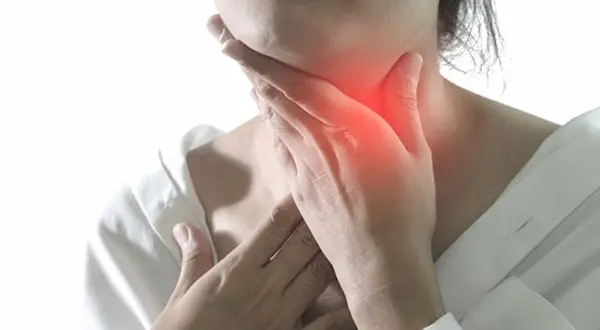
The correct definition of “benign thyroid cancer” is benign tumors in the thyroid gland or benign nodules, and in most cases they do not cause any symptoms at all, especially if they are small in size, and they are discovered by chance during other medical examinations, but if the benign nodules increase to become large in size, they cause some symptoms due to pressure on the structures surrounding the neck, and these symptoms come as follows:
- The appearance of a mass or tumor in the neck, where a swelling or nodule may be observed near the thyroid gland.
- Change in voice or hoarseness when the tumor affects the nerves near the vocal cords.
- Difficulty swallowing, due to the pressure of the tumor on the esophagus.
- Difficulty breathing, especially if the tumor is large and presses on the windpipe, especially when lying down or engaging in physical activity.
- Pain in the neck or throat, which may extend to the ears.
- Swelling of the lymph nodes, especially in the neck.
يمكنك قراءة Price of thyroidectomy
Causes of benign thyroid cancer
The causes that lead to the disease vary and are often the result of the intersection of many genetic and environmental factors. The following are the most prominent risk factors for benign thyroid nodules:
- Increased growth of normal thyroid tissue, i.e. thyroid adenoma. This is the most common cause of the formation of benign nodules. It occurs as a result of excessive growth of normal cells in the thyroid gland. The main and precise reason for this growth is often not known, but it is believed that genetic factors play a role in its growth. It should be noted that some of these adenomas secrete thyroid hormones in excessive quantities, thus increasing thyroid activity.
- Chronic thyroid diseases, such as Hashimoto's thyroiditis, can increase the risk slightly.
- Women are more susceptible to thyroid cancer, and the disease usually appears between the ages of 30 and 60 years.
- Iodine deficiency, as disturbances in iodine levels in the body may be linked to some types of thyroid cancer.
- The cause may be thyroid cysts, which are fluid-filled cavities that often form as a result of the decomposition of thyroid gland tumors, and they may contain solid components in addition to the fluid.
Get to know Cancer tests are your comprehensive guide to early detection and accurate diagnosis
How is benign thyroid cancer diagnosed?
Diagnosis is made through several precise steps taken by the doctor to ensure confirmation of the infection and to determine the type of tumor whether it is benign or malignant. The diagnosis includes the following points:
- The doctor begins by touching the neck to check for abnormal masses or swellings in the thyroid area or lymph nodes.
- Blood tests are done to measure levels of the thyroid hormones TSH, T3, T4, and some other indicators such as calcitonin or thyroglobulin, which can increase in some types of cancer.
- Ultrasound imaging, which helps determine the characteristics of existing masses such as size, shape, and calcifications that may be present or spread to the lymph nodes.
- Fine needle biopsy, in which a thin needle is used to take a small tissue sample from the mass and analyze it under a microscope to confirm the presence of cancer cells.
- CT or MRI scan, through which the extent of the cancer is assessed, especially if there is suspicion that it has spread to other parts of the body.
- Radioactive iodine scanning. This test is used in some types of thyroid cancer, such as papillary or follicular, in order to identify the extent of the gland’s activity and the spread of cancer cells.
Learn about the achievements of Al Mousa Specialist Hospital في إنجاز طبي غير مسبوق نجح فريق باستئصال ورم ضخم بالغدة الدرقية
Methods of treating benign thyroid cancer
If the tumor is benign, it usually does not pose a risk, and treatment depends on the size of the tumor and its symptoms. Treatment methods are as follows:
- Periodic monitoring. If the tumor is small in size and does not cause symptoms, follow-up with ultrasound is done every six to 12 months.
- Hormone therapy: In some cases, thyroxine is given to reduce the size of the tumor, but the use of this treatment has decreased recently.
- If the tumor is large and causes symptoms such as difficulty swallowing or pressure on the larynx, or if there is suspicion that it has become malignant, surgery is the solution.
احجز استشارتك الأن في مركز الاورام At Al Mousa Specialist Hospital
Top frequently asked questions
Is thyroid cancer dangerous or not?
This type of cancer is mostly treatable, and is rarely dangerous compared to other types of cancer, especially if it is discovered in its early stages. Most types grow slowly and respond well to treatment, whether with surgery or using radioactive iodine, which gives patients high recovery rates. There are some rare types, such as anaplastic cancer, which may be more aggressive and require intensive treatment, and for this reason, careful medical follow-up is necessary.
What is the cure rate for thyroid cancer?
Cure rates are high, especially with widespread types such as papillary and follicular cancer. Survival rates for 5 years increase to 95%, and the rate may reach 100% in some cases, if the disease is discovered early and if it is treated properly, even if the cancer has spread to nearby lymph nodes.
How many years does a thyroid cancer patient live?
The patient's survival time varies according to the type of cancer and its stage upon diagnosis, but in general, the patient has long chances of survival, as most people with common types live normal lives, with survival rates exceeding 95% after 5 years of diagnosis, and in many cases the patient can live for decades with periodic medical follow-up and access to appropriate treatment.
What is the recommended dose of radioactive iodine for thyroid cancer?
The recommended dose of radioactive iodine depends on many factors, including the type of cancer, its size, and the extent of its spread. The dose usually ranges between 30 to 100 ml for simple cases, and after complete removal of the gland. However, the dose may reach between 150 and 200 ml or more in cases of large tumors or those spreading outside the gland. The doctor determines the appropriate dose based on the individual evaluation of each patient in order to ensure the best results are achieved.
Al Mousa Specialist Hospital has a distinguished medical team specialized in oncology that gives you hope in life again. Book your appointment now to begin the journey of treating benign thyroid cancer according to your health condition. Do not hesitate and start now.
المصادر:
Thyroid Cancer – mdanderson
What Is Thyroid Cancer – cancer
