
A blow to the head from behind is a common injury that may seem simple on the surface, but it can cause serious complications such as concussion or internal bleeding if neglected.
What is a blow to the head from behind?
A blow to the head from behind is an injury that occurs to the back of the skull as a result of a direct collision, fall, or collision with something solid. Its severity may range from a simple bruise to a serious injury such as a concussion, internal bleeding, or a fracture of the skull.
- Superficial bruising on the scalp.
- Injuries to the cerebellum or occipital lobe (responsible for vision).
- The brain bounces back and forth, which may cause damage to multiple areas within the brain.
What is first aid for a blow to the head from behind?
1. Check awareness and breathing
- Examine the injured person if he is conscious and breathing normally.
- If he loses consciousness or stops breathing, an ambulance should be called immediately and cardiac resuscitation started if necessary.
2. Keep the injured person still
- Make sure to keep the head and neck stable, especially if there is a suspicion of spinal injury.
- Gently make the injured person lie on his back.
3. Stop any external bleeding
- Gently apply pressure to the bleeding site with sterile gauze or a clean cloth.
- Do not apply force if you feel a skull fracture.
4. Apply cold compresses
- Apply a cold compress or ice pack wrapped in a cloth to the site of the blow to reduce swelling.
- Do not apply ice directly to the skin.
5. Monitor symptoms for 24-48 hours
Pay attention to any serious signs such as:
- Loss of consciousness or extreme drowsiness.
- Severe and persistent headache.
- Repeated vomiting.
- Disturbance in vision or speech.
- Weakness or numbness in the extremities.
6. Maintain body temperature
- Gently cover the injured person if the weather is cold to avoid shock, but without causing the head to heat up.
7. Immediately prevent the injured person from entering light
- If the injured person is conscious, it is preferable to keep him awake in the first hours, to monitor the extent of consciousness and the development of symptoms.
8. Avoid giving food or drinks
- It is not recommended to give the injured person any food or drink until his condition is confirmed, especially if he suffers from nausea or disturbance of consciousness.
9. Go to the emergency room immediately when any serious symptoms appear
Learn about: Causes of headache in the front of the eye
When should you seek immediate help after being hit from behind the head?
Immediate medical assistance must be sought after suffering a blow to the head from behind in the following cases:
-
- Loss of consciousness Even if only for a moment.
- Severe and persistent headache It doesn't get better with time.
- Severe dizziness or loss of balance.
-
- Repeated vomiting Or severe nausea.
- Change in level of consciousness or confusion (such as difficulty speaking or responding).
- Vision problems (such as double or blurry vision).
- Bleeding from the nose or ears Or a transparent liquid coming out of them.
- Convulsions and epileptic seizures.
- Numbness or weakness in the arms or legs.
- One pupil dilates but not the other Or an abnormal change in the shape of the eye.
- To be injured Child or elderly person.
- The injured person eats Blood thinning medications.
Learn about: 4 of the most important types of headache With how to diagnose and treat it in the best ways
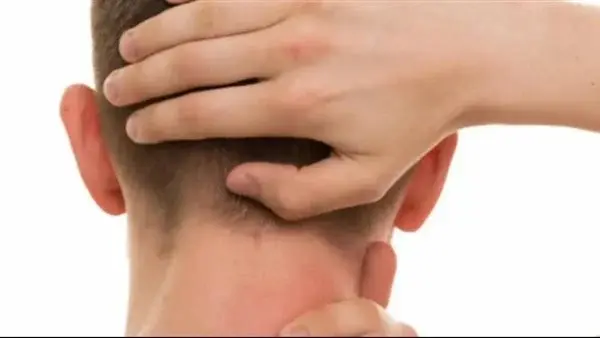
The most important tips for getting hit from behind the head
To ensure safety and reduce complications after a blow to the head from behind:
-
Monitor symptoms for 24-48 hours
Even if the blow seems mild, keep an eye on any changes in consciousness or behavior.
-
Avoid sleeping in the first hours after injury.
Especially if there is a possibility of a concussion.
-
Do not use strong painkillers without consulting
Such as aspirin or ibuprofen, because they may increase internal bleeding in the event of an internal injury.
-
Complete comfort physically and mentally.
Avoid physical exertion or use of electronic devices until the condition stabilizes.
-
Do not move the neck or head violently
Especially if there is neck pain or suspected spinal injury.
-
Use cold compresses gently
To reduce swelling at the site of injury.
-
Consult a doctor immediately
When any abnormal symptoms appear, such as severe headache, vomiting, dizziness, or disturbance of consciousness.
-
Avoid driving or operating machinery
Even if no obvious symptoms appear, it is preferable to rest completely to avoid any danger due to loss of concentration or sudden dizziness.
-
Do not use the phone or watch screens for a long time
Blue light may make headaches worse or cause brain irritation if a concussion is present.
-
Elevate the head slightly while sleeping
To help reduce pressure inside the skull if swelling or bruising is present.
Book your consultation now at مركز تأهيل الإصابات العصبية والسكتة الدماغية At Al Mousa Specialist Hospital.
Treatment of head injuries
Treatment varies depending on the type and severity of the injury, and includes:
1. Comfort and control
- Used for minor injuries, bruises or mild concussions.
- Physical and mental comfort is important, so it is best to avoid screens, high concentration, and stressful activities.
- Monitor the condition during the first 24-48 hours.
2. Drug treatment
- Mild painkillers such as paracetamol.
- Antiemetics when needed.
- Avoid medications that thin the blood (such as aspirin) unless recommended by your doctor.
3. Imaging examinations
- The doctor may order a computed tomography (CT) scan or magnetic resonance imaging (MRI) scan to evaluate the presence of internal bleeding or a skull fracture.
- It is performed according to the symptoms and severity of the infection.
4. Surgery
- The doctor may perform surgical intervention in severe cases, such as a cerebral hemorrhage, or a skull fracture that puts pressure on the brain.
- Surgical intervention is performed to remove accumulated blood or repair damage.
5. Physical and rehabilitation therapy
- It is used in cases that leave complications such as poor movement, balance or speech problems.
- It includes physical therapy, speech therapy, and neurological rehabilitation sessions.
6. Psychological and cognitive support
Some people who have been hit from behind the head experience changes in mood or concentration after the injury.
It is recommended that they be seen by a psychologist or cognitive behavioral therapy when needed.
Frequently asked questions
When is a blow to the head from behind dangerous?
A blow to the head from behind is dangerous if symptoms appear such as loss of consciousness, severe and persistent headache, repeated vomiting or severe dizziness, disturbance in consciousness or speech, bleeding or clear fluid coming from the nose or ear, weakness or numbness in the extremities, change in vision or dilation of only one pupil.
Is falling on the head from behind dangerous?
Yes, because the back of the head contains very sensitive areas in the brain, including the occipital lobe (responsible for vision) and the cerebellum (responsible for balance and motor coordination). Also, the skull in this area is closer to the brainstem, which is a vital center that controls vital functions such as breathing, blood pressure, and pulse.
How do I know that a head blow is not serious?
A blow to the head from behind is not dangerous if no serious symptoms appear in the first 24-48 hours of injury.
In conclusion, a blow to the head from behind is not always dangerous, but paying attention to serious symptoms is the basis for evaluation.
Sources
Healthdirect- head injuries
mayoclinic – traumatic brain injury
